

Areas of Study

Join our exciting and supportive environment of over 350 students! You’ll receive expert instruction from diverse and talented faculty and the chance to grow tremendously as a musician.
We build on a long legacy of musical training for leading performers, educators and scholars. You will be part of a community that values both artistic excellence and comprehensive skill-building. As a student in music, you will engage with several other aspects of music in addition to your area of focus. Scroll down to explore our Areas of Study.
Areas of Study

Brass
Pursue undergraduate and graduate degrees in brass performance, or study brass as part of a degree such as music education. Study trumpet, trombone, horn, euphonium or tuba with faculty who are active international and national performers. Our supportive environment gives you the skills and education you need to become an excellent performer or educator.
Conducting
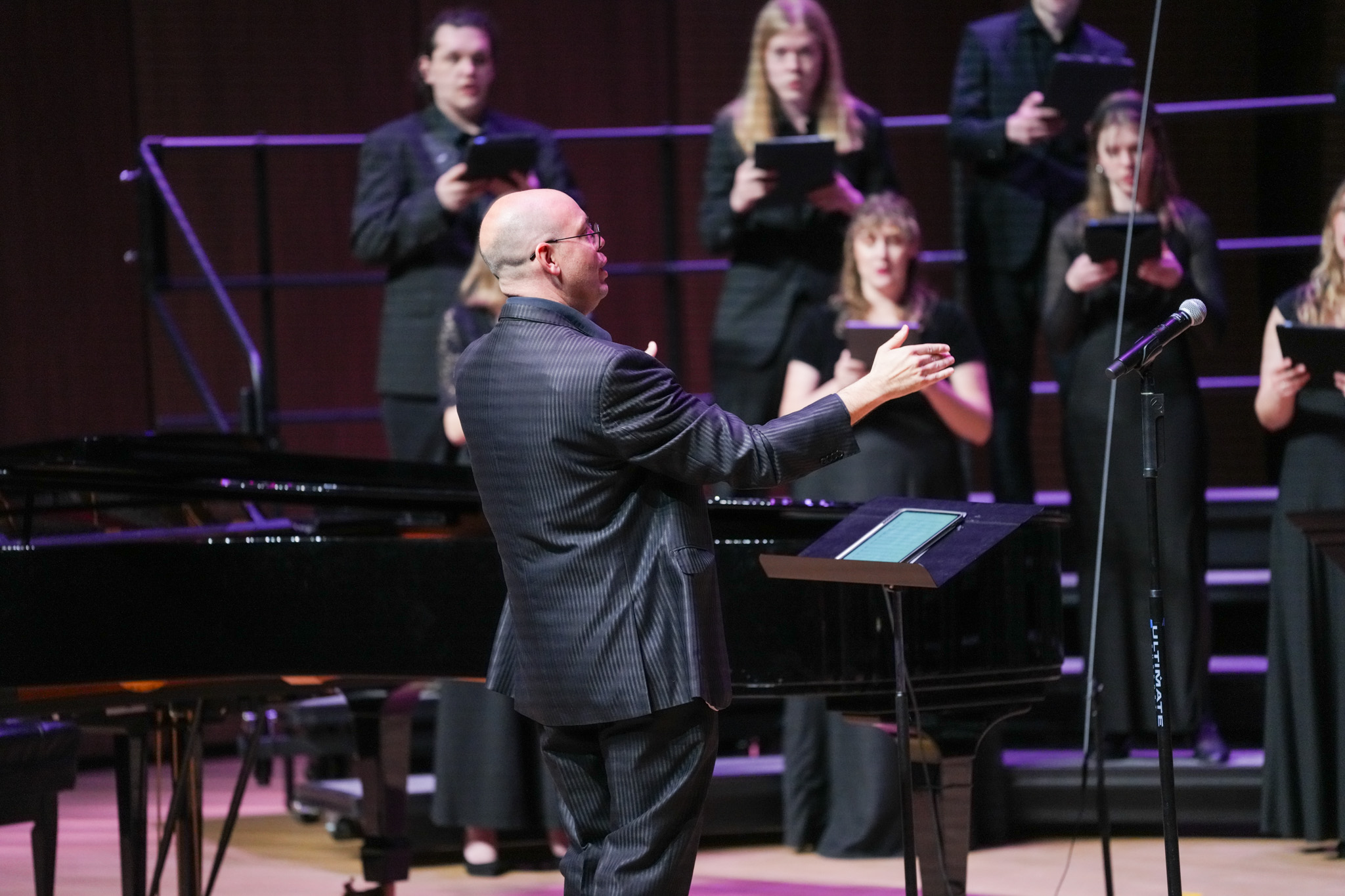
When you study conducting here, you’ll deepen your artistic practice with our ensembles, work with dedicated faculty mentors and gain a greater understanding of music in your academic classes. Study wind, orchestral, or choral conducting with our Graduate Certificates, Master of Music options (including low-residency!) and Doctor of Arts degree.

Culture & Expression
The Culture and Expression program offers flexible and customizable course options in music theory, history, technology, arts entrepreneurship and more. It’s ideal if you want to specialize in multiple areas, or if you minor or double major in a non-music field. It can also be a great option for transfer students.
No audition is required, but you may audition for scholarship consideration.

Jazz Studies
Pursue undergraduate and graduate study in jazz performance or composition in a supportive community of musicians and renowned faculty. Build your craft, explore a broad range of musical styles and prepare for a career that fits your goals through hands-on learning and professional development. UNC’s Jazz Studies program brings together a tradition of artistic excellence and a commitment to your future.

Latinx Music
Our Latinx Music program feeds your passion for the musical traditions of Mexico, Central America, South America and the Caribbean. The B.A. in Latinx Music is the first of its kind in the U.S. and focuses on community engagement. Post-baccalaureate students can pursue a low-residency Graduate Certificate.
No audition is required, but you may audition for scholarship consideration.

Music Business and Recording Arts
Music Business and Recording Arts lets you customize your classes to focus on business, recording or a balance of both. You’ll prepare for the professional world as you learn the financial, legal and artistic aspects of the music business, alongside the technical and aesthetic skills of recording arts in our state-of-the-art recording and mixing studios.
No audition is required, but you may audition for scholarship consideration.
Music Composition
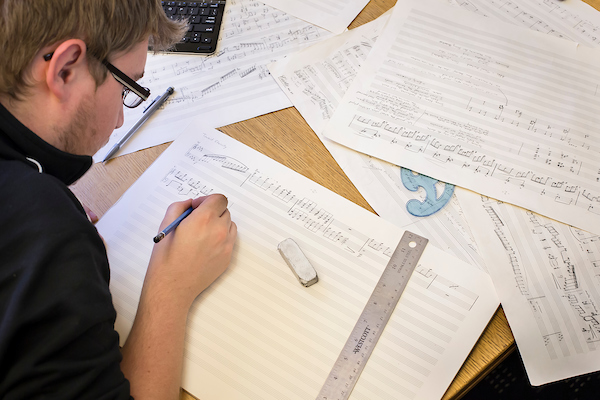
Pursue undergraduate and graduate degrees in Music Composition. Our experienced faculty have premiered works at festivals and concerts all over the United States, Europe, South Africa, Australia and Asia. You’ll have opportunities to collaborate with diverse students and faculty, to cultivate your unique creative voice and to build on our tradition of students’ works premiered worldwide.

Music Education
Pursue undergraduate and graduate degrees in Music Education. You’ll also earn your Colorado K-12 Teaching License and wrap up your degree with hands-on student teaching experience. Our experienced and dedicated faculty will help you become exceptional teachers. You’ll join our extensive alumni network of music educators excelling in Colorado and beyond.

Music History and Literature
Pursue master’s and doctoral degrees in Music History and Literature while working in depth with our expert faculty, or add a Music History and Literature secondary area to any doctoral degree. Undergrad students can take our wide-ranging seminars as part of any BA or BM degree. We present an inclusive and detailed curriculum that offers many opportunities to specialize while covering historical and contemporary musical repertoire, evolving styles and performance practices.

Music Theory
Build a strong musical foundation in aural skills, sight singing, voice leading, form and analysis and 20th/21st-century musical materials that will prepare you to perform and/ or teach during your career. This foundation is intrinsic to all of our undergraduate degrees in music. You can pursue a Master’s degree in Music Theory, or add a Music Theory secondary area to any doctoral degree.

Percussion
Pursue undergraduate and graduate degrees in percussion performance, or study percussion as part of a degree such as music education. You’ll focus on your instruments in applied private lessons with expert faculty, have plenty of chances to perform in our ensembles, gain a broader understanding of music in your academic classes and get the chance to dive into electives like music business or recording techniques. You’ll be prepared to go further in your career as a modern musician.

Piano
You can earn undergraduate and graduate degrees in Piano. You’ll have numerous performance opportunities as a soloist and a collaborator and work with expert faculty and renowned guest artists. Your focus on your instrument in applied lessons will take you towards a career as a performer or educator.

Strings
Pursue undergraduate and graduate degrees in string performance, or study strings as part of a degree such as music education. Work with faculty who are active expert performers and focus on your main instrument as you work towards your career goals. You will take applied lessons and play in large and small ensembles. Study violin, viola, cello, double bass or classical guitar.
Voice
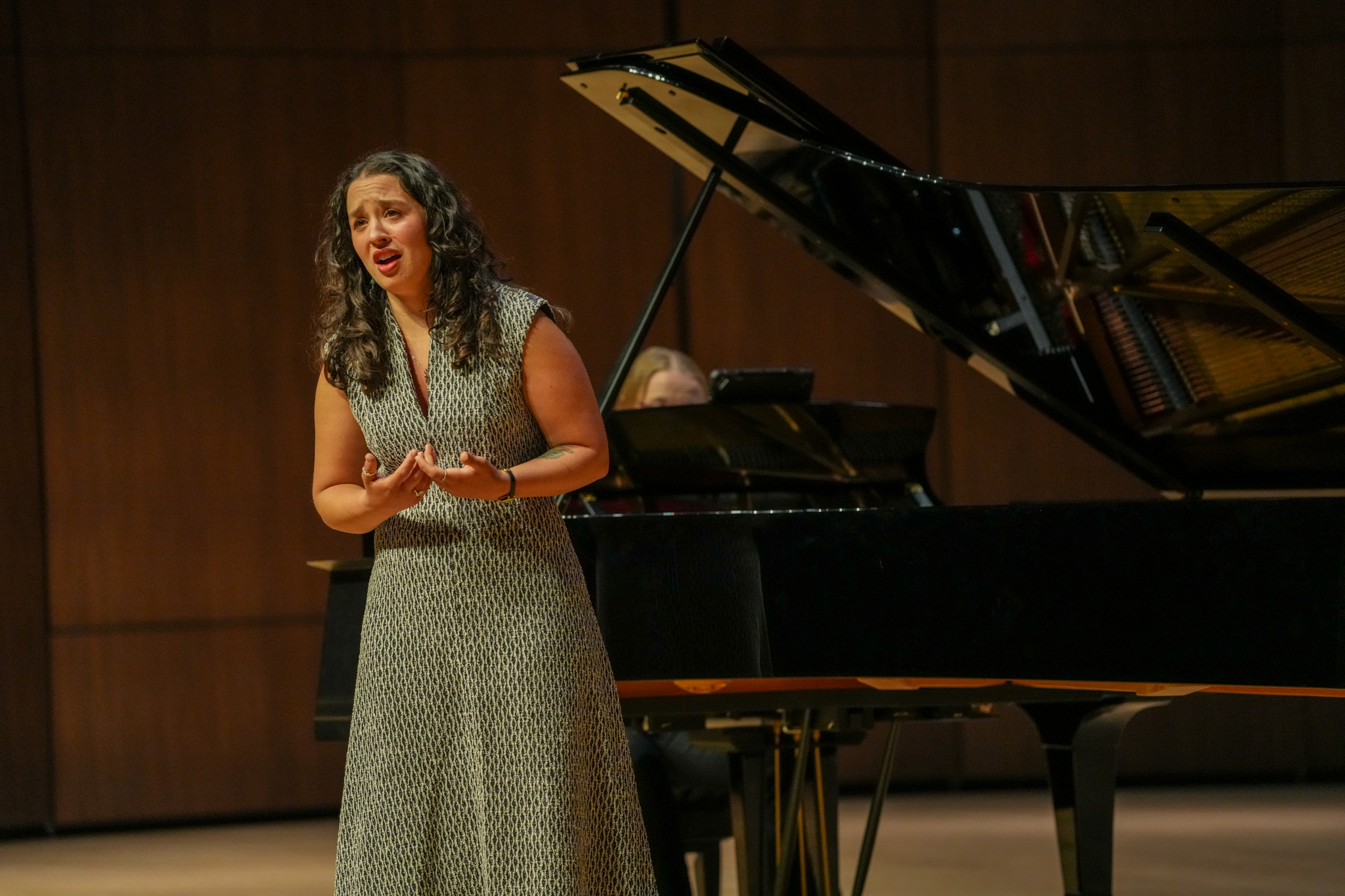
Join a collaborative, supportive voice area while earning an undergraduate or graduate degree in vocal performance or music education. With hands-on experience and guidance from our passionate faculty, you’ll grow in technique, genres, pedagogy and career development and be ready for a versatile career on the stage, in the studio, in the classroom or beyond.

Woodwinds
Pursue undergraduate and graduate degrees in woodwind performance, or study woodwinds as part of a degree such as music education. Study flute, clarinet, oboe, bassoon or saxophone with faculty who are active international and national performers. You’ll focus on your instrument in applied private lessons, have plenty of chances to perform in our ensembles, gain a broader understanding of music in your academic classes and get the chance to dive into electives like music business or recording techniques. You’ll be prepared to go further in your career as a modern musician.
Minors & Certificates
Choose courses in music history, theory, literature, performance or ensembles to complete the 21 required credits for this minor. You can take a maximum of 7 credits of performance and ensemble participation to meet the requirements.
If you are a music student who wants to go into the music technology industry and/or produce your own music, this certificate is for you. You’ll take 6 courses that will give you a solid foundation in contemporary technologies and related techniques such as MIDI, digital music notation, sequencing, samplers, recording, microphone techniques, mixing, composition, video scoring, music production, critical listening, music publishing, copyrights, promotion, marketing and more.
You can incorporate the Arts Entrepreneurship Certificate into your undergraduate major in many different ways to get yourself ready for the professional arts world. You can choose the 15 credits required for this certificate according to your interests.
A Glimpse into Our Music Programs


Curricular Practical Training
UNC School of Music students routinely participate in paid and unpaid teaching and performance opportunities both on and off campus to develop as performers and educators during their degree programs. Although the expectation is not explicit in the catalog requirements, practical application and participation is an expected and necessary part of the curriculum for all School of Music students. Students are expected to work with their applied teacher and area faculty to evaluate the applicability of teaching or performance opportunities to their program of study.