

Scholarships
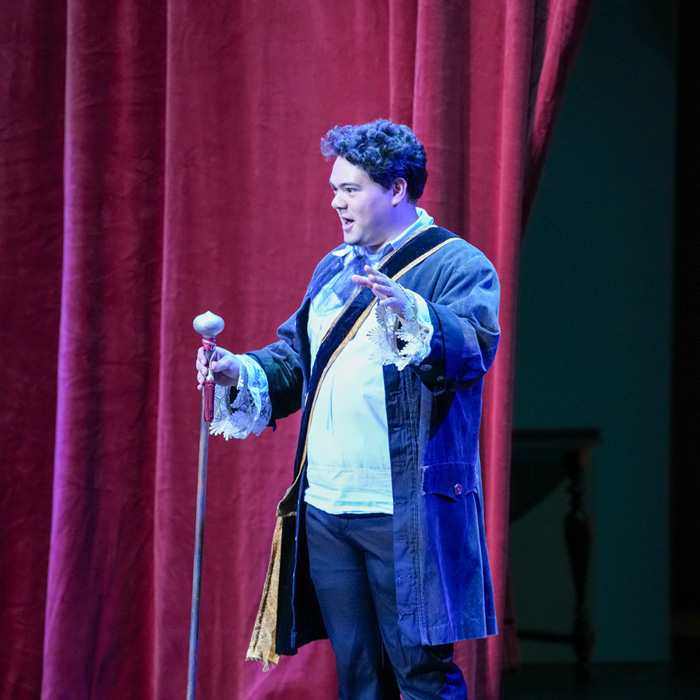
The College of Performing and Visual Arts offers over $1.5 million in scholarships every year.
These scholarships, including “talent” and “foundation” types, help you pay for your education. Talent scholarships are based on your skills and may require an audition or portfolio. For other scholarships, you need to fill out the UNC Scholarship Application each year. Don’t miss out on these opportunities to fund your artistic journey!
General Financial Aid Info
The Office of Financial Aid connects you and your family to financial solutions such as grants, scholarships, student employment and loans to help you bridge the gap between what you can afford to pay for your college expenses and the cost of attending.
Scholarship Specialist & Directors
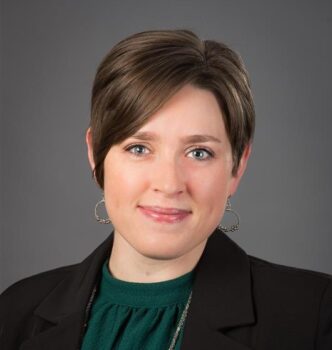
Jessica Castleberry
Adjunct, Music History; PVA Academic Advisor & Scholarship Coordinator: Music Culture and Expression, LatinX Music, Instrumental & Vocal Music Performance, Jazz Studies, Graduate Students
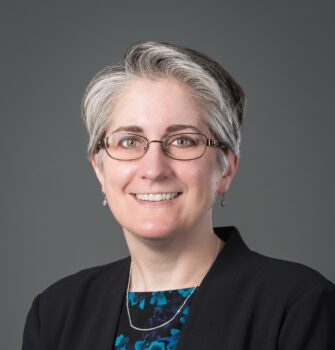
Carissa Reddick
Director, School of Music | Associate Professor of Music Theory

Anne Toewe
Director, School of Theatre Arts and Dance | Professor of Costume Design
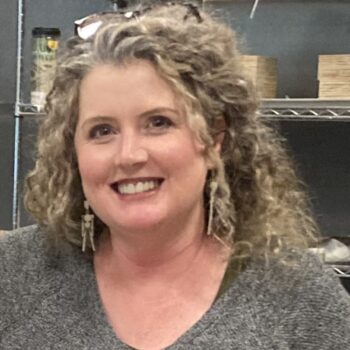
Donna Goodwin
Director, School of Art and Design | Associate Professor of Art Education
Auditions & Portfolios
Saturday, November 15, 2025
Saturday, January 24, 2026 (virtual)
Saturday, February 14, 2026
Saturday, March 7, 2026
Video auditions are also an option; you can submit them through the application process (deadline: March 7, 2026).
NEW & RETURNING Students: Submit a digital PDF portfolio containing five examples of your artwork + a statement of goals to be considered for scholarships.
Timelines
New Student Scholarship Deadline
The priority deadline for the UNC Scholarship Application is February 1, but students are encouraged to still apply after this in case there are remaining scholarship funds. The application opens each November 1 for the following academic year. Portfolio applications for the School of Art and Design Portfolio are preferred by March 15, but applications are accepted after this so that any remaining funds can be awarded.
Current Student Scholarship Deadline
To be considered for new scholarships or have foundation scholarships renewed for another year, returning PVA students must fill out the UNC Scholarship Application. It’s recommended that you complete it between when it opens on November 1 and the priority deadline of February 1. The preferred deadline for Digital Portfolio applications for School of Art and Design Scholarships is April 15.
Audition Deadline
The last PVA Audition Day is March 7, 2026, and Video Auditions are also due on this date.
School of Music Scholarships & Assistantships
Several scholarships are available through the School of Music. For auditioned programs, your admission audition serves as a music talent scholarship audition. For non-auditioned programs, make sure you schedule an audition so that you are also considered for music talent scholarships.
Once you’ve scheduled your audition, you don’t need to complete a separate form to be considered for these talent awards, but you must fill out the UNC Scholarship Application if you want to be considered for additional foundation awards.
Recommendations for music talent scholarships are made by the faculty in each applied area and are finalized by the Director of the School of Music. Scholarship offers are sent to your mailing address in April.
If you are a returning student who wants to renew their scholarship for another year or who wants to be considered for additional scholarships, you must complete the UNC Scholarship Application. It is recommended that you fill it out between when it opens on November 1 and the priority deadline on February 1.
Your admission audition/interview will serve as a music talent scholarship/assistantship audition. Recommendations for music talent scholarships and assistantships are made by the faculty in each applied area and are finalized by the Director of the School of Music. Assistantships carry a stipend and tuition support.
School of Theatre Arts and Dance Scholarships
In addition to university-level scholarships, the School of Theatre Arts and Dance also offers talent scholarships. To be eligible, you must be admitted to a program within the School of Theatre Arts and Dance. For the BFA Musical Theatre, BFA Acting, BFA Design and Technology, and BA Theatre Education majors, your audition and/or interview for admission serves as your application for talent scholarships. The final step in the talent scholarship process is to complete the UNC Scholarship Application in your MyUNC account. You are only able to access MyUNC and this application if you have been admitted.
BA Theatre Studies majors can be considered for talent scholarships by scheduling an interview. You can schedule this by emailing PVA.Admissions@unco.edu.
If you are a returning student who wants to renew their scholarship for another year or who wants to be considered for additional scholarships, you must complete the UNC Scholarship Application. It is recommended that you fill it out between when it opens on November 1 and the priority deadline on February 1.
School of Art and Design Scholarships
Submit a digital PDF portfolio containing five examples of your artwork + a statement of goals to be considered for scholarships.
Questions? Email Donna Goodwin or Devon Rosson.
In addition to university-level scholarships, the School of Art and Design also offers talent and foundation scholarships through portfolio submission. To be eligible, you must be admitted to a program within the School of Art and Design.
If you are a returning student who wants to renew their scholarship for another year or who wants to be considered for additional scholarships, you must complete the UNC Scholarship Application. It is recommended that you fill it out between when it opens on November 1 and the priority deadline on February 1. Portfolio submissions are still accepted after this deadline.
- New students:
- Apply by 3/15 for full scholarship consideration, but funds may be available after this, so submit your application even if it is after the preferred deadline.
- Scholarships offered by 4/1
- Returning students:
- Apply for full scholarship consideration by 4/15
- Scholarship offered in May
*Please note that scholarship offers may not show up immediately in MyUNC.
Include the following materials in a single PDF document:
- Cover Page
-
- First and last name
- List and descriptions of artwork
- Title of each work
- Media used
- Description of each piece (50 words or less)
- Images of artwork
- Include five different pieces
- One piece per page
- Include only one image of each piece
- Statement of Educational Goals
- Between 250 and 500 words
- Scan/photograph flatwork (drawings, paintings, etc.) to fill the digital image completely. Do not include a border, matte, or frame.
- We strongly encourage incoming first-year students to include work in a variety of media.
- If you are submitting video, animation, or other time-based work, please include a web link in your PDF.
- If you have an online portfolio or professional website, you may include a link on your cover page.
- Photograph your work on a large, smooth, neutral, solid-colored background (gray or beige) without distracting textures.
- Do not shoot your artwork on a pure white or black background (the dramatically light or dark color of the background will interfere with your camera’s internal metering system and produce an under- or over-exposed image).
- Shoot your work so that it is perpendicular to the camera lens. Otherwise, the lens will create unusual distortions.
- When shooting two-dimensional pieces, it may be easier to lay your work on the ground and position yourself above the work. Using a ladder or tripod may help you position yourself high enough to avoid cropping any of the artwork. Large work may need to be propped up on a support and shot straight on.
- When shooting three-dimensional work, make sure to position the work carefully for the most descriptive point of view. This may require positioning yourself above or below the work, or shooting an additional view from a different vantage point.
- Shoot tightly, emphasizing the piece you are shooting. Pay attention to everything in your frame. Do not include mattes, frames or distracting background elements.
- Do not shoot any framed artwork under glass. The camera will capture distracting highlights and reflections in the glass.
- Shoot your work outdoors, preferably on an overcast day. Do not shoot in a bright sunny location. The sunlight will create extreme highlights and distracting shadows. If you cannot shoot on an overcast day, then place your work on the north side of a building, again to avoid extreme lighting.
- If your camera has manual controls, you should “bracket” your exposures, meaning you should shoot at the camera’s suggested meter reading as well as shooting two additional frames, one under and one over the suggested meter reading. For example, if your automatic setting records the piece at f/11, shoot another at f/16 and another at f/8.
- Ask your art teacher for assistance if you are unsure about capturing good quality images for your portfolio.
You are welcome, but not required, to use one of our templates to create your scholarship portfolio. If you choose to use a template, you may modify it as you see fit.