

Osteopathic Medical College Exploration
The University of Northern Colorado College of Osteopathic Medicine is officially accepting applications for its inaugural class. Visit the College of Osteopathic Medicine website to learn more about the program, admissions requirements, and how to apply.
Creating a College of Osteopathic Medicine
The University of Northern Colorado is creating a College of Osteopathic Medicine – a project that will expand our program offerings in the health sciences and position the university to better meet the workforce needs of the state and region. A College of Osteopathic Medicine at UNC will greatly enhance the strength, health and prosperity of our people and our communities.
The UNC College of Osteopathic Medicine Is Now Accepting Applications
The University of Northern Colorado College of Osteopathic Medicine is officially accepting applications for its inaugural class. Visit the College of Osteopathic Medicine website to learn more about the program, admissions requirements, and how to apply.
Ceremonial Groundbreaking
Opening the College of Osteopathic Medicine will be a historic milestone in UNC’s legacy of educating society’s future health care professionals. On September 28, 2024, we mark this milestone by celebrating the beginning of the construction of a facility to house the proposed College of Osteopathic Medicine. This College will meet critical needs, change the lives of our neighbors and families, and open doors to students who will make a difference now and for generations to Colorado communities to come.
College Leadership
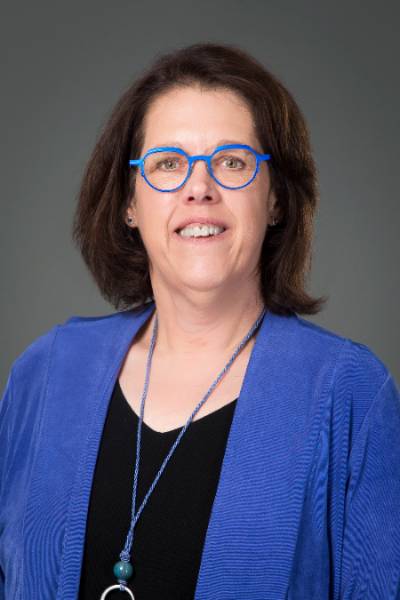
Meet Founding Dean: Beth Longenecker, DO, MS, FACOEP, FACEP
Dr. Longenecker received her Doctor of Osteopathic Medicine degree from the Ohio University College of Osteopathic Medicine in 1991. She completed a one-year rotating internship at Doctor’s Hospital in Columbus, Ohio in 1992 and subsequently a residency in emergency medicine at Newark Beth Israel Medical Center. She continues to be certified in this specialty by the American Osteopathic Board of Emergency Medicine. Dr. Longenecker is a member of the inaugural class of the Costin Institute for Osteopathic Medical Educators (2005) and completed the Harvard Macy Institute Program for Educators in Healthcare Professions in 2008. She received a master’s degree in medical education and leadership from the University of New England in 2016. She is a 2017 AACOM Health Policy Fellow.
Dr. Longenecker brings 20 years of experience in medical education to her leadership role. She began in her position as founding dean of the proposed College of Osteopathic Medicine at the University of Northern Colorado (COM-UNC) in June 2022.
Prior to arriving at UNC, Dr.Longenecker served as the Athens Campus Dean at the Ohio University Heritage College of Osteopathic Medicine, the Associate Dean for Clinical Education and Assistant Professor of Emergency Medicine at the Midwestern University/Chicago College of Osteopathic Medicine, and Associate Dean of Clinical Sciences at the William Carey University College of Osteopathic Medicine in Hattiesburg, Mississippi.
Her previous experience focused on graduate medical education (GME), serving as emergency medicine residency program director at Mount Sinai Medical Center in Miami Beach and St. Barnabas Hospital in the Bronx, New York.
Dr. Longenecker is a member of the American Osteopathic Association (AOA), the American College of Osteopathic Emergency Physicians (ACOEP) and the American College of Emergency Physicians (ACEP). She served as President of the Illinois Osteopathic Medical Society (IOMS), holds an appointment on the Bureau of Education of the American Osteopathic Association (AOA) and serves as a Site Inspector for the AOA Commission on Osteopathic College Accreditation.
Dr. Longenecker served as a trustee on the board of the Foundation for Osteopathic Emergency Medicine (2015-21) and a member of the board of directors of the American College of Osteopathic Emergency Physicians from 2005-14 and as treasurer in 2011-12. She was a delegate for the state of Illinois at the 2016 and 2017 AOA House of Delegates and served as a delegate for the state of Colorado at the AOA business meeting in July 2022.
Contact
Beth Longenecker, DO, MS, FACOEP, FACEP
Founding Dean, College of Osteopathic Medicine
Norma Juárez, MPH
Manager of Operations and Accreditation
Background
An osteopathic medical college at UNC will be the third medical school in Colorado and will help the state alleviate its shortage of physicians, particularly in rural and underserved communities. According to the Health Resources and Services Administration (HRSA), only 34.6% of the state’s need for physicians is met. The HRSA also identifies that 59 of the 63 counties in the state contain regions designated as health professional shortage areas (HPSA) in primary care. Launching an osteopathic medical college will help address shortages that affect access to and the overall quality of healthcare service that is available in the state and region.
The University of Northern Colorado will meet this challenge and is uniquely positioned to leverage existing programs to amplify positive outcomes for healthcare access and quality across the state. Of tremendous benefit to the success of the project, UNC has long had strong programs in the sciences and health sciences, including nursing, public health, behavioral sciences, biology, chemistry, audiology, speech-language pathology, and other fields. UNC is already exploring ways to leverage synergies among programs to enhance the osteopathic medicine curriculum and students’ academic experience in these other fields. UNC will also leverage revenues to reinvest in growing existing programs to amplify its capacity to support the health and strength of communities across Colorado.
By proceeding on a well-organized timeline from this point through to completion, it is anticipated that the first class of students will begin instruction in fall 2026. With 40 accredited colleges of osteopathic medicine in the United States – only seven of which are at public colleges and universities – UNC-COM would be joining a select group of D.O. colleges that will attract students from not just Colorado and the region, but across the country.
“I am excited about the possibility of UNC stepping up to meet the need of producing more physicians in service to our community and region. The creation of an osteopathic medical college at UNC would establish a pipeline of additional physicians to provide high-level care to others, including to individuals in underserved areas. A new medical college would be a win for Greeley, Weld County, the State of Colorado, and UNC.”
Andy Feinstein – President, University of Northern Colorado
“I am very excited about the possibility of UNC creating a College of Osteopathic
Medicine and fully support the university’s efforts. UNC’s capacity to support the
health and economic prosperity of the community, region, and state is only enhanced
through the creation of an osteopathic medical school. Greeley, along with other communities in Weld County and Northern Colorado, would benefit from a robust pipeline of well-trained healthcare professionals who are prepared to serve the needs of a rapidly growing region.”
John Gates – Mayor, City of Greeley
“With UNC’s strong reputation in education and health sciences, it is only natural
that the university applies these areas in the bold development of Colorado’s next
public medical school. It is a true honor to be part of the team that will take UNC
to the next level of education and service for the Rocky Mountain region by training
the physicians of the future.”
Brian Davidson, MD – 1999 UNC graduate, Physician Executive of Banner Health’s Western Division
Mission
To provide a transformative education in a culture that cultivates proficiency, inclusion, collaboration, mentorship and professionalism. We inspire our students to become caring physicians who embrace their identity, deliver patient-centered care, promote health equity and positively impact the patients and communities they serve.
Vision
The College of Osteopathic Medicine at UNC is committed to achieving its vision of:
- Being a national leader in advancing diversity, equity and inclusion in medical education.
- Positively impacting the physician workforce in Colorado and the High Plains region.
- Graduating students who are highly regarded by fellow physicians, health care teams and patients.
- Being an innovator in interprofessional medical education.
- Preparing graduates for opportunities to practice in rural and underserved communities.
- Ensuring graduates understand the critical role the primary care physician plays in patient wellbeing.
Values
Osteopathic Philosophy
- We recognize that people are comprised of mind, body and spirit and seek ways to foster wellness across this spectrum, not just for our patients but for our students, faculty and staff.
- We integrate the tenets of osteopathic medicine within the full spectrum of the curriculum.
Diversity
- We value and respect all perspectives and experiences as we acknowledge that these are shaped by the identities that we hold as individuals.
- We foster a culture of inclusion.
- We actively seek diversity and promote equity and social justice.
Community
- We actively partner with our colleagues across the university to create opportunities for cross-disciplinary teaching, learning and innovation.
- We work with our healthcare partners in ways that provide value to both our students and to those engaged in clinical teaching.
- We recognize the impact of the community on individual wellbeing and educate our students on the principles of community-focused care.
- Our students, faculty and staff advocate for social change that will improve the health and wellbeing of the communities we serve.
Lifelong learning
- We prepare our students for a career that requires them to continually learn and apply evolving concepts and new discoveries.
Our faculty and staff participate in learning experiences that allow them to further develop their skills and explore their career trajectory. - We support graduate medical education (GME) programs within our community and assist in the development of new GME programs.
Service
- Our students, faculty,and staff serve others through participation on university and community committees, mentorship and engagement with service projects.
- Our students, faculty and staff serve their profession through active membership and leadership roles in professional societies.
Frequently Asked Questions
A feasibility study prepared by Tripp Umbach, a leading consulting firm in medical education, evaluated a variety of factors such as market demand, economic impact, and the capacity and commitment of healthcare providers to support clinical placements – a vital component of medical education.
The most important reason is simply that Colorado needs more doctors, specifically in underserved areas, and hospital systems that serve Northern Colorado communities have called on UNC to act. According to the U.S. Health Resources and Services Administration, only 34.6% of the state’s need for physicians is met. As a result, physician shortages are already negatively affecting access to care, which is felt most acutely in rural and other underserved communities. The COVID-19 pandemic has helped to focus attention on the problems inherent in the limited capacity of our healthcare systems. The shortages Colorado encounters today are projected to get worse. The state’s booming population growth over the last decade – at double the national average – coupled with Colorado’s high percentage of active physicians aged 60 or older who are expected to exit the workforce in the next few years – one-third of all active doctors will be older than 65 in the next decade – are driving factors. Nationally, the Association of American Medical Colleges predicts a shortage of as many as 139,000 physicians, including as many as 55,000 primary care practitioners, by 2033.
While this is a challenge facing most of the state, especially rural and underserved communities, UNC’s hometown of Greeley has been and will continue to be the fastest growing city in Colorado and one of the fastest growing cities (actually, 4th fastest!) in the United States. The population of the Greeley metropolitan statistical area increased by 30.1% between 2010 and 2020, so the need to meet local and regional needs for physicians is going to continue to grow significantly right in UNC’s backyard.
The benefits to the health, strength, and growth of local communities and others across the region and state are many—and UNC is excited to move forward in partnership with stakeholders at each level. Developing a College of Osteopathic Medicine in Northern Colorado will have a positive impact on the quality and accessibility of health care and will have direct and indirect benefits to the regional and state economy. It will draw upon UNC’s existing strengths in the sciences and health sciences, developing synergies with programs such as nursing, behavioral sciences, public health, audiology, speech-language pathology, biology, and chemistry to enrich the curriculum—and reinvesting in programs that expand UNC’s capacity to support positive health outcomes for Colorado. As a result, we anticipate that the University of Northern Colorado College of Osteopathic Medicine will improve quality of life in communities across Colorado by growing the capacity of the healthcare system—expanding numbers of highly qualified doctors who have local and regional connections and interests, as well as by enhancing access to healthcare, especially in rural and other underserved communities.
Diversity in healthcare matters and currently only 5% of practicing physicians are African American and < 6% are Latinx. UNC serves large numbers of underrepresented, first generation, and Pell-eligible students and is projected to be federally recognized as a Hispanic Serving Institution in the coming years. As a result, the College of Osteopathic Medicine is being developed with careful attention to providing academic pathways for underrepresented minority students to pursue medical degrees—and, through their success, produce a pipeline for achieving greater diversity in the physician workforce.
The feasibility study from summer 2021 also projects UNC’s proposed medical school will contribute as a major driver of the local, regional, and state economy, creating jobs and generating tens of millions of dollars in economic impact to the region. When the school is fully operational, it will generate $66.7 million in total economic impact per year (direct, indirect, and induced impacts) and will add $2.7 million in state and local government revenue. In addition, by 2035, the economic impact will grow to $78.9 million as communities in Northern Colorado will begin realizing health-care benefits and additional economic impact because graduates locate in the region. Assuming that 25% of graduates from the college practice in underserved communities, Tripp Umbach estimates that by 2035 these new primary-care physicians will also yield real savings, as emergency room utilization declines and quality of care improves. These savings are expected to total $136.8 million annually by 2035.
The University of Northern Colorado is uniquely positioned to leverage existing programs to amplify positive outcomes for healthcare access and quality across the state. Of tremendous benefit to the success of the project, UNC has long had strong programs in the sciences and health sciences, including nursing, public health, behavioral sciences, biology, chemistry, audiology, speech-language pathology, and other fields. UNC is already exploring ways to leverage synergies among programs to enhance the osteopathic medicine curriculum and students’ academic experience in these other fields. For example, there is potential for making a significant impact on mental health outcomes by preparing osteopathic primary care physicians—the leading area of practice for D.O.’s—with greater knowledge, skills, and competencies in the behavioral sciences. A recent study by the Robert Graham Center found that primary care physicians were responsible for providing a majority of the care for depression, anxiety, serious mental illness, and other mental health needs prior to the COVID-19 pandemic; unmet mental healthcare need has only increased as a result of the pandemic. UNC will also leverage revenues to reinvest in growing existing programs to amplify its capacity to support the health and strength of communities across Colorado.
Both allopathic and osteopathic medical schools teach students the scientific foundations needed to become licensed physicians, but they take different approaches. Allopathic medicine focuses on diagnosing and treating medical conditions, while osteopathic medicine takes a more holistic, patient-centered approach and focuses heavily on prevention. According to the American Osteopathic Association (AOA)’s 2019 figures, nearly 57% of DOs practice in primary care specialties, 31% are family physicians, and 7% are pediatricians. By comparison, less than 30% of MDs practice in primary care specialties, 11% are family physicians or in general practice, and just under 7% are pediatricians (data from the Association of American Medical Colleges).
Graduates of allopathic programs receive Doctor of Medicine, or M.D., degrees. Graduates of osteopathic programs receive Doctor of Osteopathic Medicine, or D.O. degrees. After medical school, both M.D.s and D.O.s must complete residency training in their chosen specialties. They must also pass the same licensing examination before they can treat others and prescribe medication.
In order to open the University of Northern Colorado College of Osteopathic Medicine, it is estimated that UNC will need to raise nearly $200,000,000. UNC will raise these funds through a wide variety of means—principally through philanthropy, but we are also exploring opportunities for one-time state and local government support, partnerships, and other sources of funding. Once it is fully operational, the College is planned to be completely self-supporting, and will provide additional operating revenue that can be used to strengthen UNC’s existing programs in the sciences, health sciences, and beyond.
Construction Budget: $127.5 million
Physical plant costs including design, construction, and furnishings for the development of an osteopathic medical school facility will be at least $127.5 million to accommodate a medical school class size of 150 students per year. The projected cost could increase if additional space is planned to develop synergies with other programs in the sciences and health sciences or facilitate other programmatic opportunities such as workshops for K-12 students to explore careers in healthcare.
Start-Up Costs: $30 million
Total start-up costs over the three planning years and first two years of operations until tuition revenues are projected to match expenditures equal approximately $30 million.
Escrowed Funds Required by the Commission on Osteopathic College Accreditation: $42 million
The accrediting body, COCA, requires escrowed funds intended to fund teach-out agreements for the matriculated students in the event that the program fails during its initial years of operation prior to graduation of its first class of students. Estimates for the escrowed funds equal approximately $42 million.
Because UNC is still in the exploratory phase of the process, these are questions that do not yet have answers. Organizationally, the College of Osteopathic Medicine will likely stand alone as its own academic unit much like the other colleges. Physically, one potential location for the medical school is on the current site occupied by Bishop-Lehr Hall, where UNC has property and facilities that are not being fully utilized. This location has been explored in-depth in our program planning process.
The new college of osteopathic medicine (COM) and NHS have developed a collaborative relationship that is focused on mutual growth and support. Programs in NHS will continue to have their own faculty and staff to support its programs. Care is also already being taken to ensure that there are a sufficient number of commitments for clinical placements available so that NHS students and DO students will not have to compete.
Leadership from the College of Natural and Health Sciences serve on the college advisory board for the new COM as well as the research strategic planning team. Multiple initiatives have been identified that will synergistically benefit both colleges. These include development of learning opportunities in interprofessional education and the development of programming for students in 5th through 12th grade that allow them to explore careers in the health professions. Additionally, extracurricular opportunities for undergraduates have been provided through the COM, allowing students to learn suturing techniques as well as streamlining the process for undergraduates to shadow physicians in the community.
In the Media
Communications
Aug 27, 2024
Proposed College of Osteopathic Medicine Receives Candidate Status
April 26, 2024
Colorado lawmakers give final approval to fund UNC’s proposed College of Osteopathic Medicine
February 13, 2024
Colorado Bill will secure necessary support toward UNC’s College of Osteopathic Medicine initiative
February 12, 2024
October 10, 2023
$25 Million Gift, Largest in UNC History, Accelerates Plans for College of Osteopathic Medicine
April 17, 2023
Launched a grassroots fundraising campaign Doctors for DOctors
March 3, 2023
Board of Trustees approves College of Osteopathic Medicine Mission Statement
October 28, 2022
Press Release – Is there a Doctor in the House?
April 12, 2022
Press Release – Dr. Beth Longenecker named Founding Dean of UNC’s College of Osteopathic Medicine
March 17, 2022
Press Release – UNC Gets Green Light from State to Offer Degree Programs in Osteopathic Medicine, Finalists for Founding Dean Identified
November 15, 2021
Press Release – UNC Moving Forward with Next Steps in Pursuit of Osteopathic Medical School
November 14, 2021
Op-Ed in Greeley Tribune – Working to Fill a Vital Need in our Community, State
November 8, 2021
Message to UNC community – An Update on UNC’s Exploration into Developing an Osteopathic Medical School
July 19, 2021
Message to UNC community – UNC to Conduct Feasibility Study Looking Into Osteopathic Medical School
Press Coverage
January 14, 2025
9NEWS – New medical school coming to Colorado to help address state’s health-care worker shortage
August 27, 2024
Greeley Tribune – Northern Colorado’s proposed college of osteopathic medicine on track to welcome first class in fall 2026
March 1, 2024
Greeley Tribune – Bill to fund University of Northern Colorado medical college passes Colorado House committee
February 13, 2024
Greeley Tribune – ‘The bill is not just about us anymore’: Funding of University of Northern Colorado medical college part of $247M health education proposal
February 12, 2024
The Denver Post – New medical school planned for University of Northern Colorado as state looks to expand health care workforce
February 12, 2024
CBS News – Gov. Jared Polis announces funding plan to address shortage of health care workers in Colorado
February 12, 2024
KKTV – Proposed medical school in Colorado expected to train 100+ doctors each year
February 6, 2024
Rocky Mountain PBS – University of Northern Colorado hopes to train the next generation of osteopaths with new school
February 5, 2024
The Mirror – UNC to Propose Bill for Medical School Funding
October 10, 2023
Greeley Tribune – The Weld Trust gives $25 million to UNC for college of osteopathic medicine. The gift is the largest in UNC history, according to a joint news release from the university and The Weld Trust.
November 26, 2022
Greeley Tribune – Founding dean of UNC’s osteopathic medical school prescribes a path for state’s third medical college.
June 26, 2022
BizWest – UNC seeks new heights with osteopathic medical school
March 17, 2022
Greeley Tribune – State approves University of Northern Colorado plan for osteopathic medical school
March 17, 2022
Colorado Politics – Polis: Full steam ahead on new University of Northern Colorado medical school
January 11, 2022
Colorado Politics – University of Northern Colorado Seeks Legislative Approval for Medical School
December 4, 2021
Greeley Tribune – Banner Medical Group Backs University of Northern Colorado’s Plan to Osteopathic Medical School
November 19, 2021
Loveland Reporter-Herald – UNC Decides to Move Ahead with Osteopathic Medical School at Greeley Campus
November 12, 2021
Greeley Tribune – University of Northern Colorado Board of Trustees OKs Start to Accreditation Process, Hiring Dean for Osteopathic Medical School