Article
November 10, 2026
Written by Sydney Kern
Representing Rural Educators, Alumna Honored with 2027 Colorado Teacher of the Year Award
Merci Ames, M.A. '12, teaches in the Strasburg School District and hopes to use the recognition to advocate for the incredible things happening in classrooms across Colorado
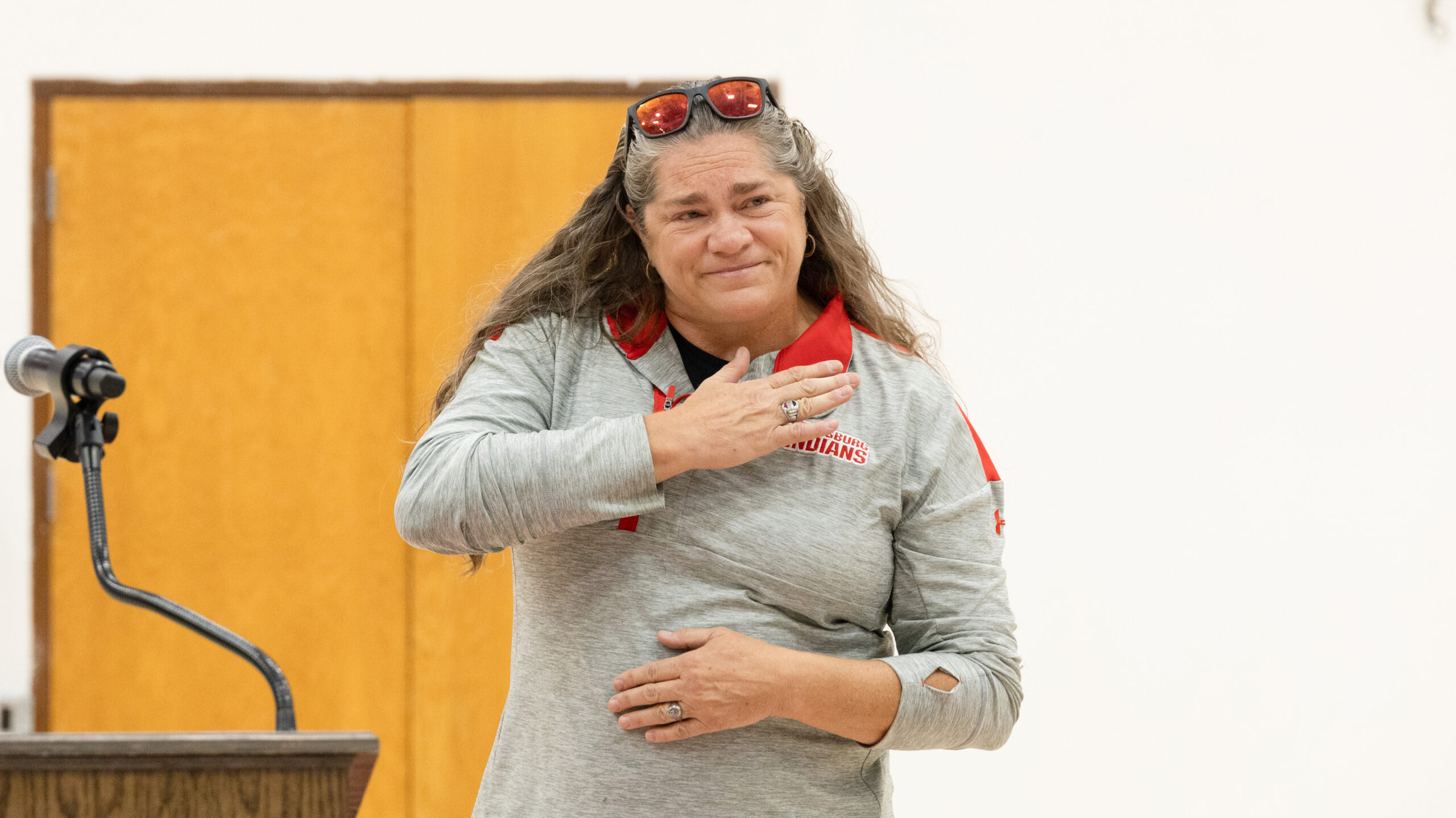
In January, alumna Merci Ames, M.S. ’12, will become the Colorado Department of Education’s 2027 Colorado Teacher of the Year, succeeding fellow University of Northern Colorado (UNC) alumnus and 2026 honoree Stephen Paulson ’11. Together, they add to the growing list of UNC graduates recognized as exceptional educators.
Ames is a science teacher and longtime basketball coach at Strasburg High School in the Strasburg School District. She has been teaching for 35 years, having earned a bachelor’s degree in Biology from the University of Wyoming and a master’s degree in Sport Administration from UNC.
-
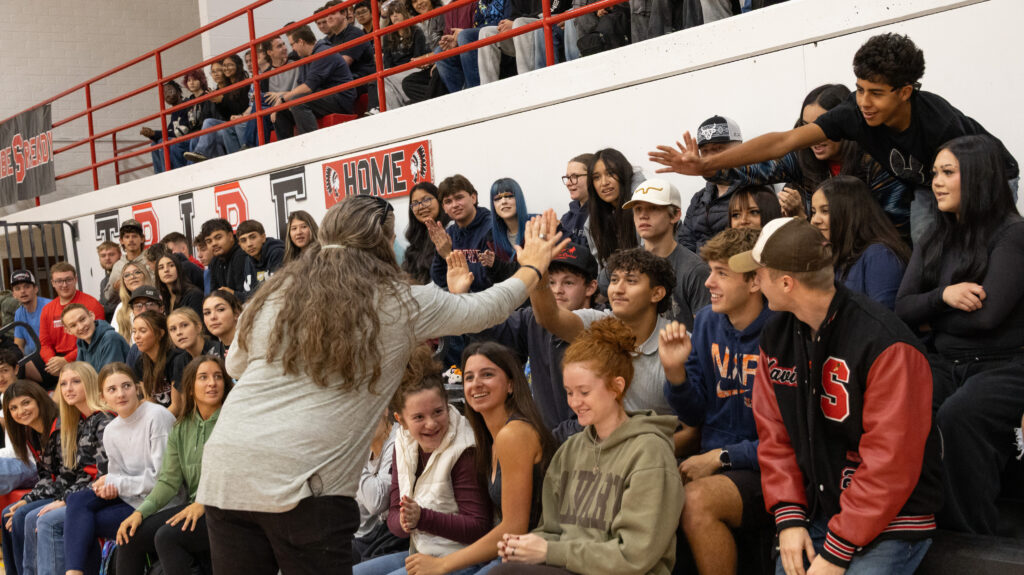 Photo courtesy: The Colorado Department of Education
-
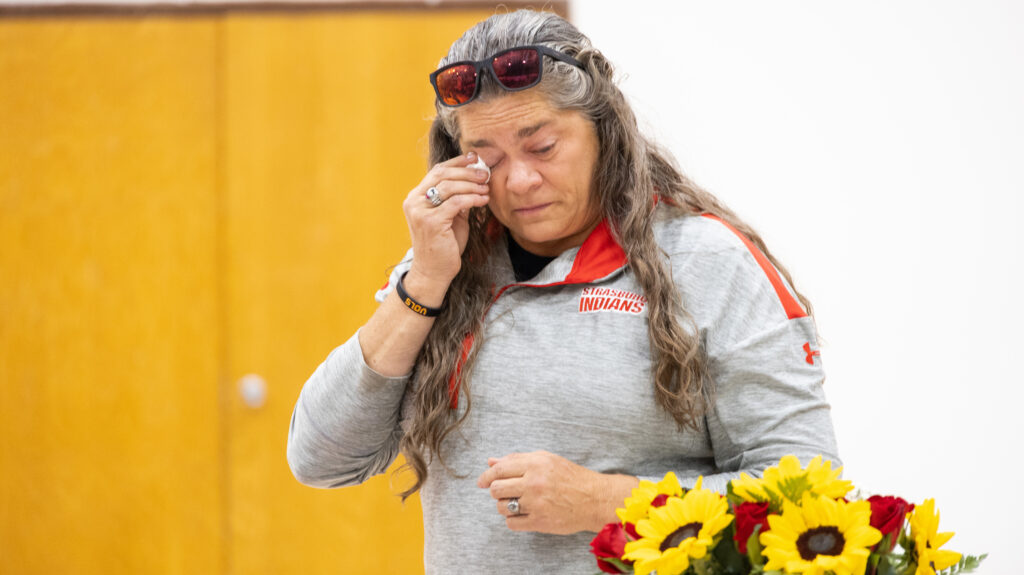 Photo courtesy: The Colorado Department of Education
-
 Photo courtesy: The Colorado Department of Education
-
 Photo courtesy: The Colorado Department of Education
-
 Photo courtesy: The Colorado Department of Education
-
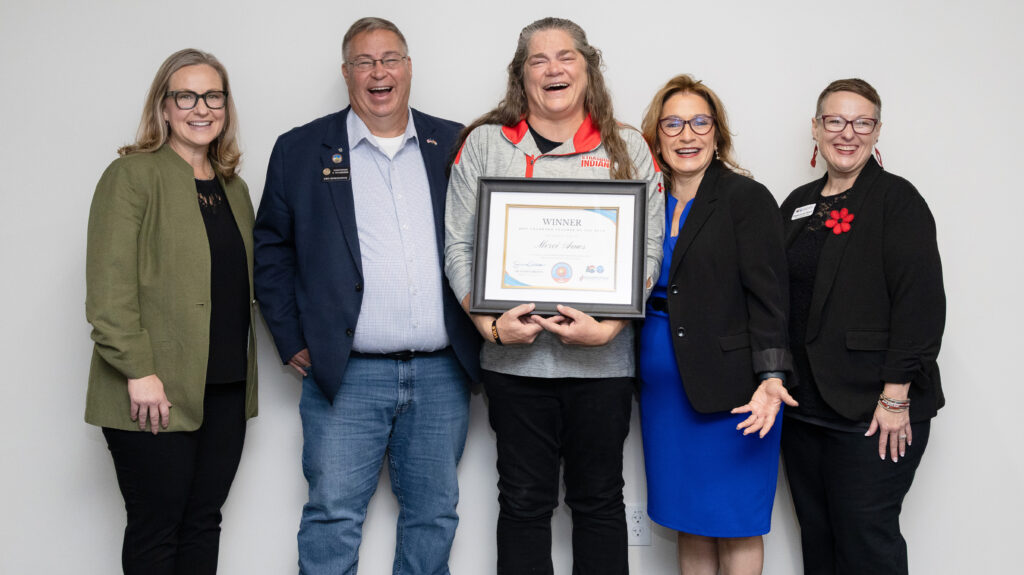 Photo courtesy: The Colorado Department of Education
-
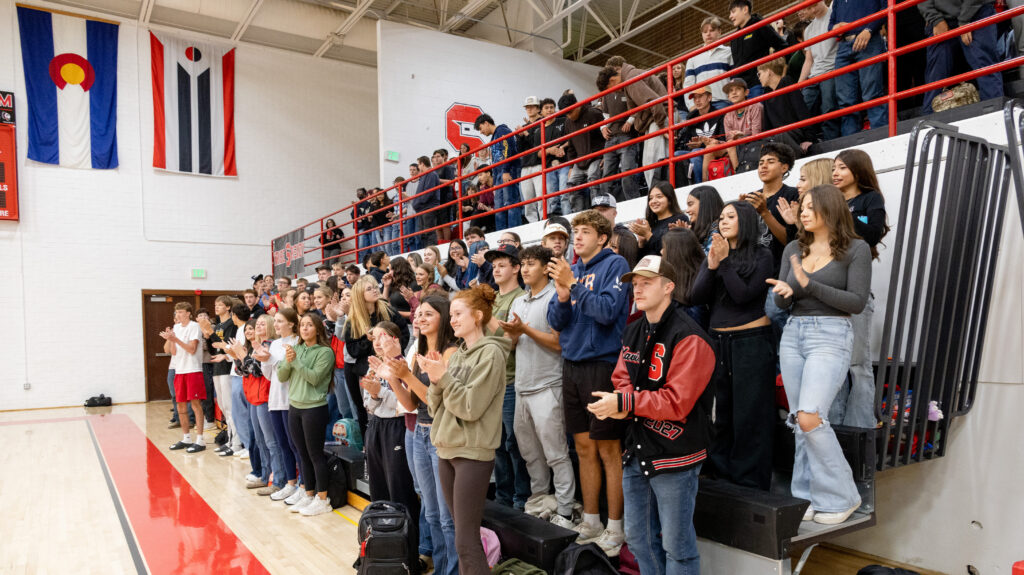 Photo courtesy: The Colorado Department of Education
-
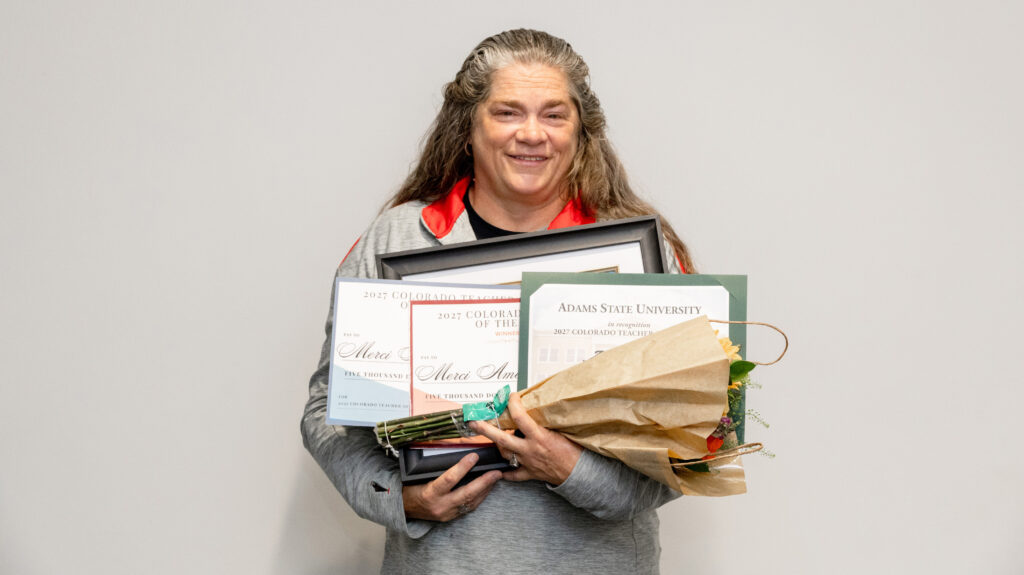 Photo courtesy: The Colorado Department of Education
Ames answered some questions from us about her teaching career and receiving the honor:
How does it feel to be the newest Colorado Teacher of the Year?
It is still a little overwhelming, to be honest. I am incredibly honored to have been selected as the 2027 Colorado Teacher of the Year. There are so many outstanding teachers across Colorado doing wonderful things for students every day, and to be recognized among them is something I never would have imagined.
I think what makes this especially meaningful is the opportunity to represent Strasburg, rural education, and the students and colleagues I have had the privilege of working with over the years. Teaching isn’t something you do alone, and I have been fortunate to learn from and work alongside some pretty remarkable people.
I also recognize that this opportunity comes with a serious responsibility. I hope to use it to help recognize the great work teachers are doing, advocate for students and share some of the incredible things happening in classrooms across Colorado, regardless of the size of the school or its location.
How has UNC helped prepare you to become the excellent educator you are today, having earned your master’s in Sport and Exercise Science? Or has your experience helped more with coaching?
When I originally decided to pursue my master’s degree at UNC, I had every intention of moving into athletic administration and eventually becoming an athletic director. Interestingly enough, as I went through the program, I realized just how much I enjoyed teaching and coaching, and that maybe athletic administration wasn’t the direction I wanted to go after all.
I really enjoyed my experience at UNC. One of the things that attracted me to the program was that classes were offered in person at an off-site location. I have always appreciated face-to-face learning and the opportunity to interact with other people, and that was one of the things I valued most about the program.
Our cohort included people from a variety of professions, not just education, and I learned a tremendous amount from their different perspectives and experiences. We had excellent instructors, and much of what we studied could be applied to things I was already doing. What I probably didn’t realize at the time was how many different ways I would eventually use that education. It certainly helped in administration, but it also strengthened my skills in leadership, organization, communication and working with others.
Those experiences have been especially valuable in my work with Colorado Coaches of Girls Sports, where I have been involved for 21 years, particularly in helping organize and direct our All-State Games. I have also been able to apply much of what I learned through my involvement with the Colorado High School Coaches Association and the Colorado High School Activities Association. So, while I didn’t end up following the career path I originally had in mind, I think my education at UNC has benefited me in more ways than I ever anticipated. It has influenced my teaching, coaching and leadership, and I am very grateful for the experience.
What makes you so passionate about teaching, particularly in a smaller district?
I think I have a slightly different perspective, because while growing up, I attended schools in urban, suburban and rural districts. Each had its advantages, but I graduated from a rural high school, and I really appreciated the opportunities that came with being part of a smaller school. One of the things I love about rural schools is that students often have the chance to be involved in so many different things. We might not have the same number of programs or resources as larger districts, but students often have opportunities to participate in activities they might never have considered otherwise. I know that was true for me growing up.
I think the same can be said for teachers. In a small district, you wear a lot of different hats, sometimes because you want to and sometimes because somebody has to. You might teach several different courses, coach, sponsor an organization or find yourself developing an entirely new program. That certainly comes with challenges, but it also gives you opportunities to grow, try new things and make a difference beyond your own classroom.
At the same time, having experienced schools of different sizes, I recognize that many of the challenges students face are the same regardless of where they live. Students everywhere deal with family struggles, economic challenges, self-doubt and uncertainty about their futures. And I think that is where teachers can make such a difference. Sometimes all it takes is someone who recognizes a student’s potential, believes in what they are capable of and gives them an opportunity to prove it.
For me, that is really what teaching is about. I love working in a rural district, but I also believe great things are happening in schools of every size. It isn’t necessarily the size of the school that makes the difference; it’s the people, the relationships we build and the opportunities we create for students. Every student deserves those opportunities, regardless of what school they attend or what their ZIP code happens to be.
Is there anyone or anything that inspired you to become a teacher and/or strive for excellence?
That is a difficult question because there are so many people who have influenced me over the years. I have been incredibly fortunate to have some wonderful teachers, coaches, mentors, colleagues and family members who have helped shape the person and educator I am today.
I would have to start with my parents. They taught me the importance of hard work, helping others, following through on commitments and doing the best you can with whatever is in front of you. Those values were reinforced by some outstanding teachers and coaches who challenged me, believed in me and encouraged me to try things I might not have considered on my own. Along the way, I learned important lessons about leadership, teamwork, competition and how to handle things when they don’t go as planned.
Those influences have continued throughout my career. I’ve been fortunate to work alongside some remarkable educators and coaches who have challenged me to think differently, try new approaches and continue learning. I think that’s one of the great things about education. No matter how long you’ve been teaching, there is always something you can learn from the people around you.
I also have to admit that I am pretty competitive and have never been particularly good at accepting that something can’t be done. If I see a problem or recognize an opportunity that doesn’t exist for students, I usually start thinking about how we can make it happen. And, of course, my students are a tremendous source of inspiration. They continually challenge me to think differently, try new approaches and find ways to make learning meaningful.
I don’t think striving for excellence means that you have all the answers or that everything you do is going to be successful. It means being willing to learn, make adjustments, take a few risks and keep trying to do better.
RELATED: Alumni Honored with Colorado Teacher of the Year Award
What is your philosophy on teaching?
I have always believed that students learn best by doing. I want students to ask questions, explore ideas, try things, make mistakes and figure out why something works or doesn’t work. I think learning needs to be meaningful, and students should understand how what they are learning connects to the world around them.
That is one of the things I love about teaching science and healthcare. Students have the opportunity to take what they are learning and actually apply it. Whether they are working through a medical scenario, conducting a lab or practicing a patient care skill, I want them to think critically, solve problems and sometimes struggle a little before figuring things out. I think that is an important part of learning.
I believe students are capable of far more than they sometimes give themselves credit for, but they need opportunities to discover that for themselves. As teachers, we have a responsibility not only to recognize that potential, but to create opportunities for students to explore their interests, challenge themselves and discover what they are capable of accomplishing. That means setting high expectations, providing support and sometimes finding ways to create opportunities that didn’t exist before. It doesn’t mean making things easy. Some of the most valuable learning happens when students have to work through a problem, make adjustments and figure things out for themselves.
I don’t expect every student who comes through my classroom to become a scientist or pursue a healthcare career. What I do hope is that they leave with the ability to think critically, ask good questions, solve problems, work with others and have the confidence to take on new challenges. Beyond those skills, I want them to take ownership of their learning, recognize what they are capable of and have the confidence to pursue opportunities they might not have considered before. To me, that is what teaching is really about.
More than 35% of Colorado Teachers of the Year are UNC alumni, including three of the past five recipients: 2024 honoree Jessica May, ’96, Paulson in 2026 and Ames in 2027.