
Article
June 22, 2026
Written by Duard Headley
Studying on the Seven Seas
Across the open ocean and throughout nearly a dozen countries, Semester at Sea provides the voyage of a lifetime for both faculty and students at UNC
It’s a morning like any other — it starts with the blaring of an alarm clock dragging you from sleep, eyes bleary and hair tousled.
Like any morning, you roll out of bed, go through your morning routine and prepare to set off to class for the day.
Like any morning, you make your way to the day’s first classroom, head swimming with notes and tidbits from yesterday’s lesson.
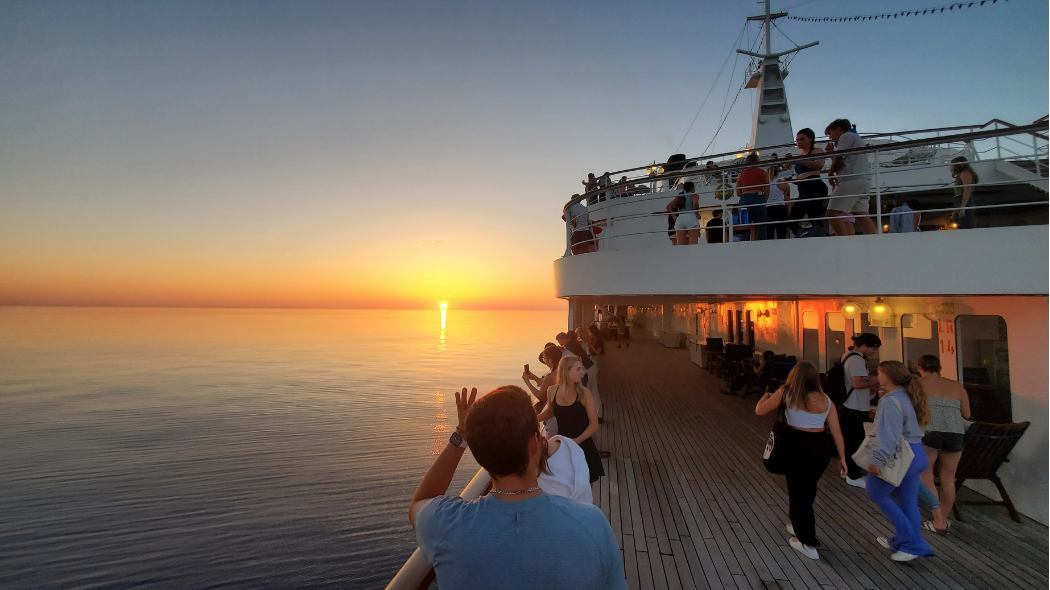
And, like any morning, on your way to class, you look to one side and take in the breathtaking sight of the endless, unbroken ocean rolling gently all around you and the hundreds of other students, faculty and family members on board the cruise ship, countless miles from shore.
As far-fetched as that morning routine might sound, it’s a four-month-long reality for nearly 500 college students and around 30 faculty members each year, all thanks to a singularly unique study abroad program aptly named Semester at Sea.
While the majority of study abroad experiences see those who sign up spending most of their time based in a single country, Semester at Sea provides participants with a semester-long journey around the world. Classes are conducted while the boat is traversing the open ocean and travel opportunities are available at the 10-12 countries the ship visits during the voyage.
During most semesters, Steven Anderson, Ph.D., serves as a professor of Earth Sciences in the University of Northern Colorado (UNC)’s College of Natural and Health Sciences. But every few years, Anderson takes to the seas, joining faculty members from across the country for some open ocean education with Semester at Sea.
“It’s an entirely different model of teaching and learning — one that’s unique and highly impactful, not just for the students, but for the faculty, the staff and the families that travel with them,” Anderson said.
______________________________________
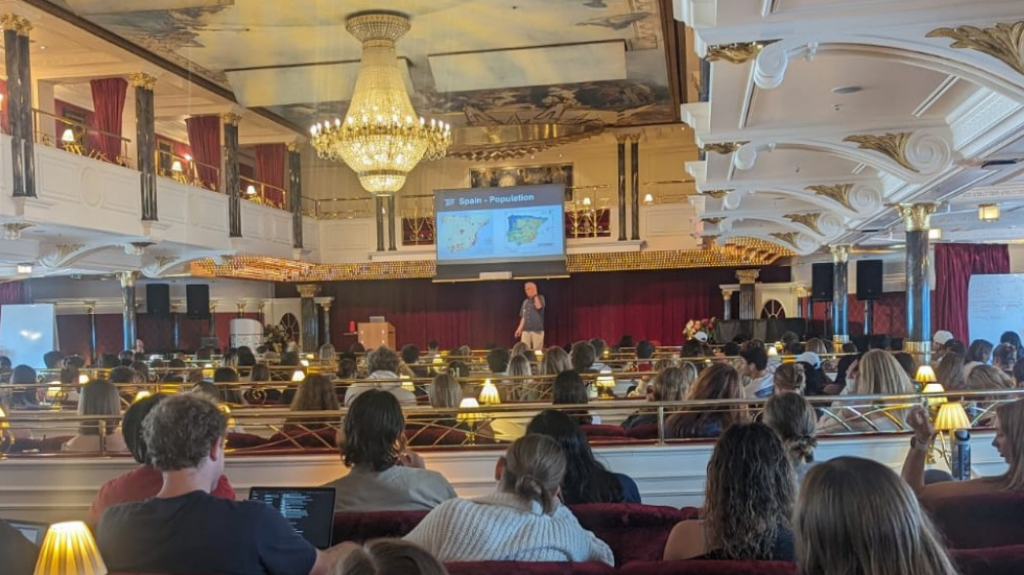
Most recently, Anderson participated in the Spring 2026 voyage, teaching a total of three courses — one on introductory geology, one on geologic hazards and one on sustainability — in the floating classrooms aboard the program’s ship, the MV World Odyssey.
“There are some unique challenges that the semester presents,” Anderson said. “Trying not to throw up is always an interesting hurdle. We actually had to cancel class one day because we got caught on the edge of a typhoon near Madagascar. We were getting tossed up on waves like, 20 feet high, and several students couldn’t even leave their cabins because they were so sick.”
Thankfully, Anderson said there are a few extra days each year built into the schedule to accommodate for situations like that.
On the other side of the coin, the experience provides both students and faculty alike a one-of-a-kind educational experience and the chance to participate in cultural exchanges in nearly a dozen different countries.
______________________________________
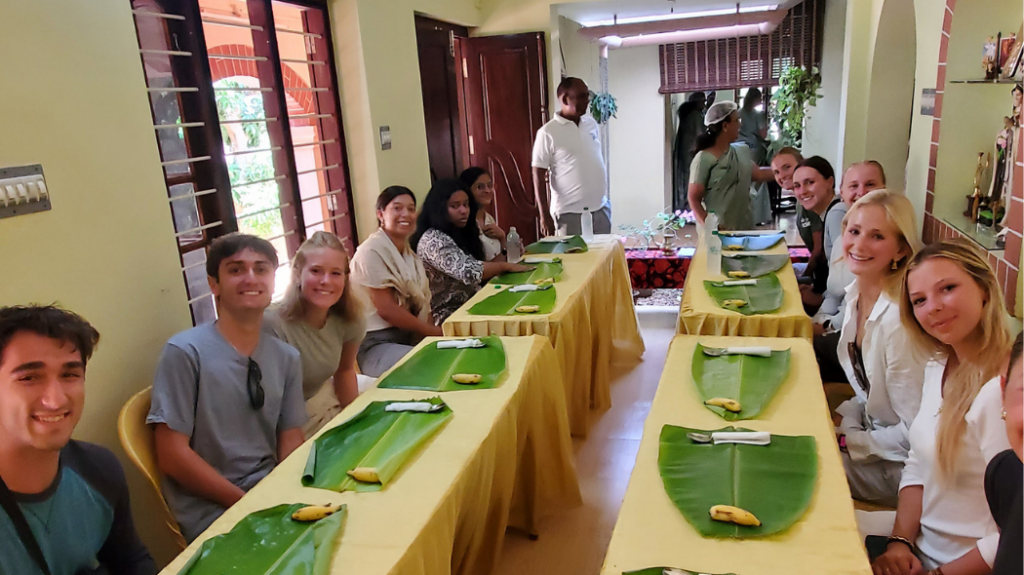
“We go to rich countries, poor countries, democratic countries, communist countries. Everywhere we go, we meet people and see glimpses into their lives. It leaves a real mark on the students, and on the faculty, too,” Anderson said.
Emily Jenson can attest to that.
Jenson, a junior studying Sport and Exercise Science at UNC, also took part in this spring’s voyage, and said the experience was unlike anything she’d ever done before.
“Before I went, everyone I’d talked to about it said it was one of the best things they’d ever done. And now having done it, that couldn’t be more true. I have no regrets. It’s honestly hard to describe sometimes how impactful it was,” Jenson said.
Jenson first set her sights on Semester at Sea when her older sister participated in the program while Jenson was still a sophomore in high school. Based on her sibling’s glowing review of the experience, she knew she had to give it a try when her time rolled around.
______________________________________
The semester wasn’t without its challenges for both Anderson and Jenson; aboard the ship, passengers are almost entirely without Wi-Fi. Students receive seven minutes of online access per day, and faculty members aren’t much better off, having to teach lessons largely without the help of the internet.
“It was kind of a struggle at first. My sister had prepared me a lot, but it was still hard,” Jenson said. “But it made me live outside of my comfort zone. I had to make new friends from all across the country, connect with people from all around the world, and get to bond with professors in a way that is so different from any sort of land campus.”
During the trip, Anderson and Jenson met in an airport in Malaysia, both flying back from an island excursion during one of the ship’s stays in port. Being from entirely different academic areas back at UNC, the two would likely never have met otherwise.
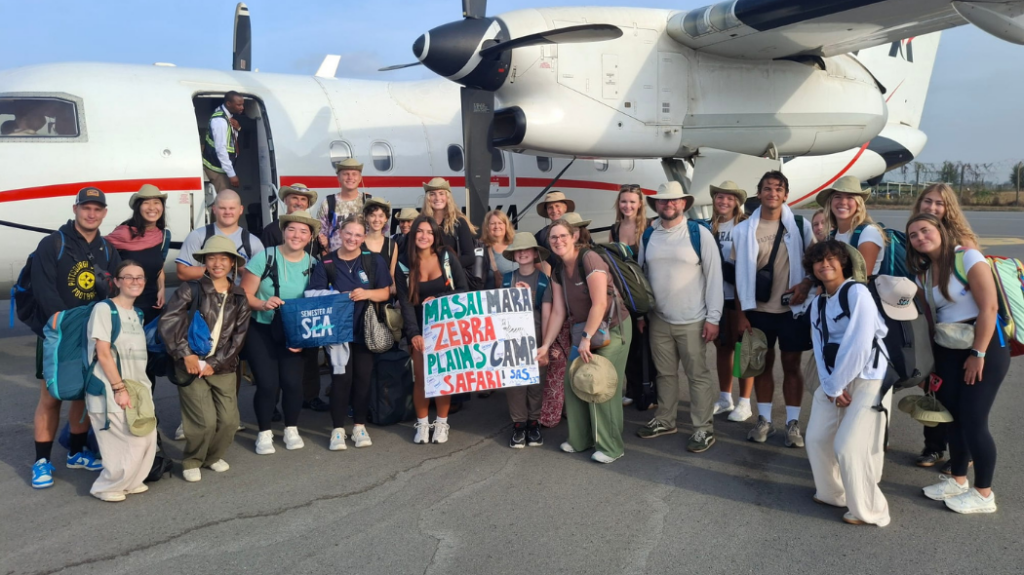
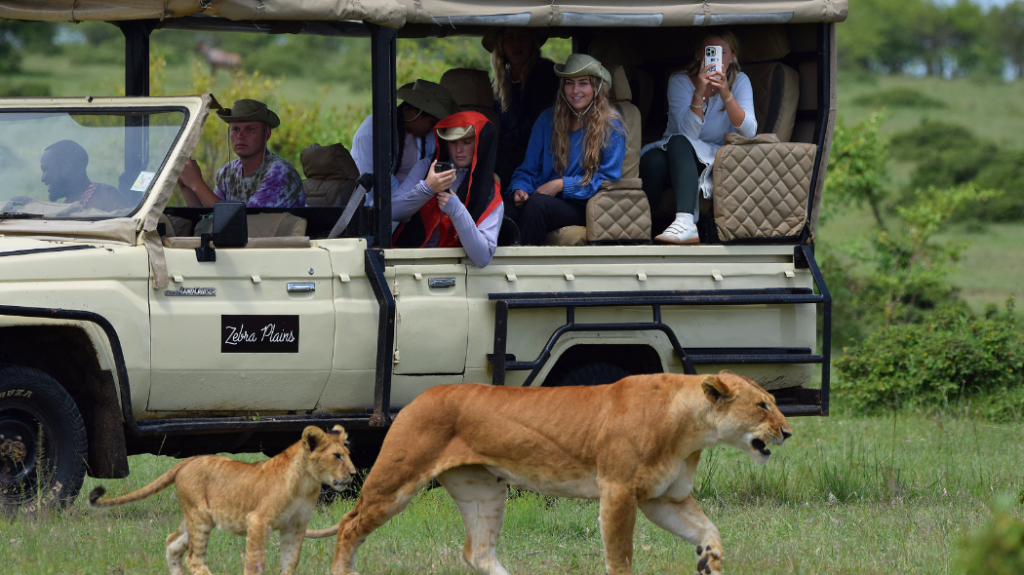
But thanks to Semester at Sea, a new connection was born, and the two even ended up participating in the same safari in Kenya later in the trip.
______________________________________
Chance encounters like that, coupled with the sheer variety of cultural and educational opportunities, are why Jenson has become a staunch supporter of Semester at Sea.
“People ask me about it a lot, especially when I wear this,” Jenson said, gesturing to the white t-shirt she was wearing. On its front is a small, blue, stamp-shaped logo featuring a cruise ship and the letters “SAS”. It’s covered in a multitude of patches, each from a different country Jenson visited during the voyage. “Every time, my response is the same: I can’t recommend it enough.”
Anderson concurs. He taught his first voyage with Semester at Sea in 2015, and since then, he has participated in a total of three sea-bound semesters.
During those trips, he’s had some truly memorable experiences, like the time he was teaching a class on hurricanes and, entirely by chance, one of the adult students in his class (one of several “Lifelong Learners” that participate in Semester at Sea on each voyage) was an ex-Air Force pilot who had flown into tropical storms in Guam for over 15 years as part of her job gathering scientific data before the days of weather satellites.
“She ended up giving an entire guest lecture, complete with photos and videos of her flights,” Anderson said.
Every semester has its challenges and diversions, though. And according to Anderson, some are more harrowing than others.
“On the 2023 voyage, we were traveling when war broke out in Israel. We were supposed to cut through the Suez Canal, but then the Yemeni rebels started shooting at ships in the Red Sea, so we had to completely divert our trip to avoid that,” Anderson said. “On other days, you’ll be in class and students will be able to look out the window and see a whale or a bunch of dolphins. That’s a smaller kind of diversion, and one I’m happy to run into every now and then.”
Ultimately, it’s the cultural exchanges, hands-on learning opportunities, unique chances to connect with students and one-of-a-kind international experiences that keeps Anderson coming back, year after year.
“It’s like 12 trips of a lifetime all rolled into one semester.”