
Article
April 7, 2026
Written by Duard Headley
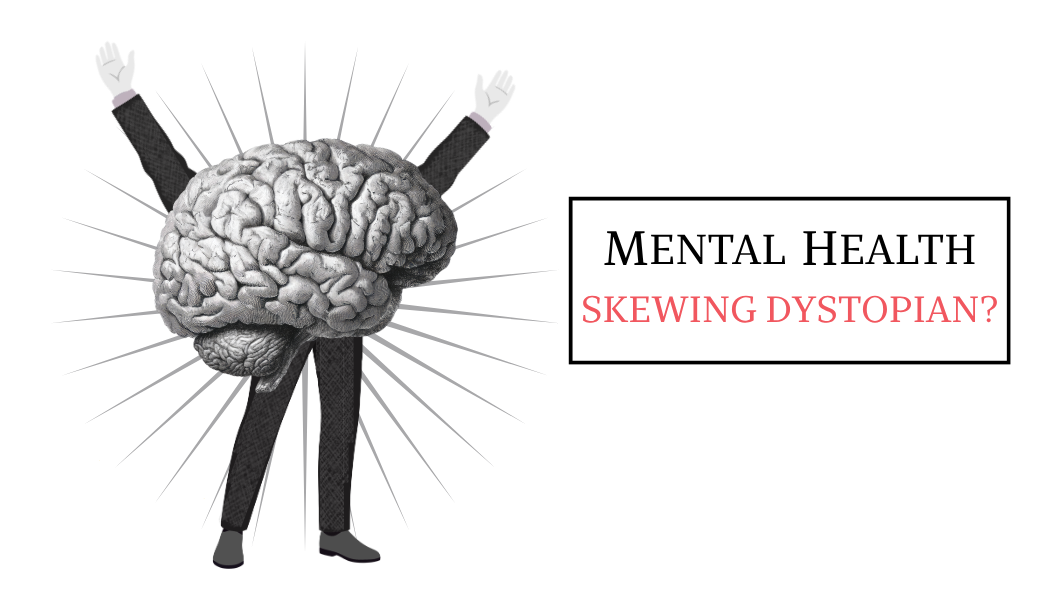
Is Mental Health in Schools Skewing Toward the Dystopian?
UNC faculty address school psychology and developmental concerns in the face of a “brave new world”
When it comes to dystopian stories – tales that tell of failed societies marked by disaster, suffering and oppression – perhaps the most well-known is George Orwell’s 1984. The famous novel has led to film adaptations, spawned memes and references, inspired similar works and buried its way into our collective pop culture consciousness.
If something is “Orwellian,” it is, by definition, dystopian.
But there is another book, not as widely known, but equally critical and, potentially, more relevant to the society and media landscape of the 21st century.
Brave New World by Aldous Huxley is a dystopian novel that, despite being written nearly 100 years ago, describes a world eerily similar to aspects of the modern day – one categorized by social conditioning, dehumanization, rampant consumerism and the erasure of all negative emotions through false, manufactured happiness.
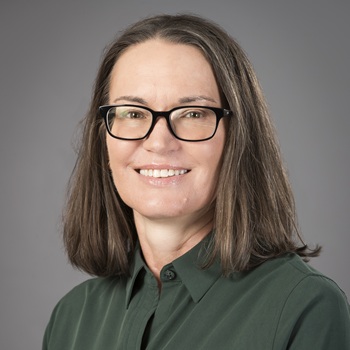
It is also a major inspiration for the recent work of David Hulac, Ph.D., professor and interim chair of the School Psychology Department at the University of Northern Colorado.
Recently, Hulac delivered a distinguished lecture at the annual National Association of School Psychologists convention in Chicago titled “101 Thoughts on Practicing School Psychology in a Brave New World.”
In particular, Hulac found the book’s discussion of manufactured happiness and desensitization to negative emotions relevant to certain aspects of modern mental health practices in schools.
“[The book] talks about a practice of societal dehumanization — and a big part of that applies to mental health and how we communicate about it in our real world,” Hulac said. “We often end up communicating that mental health equals happiness. But I want to remind people that mentally healthy people feel every emotion — through sadness, frustration, anxiety, happiness, elation and more, a complex, “normal” life is built.”
Hulac’s work in the field of School Psychology comes at a time when teen suicide risks, depression and anxiety are higher than ever. In 2021, Colorado Children’s Hospital declared a youth mental health crisis, reflecting the state’s placement as 42nd in the nation for pediatric mental health.
RELATED: School Psychologists in Short Supply as Youth Mental Health Concerns Increase
“Negative emotions are to be expected and shouldn’t be pathologized,” Hulac said. “Failure is an expected part of life, so we, as mental health professionals, shouldn’t just expect that we need to help students feel successful all the time.”
New World, New Minds
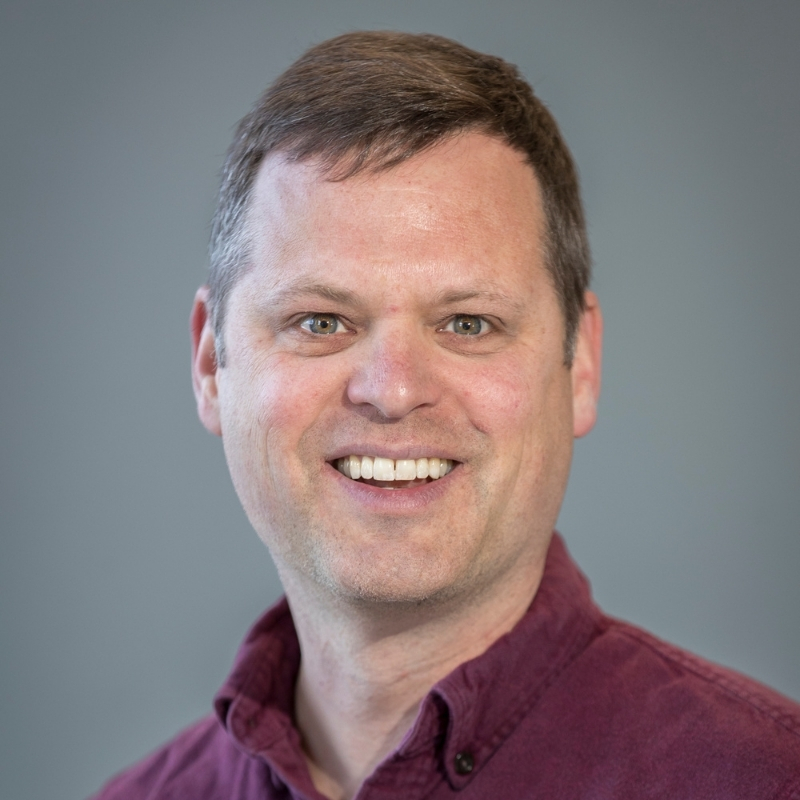
Hulac is far from the only educator concerned with the development of students’ minds. Thomas Smith, Ph.D., professor of Philosophy in the College of Humanities and Social Sciences, is another.
One of Smith’s areas of expertise is the study of philosophy of the mind – a field centered around understanding how our brains work, develop, think and feel on a conceptual level.
“From the perspective of philosophers of the mind, our brains fundamentally construct our identities,” Smith said. “As an educator, when I’m working with students, it’s essential to understand that I’m working with other human beings who are actively in the process of constructing the idea of themselves as human beings.”

Smith said he’s concerned that the digital-first, high-speed information reality of the modern media landscape might be negatively impacting how students are able to grow and connect with one another. Drawing on his philosophical knowledge, Smith referenced the ancient story The Ring of Gyges by Greek philosopher Plato.
To make a long story short, in the tale, a shepherd finds a magical ring that can make him invisible. Using his newfound power, he fulfills a handful of selfish desires; murdering the king and stealing both the throne and the queen’s hand.
“The idea that the story puts forth is that people will only behave well or ‘morally’ if they know they’re being watched,” Smith said. “I think we can draw a straight line from that concept to our world today, where social media allows people to essentially be invisible or anonymous online.”
Hulac shares Smith’s concerns, citing the vast landscape of the modern online world as something potentially damaging to students’ ability to lead mentally-healthy lives. He believes that, for children to grow into versatile, resilient people, escape from the anonymous online echo chamber is essential.
“The thing that I’m worried about is the ‘Brave New Worldification’ of our media experience,” Hulac said. “We’re now able to cultivate the media we see, consciously or not, so that it agrees with and reaffirms us, which makes it harder and harder to disagree. I think we’re nicer to each other than we ever have been, but we can’t handle discourse and disagreements – they feel devastating.”
But if the “Brave New Worldification” of the online world is a rising concern for students’ mental health, what can be done to nudge their development back in the right direction?
“I’m seeing a lot more advocacy out there – both from parents and others. There’s a stronger-than-ever expectation that students need some mental health care, and that’s great, of course,” Hulac said. “Where the struggle occurs is in making sure that care is timely, high-quality and not fragmented.”
Insufficient Accommodations
Unfortunately, according to Hulac, some mental and physical health care provided in schools is just that – fragmented.
Recent efforts in schools have focused largely on accommodations – tailored supports/modifications that allow students with disabilities or other challenges to overcome or work around those challenges.
“When we talk about accommodations, think of things like glasses or wheelchairs that enable people to participate functionally in everyday life,” Hulac said. “The same idea is applied to curriculum in schools.”
While Hulac believes accommodations can certainly be beneficial in many circumstances, he expressed concern over their ability to address the long-term needs of the student.
“What accommodations don’t do is strengthen. Take, for example, someone who has flat feet. Accommodations are needed in the form of orthotics, but we also need to strengthen the muscles in their feet and legs – helping them beyond just accommodating them,” Hulac said. “The same is true for mental health. Shortened assignments may certainly help a student complete some of their work, but this accommodation may fail to provide the practice opportunities that many students with disabilities need to learn new skills.”
Returning to his desire for students to experience a wide range of things during their time in school in order to grow and develop both as learners and as people, Hulac said more than just accommodations are needed.
“Sometimes, in my field, we recommend accommodations that may be appropriate, but the level of accommodations can sometimes be excessive,” Hulac said. “If we only accommodate, students don’t strengthen; they don’t learn to cope or thrive.”
A Brave New Future
Month after month, year after year, it can feel like the future is arriving more rapidly than ever.
On top of the growing youth mental health crisis previously mentioned, studies have shown a steady decline in our attention spans, increasing issues building relationships and a massive spike in the amount of advertisements and consumerism-centric media we’re shown daily.
At a time that, in many ways, feels increasingly like the future described in Huxley’s Brave New World, what can be done to push back against dystopia?
From an educational perspective, it’s about digging deeper, striking a balance and fostering the “human” element within students.
According to Hulac, that starts with taking a closer look at the levels of care provided in schools.
“What we have now is a lot of emphasis placed on smaller, accommodation-type care and then, in extreme cases, limited options for students who might need very intensive, high-level care,” Hulac said. “We’re almost completely skipping the middle ground, which is where most students exist. We need more options to provide coping, skill-building and experiential care – a therapy equivalent.”
While it might seem like a “middle ground” option for experiential care would only serve to bridge the gap between the existing structures already in place in schools, Hulac is convinced it would do considerably more.
In fact, he believes providing students with specific, intentional, but not overwhelming options for coping and growth would go a long way toward addressing not only mental health, but something fundamentally human.
“By presenting this landscape to kids where their only other option beyond surface-level accommodations is really intensive methods, we take away their ability to make what I like to call the ‘stupid, romantic decisions’ that adolescents do and should make – we deny them the chance to fail, to mess up and to grow from it.”
After all, isn’t failure and the growth that follows it one of humanity’s most enduring characteristics?
Hulac and Smith agree that without the messier parts of life, it’s significantly harder for students to grow into imperfect, yet well-adjusted adults – and that happiness is just a single part of that growth.
“Aristotle said that the ‘end goal’ of human existence is eudaimonia, which is sometimes translated as happiness, but that’s not the whole of it. It’s more accurate to define it as flourishing,” Smith said. “We can help students when they are struggling without completely sheltering them. When you’re carrying a heavy burden, it’s difficult to flourish.”
For every sign that our world is sliding towards those of 1984 and Brave New World, there’s a signal that we aren’t there quite yet – from quiet moments of human connection to larger trends of growing empathy.
To Hulac, those signals, coupled with the educational awareness and effort necessary to foster them, are the path forward from here.
“If we teach people how to build relationships and genuine moments, which requires deliberate listening, thoughtful reflection and willingness to grow and change, that, in my mind, is the anti-dystopia.”