
Hidden
September 1, 2026
Written by Duard Headley | Translated by Carlos José Pérez Sámano
Crossing the Ocean with the Red Cross
Cruzando el océano con la Cruz Roja
Peyton Eitemiller, ‘26, traveled from land-locked Colorado to an island in the western Pacific to provide aid, prevent harm and participate in community
Around the world, natural risks, dangers, resources and needs of the community can vary wildly.
Here in Colorado, some of the most significant and persistent hazards are wildfires, landslides, droughts and even the occasional flash flood. But for somewhere like the island country of the Republic of Palau, the concerns couldn’t be more different, as rising sea levels, tidal surges and typhoons number among the most common.
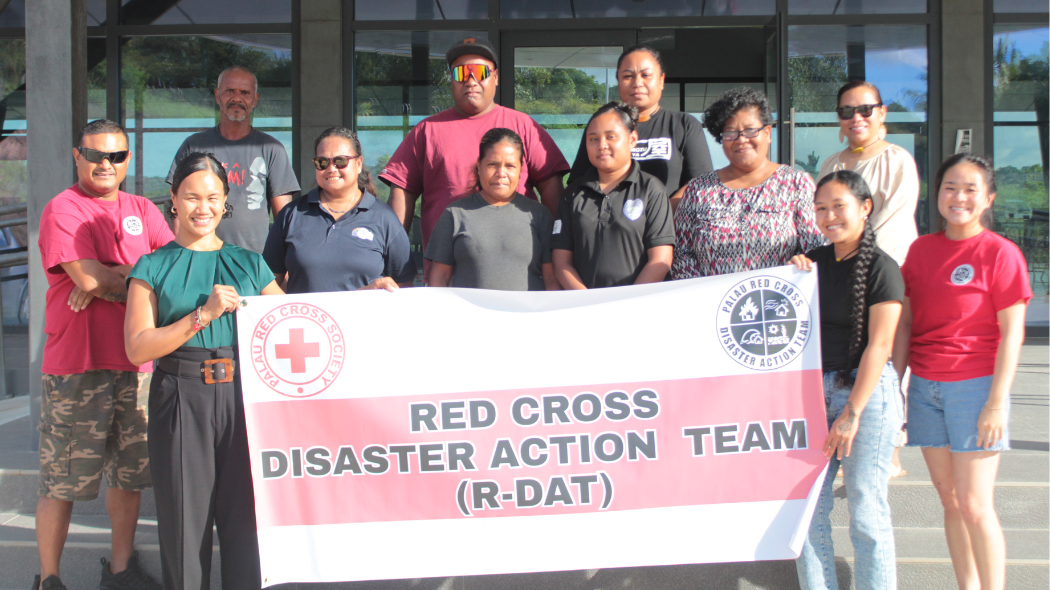
So, when Peyton Eitemiller, ‘24, MPH ‘26, shipped out this summer with the Red Cross on a disaster management internship to the island nation, not only did she face the challenge of cultural acclimation, she had to prepare to help mitigate a suite of natural dangers entirely different than any she’d encountered before.
But Eitemiller, a graduate of the Colorado School of Public Health (CSPH) at the University of Northern Colorado (UNC), was eager to step up to the task.
“Here in Colorado, we’re obviously completely landlocked,” Eitemiller said. “So, the idea of learning about disaster risk management in somewhere like Palau really appealed to me — it was a whole new domain of learning.”
When she arrived in the country, Eitemiller found her days filled with a mix of observation, analysis and hands-on experience. While some of her time was spent at the Red Cross’ headquarters in the capital city of Koror, entering data and drafting reports, she got plenty of experience away from the desk as well.
“Throughout my time studying public health, cultural humility was always instilled in us. We’re taught to approach all communities with open minds and no judgement.”
Although thankfully, no major disasters occurred in Palau while Eitemiller was there, she still accompanied local Red Cross members to a number of smaller incidents where she came face-to-face with both the challenging realities and human resilience that so often intertwine during times of crisis.
One incident that stood out in particular was when she was called to help bring aid to the site of a local house fire just before dawn.
“They said the fire had started at around three in the morning,” Eitemiller said. “We passed the fire station on the way to their house – it was only about 15 minutes away. But help didn’t arrive until an hour after the fire started. That was really shocking to me.”
Equally impactful was how the community had banded together to mitigate the fire and support the affected family until help could get there.
“It drove home how community-oriented the culture there was,” Eitemiller said. “Everybody was like family, helping each other out and banding together to mitigate difficulties in the time it took help to arrive. Small things that made a big difference — it was incredible to witness.”
For Eitemiller, experiences like that are exactly the reason she’s passionate about going into the field of public health. When people, both locals and non-residents alike, are able to come together and support one another, it represents the best of what humanity can be.
RELATED: Faculty Fulbrights Offer Global Journey WIth a Personal Impact
Whether at the site of an emergency, behind her desk or out and about in the island’s communities, Eitemiller always strove to help however she could while, importantly, staying humble and open-minded.
“Throughout my time studying public health, cultural humility was always instilled in us. We’re taught to approach all communities with open minds and no judgement,” Eitemiller said. “One of my professors likes to say, ‘we have two ears and one mouth for a reason.’”
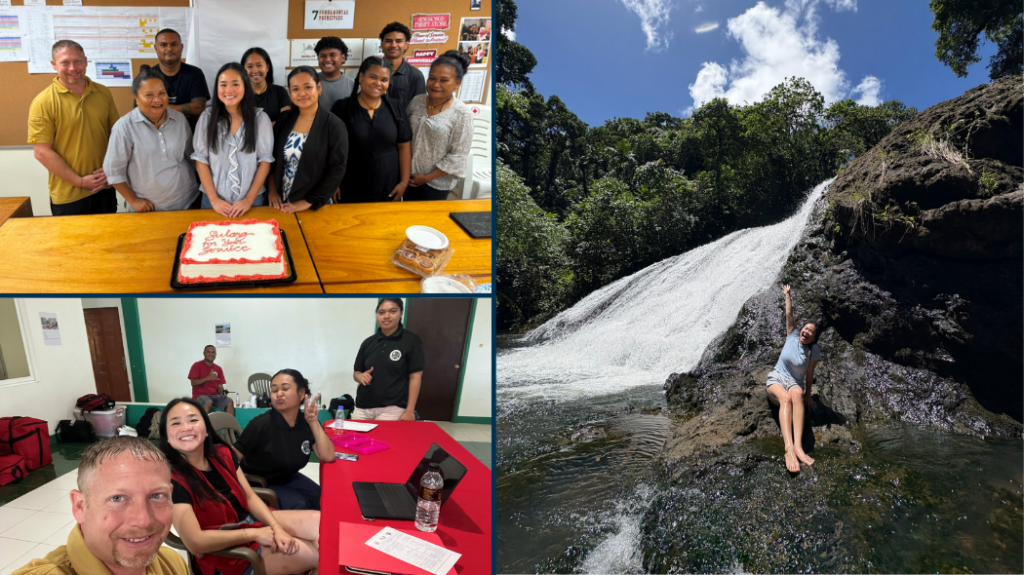
By keeping that approach in mind, Eitemiller said she was able to learn so much and have some fascinating new experiences along the way — sometimes at the same time.
“I was out with a local Red Cross worker, and she got into a casual conversation with someone she ran into in the market. When she was done, she came back and was like, ‘oh yeah, that was the governor.’ Other people we met would casually talk about the president of the country going grocery shopping in their neighborhood.”
Reflecting on her internship, the thing about Palau that stuck with Eitemiller most was the genuine humanity and sense of community that she found everywhere she went.
Despite the fact that she came into the country as part of a high-profile international organization like the Red Cross, she didn’t feel like there were barriers between the aid workers and those they served any more than there were between the county’s president and the people he shopped for groceries alongside.
“Looking back on it, you realize that names are just names,” Eitemiller said. “The Red Cross, the World Health Organization, the United Nations; they’re all just made of people; their titles don’t define what their purpose is at the end of the day. They’re all just there, working towards the same purpose of being there for the community. I think that’s really cool.”