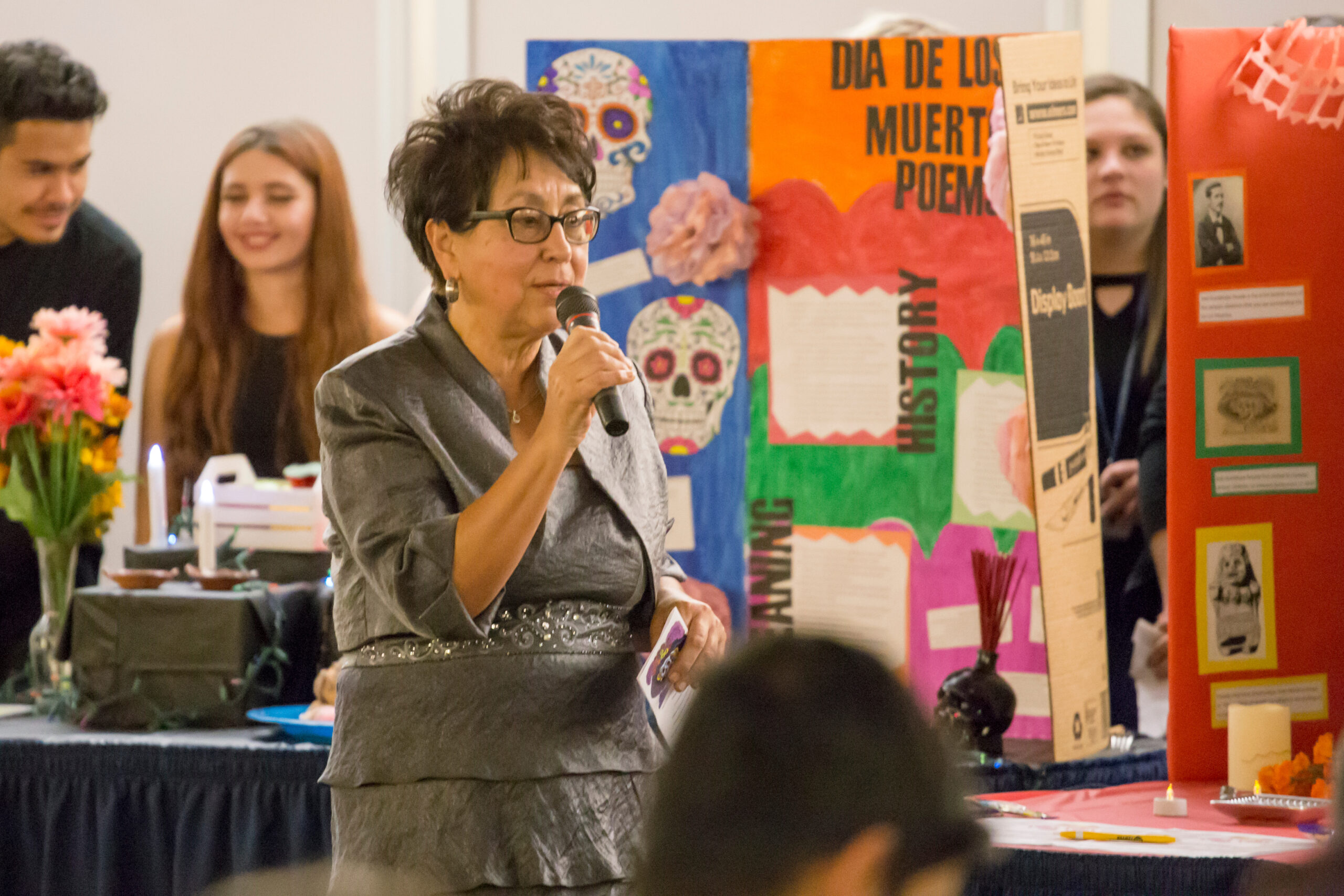
Professor Emerita Priscilla Falcón, Ph.D., celebrates the 20th anniversary of Día de los Muertos in 2016
Article
November 2, 2026
Written and Translated by Carlos José Pérez Sámano
UNC Marks 30 years of Día de los Muertos
La UNC celebra los 30 años del Día de los Muertos
Since 1996 this tradition has connected classroom learning with cultural expression, honoring beloved ones and building community.
Desde 1996, esta tradición ha servido para vincular el aprendizaje en el aula con la expresión cultural, rendir homenaje a los seres queridos y fomentar el espíritu de comunidad
For three decades, the University of Northern Colorado (UNC) has celebrated Día de los Muertos, a Mexican holiday honoring loved ones who have passed away by keeping their memories alive. What began in 1996 as a classroom project has grown into a longstanding campus tradition, bringing together students, faculty, families and the broader community through cultural expression and community participation to create a sense of belonging.
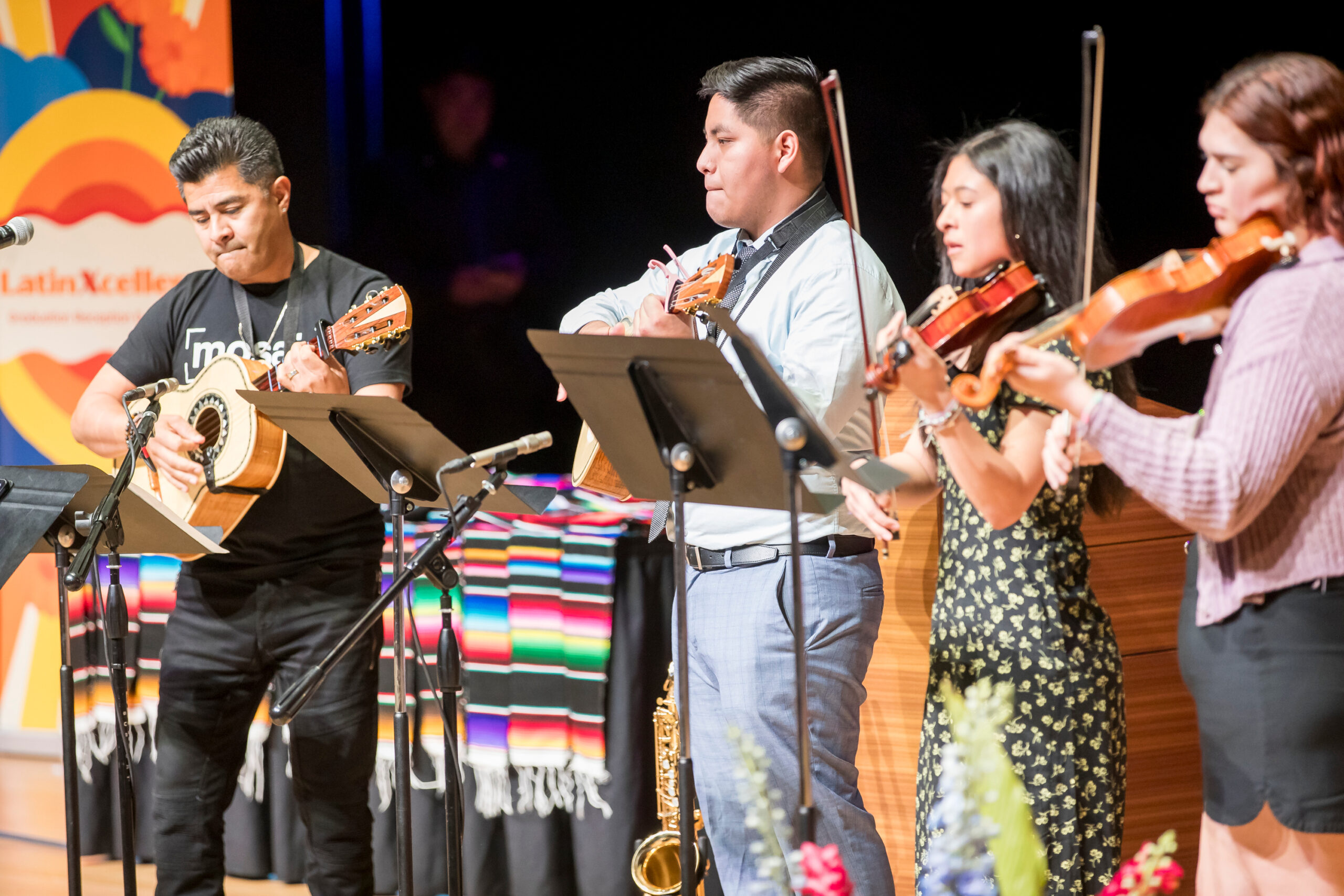
UNC will mark the celebration’s 30th anniversary on Tuesday, Nov. 3, from 5 – 8 p.m., at the University Center Ballrooms. The free, public event is planned to feature ofrendas (altars honoring deceased loved ones), music by the UNC Latin Beats ensemble and Salida del Sol Academy Mariachi Group, performances like Aztec dance from Grupo Tláloc, Folkroric dance from Greeley West , food and other cultural traditions. The public can bring a photo, a small memento, or a written note to remember loved ones to be added to the altars.
The celebration of Día de los Muertos is a joyful festivity. It is a celebration of life.
-David Barillas Chón, Ph.D.
According to Associate Professor Jonathan Alcántar, Chair of UNC’s Chicana/o and Latinx Studies (CLAS) department, the university’s Día de los Muertos celebration is one of the first and longest-running annual observances of this tradition in Colorado. The event reflects the department’s commitment to preserving cultural traditions, honoring ancestral legacies, and creating spaces within higher education where cultural identity, community engagement, and a sense of belonging are celebrated.
“Cultivating this type of tradition on our campus is a way of showing our students that we value their contributions, their culture and their presence at this university,” Alcántar said.
From the Classroom to the Community
UNC’s connection to the annual celebration began after Professor Emerita Priscilla Falcón, Ph.D., traveled to Mexico and observed Día de los Muertos firsthand. Inspired by what she saw, she brought the experience back to UNC, incorporating it into her Introduction to Mexican American Studies curriculum in 1996.
As part of their final projects, she had her students host their own classroom celebration, creating and presenting altars dedicated to historical figures or people they had studied during the course. The lesson offered students a way to apply what they learned in the classroom while exploring the symbolism and cultural significance of the celebration.
Over time, the event expanded beyond the classroom and its original academic focus. Since 2016, organizers have invited university groups, clubs and other organizations to participate in creating altars. Local high school and middle school students have also joined the celebration, extending the experience to younger generations learning about the tradition in their own classrooms.
Alcántar said the university’s longstanding commitment to recognizing Día de los Muertos reflects both the department’s continued relevance and its relationship with the communities it serves. Although the celebration has evolved in size and scope over the years, its core traditions have remained uninterrupted , even during the COVID-19 pandemic, when students continued honoring Día de los Muertos by creating altars in the university library.
The Mirror, November 1, 1996
The Mirror, October 27, 2000
The Mirror, October 30, 2006
The Mirror, October 27, 2010
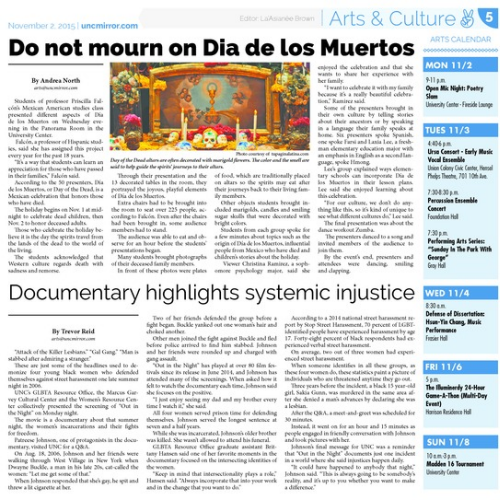
The Mirror, November 2, 2015
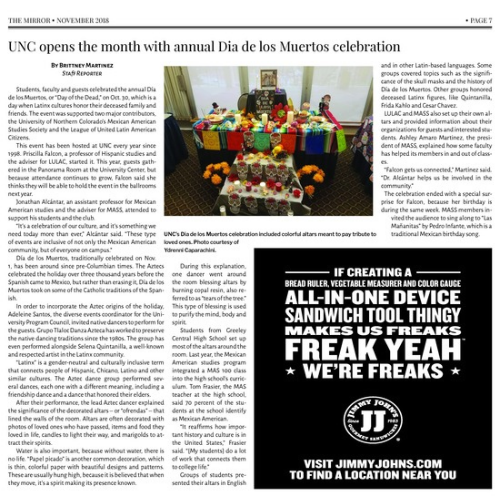
The Mirror, November 3, 2018
Archival images from the student newspaper The Mirror
The annual celebration has also provided opportunities to connect cultural practices with contemporary issues. In one year, students created a collective mural altar honoring migrants who lost their lives attempting to cross the U.S.-Mexico border. In 2021, students commemorated workers who died during the COVID-19 pandemic at Greeley’s JBS meatpacking plant. These altars were later exhibited at History Colorado in Denver, extending the students’ work of remembrance beyond the university and into the broader community.
Learning Through Remembrance
For David Barillas Chón, Associate Professor in UNC’s Department of Chicana/o and Latinx Studies and coordinator and co-organizer this year’s celebration, the event provides an important educational opportunity for students to deepen their understanding of the cultural and historical significance of Día de los Muertos.
In his classes, students learn the symbolic meaning behind the elements of this celebration while researching about important individuals or groups, for example those who have died while crossing into the United States, social activists or victims of genocide. Their work connects individual lives with broader questions about migration, immigration policy, racism and the circumstances that lead people to leave their home countries or defend certain causes.
The classwork combines research with remembrance. Students investigate the historical and political contexts surrounding a person’s death while honoring that person as an individual.
Andrés Mora, a Criminal Justice and Journalism major, has built an altar and participated in Día de los Muertos at UNC for the last three years.
He registered for the Chicano/Chicana Art and Culture course as an elective because he considers it part of his heritage.
“I believe that it is very important to engage in classes that reflect on race, ethnicity and culture,” said Mora. “Especially since we live in a political climate where those classes are actively defunded.”
Barillas Chón, whose own background informs his teaching and research on Indigenous communities, said these projects can help students recognize the humanity behind social issues such as migration debates and consider how greater awareness might influence their actions.
“I ended up making my altar in remembrance of Palestinian children and journalists who have been killed during the Palestinian genocide,” shared Mora.
The experience also connects academic learning with personal reflection. For students whose families have migration histories, Barillas Chón says the subject may feel particularly close to home. For others, it can offer a different perspective on experiences they may not encounter in their everyday lives.
“The celebration of the Day of the Dead doesn’t always have to be something sad, heavy or solemn,” said Barillas Chón. “It is also joyful, celebratory, even something to laugh and sing about, to share. It is a celebration of life.”
Visibility, Belonging and Continuity
Beyond its academic value, Día de los Muertos offers an opportunity for Latine communities to see their cultural traditions represented on campus.
For Paula Jaimes Ortiz this festivity is about finding other people on campus who look like her. Jaimes Ortiz is a Physics major from Colombia. She is also the president of the Chicano/a Latinx Student Society, a key partner for this annual event.
“Although I wasn’t used to celebrating it in Colombia, it is a celebration that we all Latinos recognize,” said Jaimes. “And it is a familiar way to be in the community and find other people with shared values.”
Barillas Chón described the celebration as a way to provide visibility and representation for communities that have historically faced persecution. He also emphasized that remembering ancestors is not an individual act alone, but a collective act of maintaining connections among families and communities.
“Although there are many ways to celebrate this festivity, with different cultural elements attached to it, remembering and honoring our ancestors is central to the different cultures that observe this day,” said Barillas Chón. “That is why it has been so well received across territories. It is about remembering where we come from in terms of our communities.
“For our communities, it is a way to show that we were here before, that we are here now, and that we will be here in the future,” said Barillas Chón.
For Alcántar, the university’s 30-year history with the event represents progress in recognizing the importance of cultural traditions and the contributions of Latine students. He also sees the celebration as an opportunity to continue exploring how students’ backgrounds and experiences can be reflected in university curricula.
Thirty years after Falcón introduced the tradition into the classroom, Día de los Muertos continues to connect education with cultural memory. Through the work of students, faculty and community participants, the celebration honors those who came before while creating opportunities for new generations to learn, share their stories and find a place for their culture at UNC.
Durante tres décadas, la Universidad del Norte de Colorado (UNC) ha celebrado el Día de los Muertos, una festividad mexicana en la que se rinde homenaje a los seres queridos que ya no están entre nosotros, manteniendo vivos sus recuerdos. Lo que comenzó en 1996 como un proyecto de clase se ha convertido en una tradición consolidada en el campus, que reúne a estudiantes, profesorado, familias y a la comunidad en general a través de la expresión cultural y la participación comunitaria para crear un sentido de pertenencia.
La UNC celebrará el 30 aniversario de esta festividad el martes 3 de noviembre, de 5 a 8 pm., en los salones de baile del University Center. Esta fiesta es abierta al público y gratuita y contará con ofrendas (altares en honor a los seres queridos fallecidos), música a cargo del conjunto «Latin Beats» de la UNC y del grupo mariachi de la Academia Salida del Sol, danza azteca del Grupo Tláloc y danza folclórica de Greeley West, además de comida y otras tradiciones culturales. El público puede traer una foto, un pequeño recuerdo o una nota escrita en memoria de sus seres queridos para añadirlos a los altares.
La celebración del Día de los Muertos es alegre y festiva. Es una celebración de vida.
-David Barillas Chón, Ph.D.
Según el profesor asociado Jonathan Alcántar, Ph.D., director del departamento de Estudios Chicanos y Latinx (CLAS) de la UNC, la celebración del Día de los Muertos de la universidad es una de las primeras y más antiguas conmemoraciones anuales de esta tradición en Colorado. El evento refleja el compromiso del departamento con la preservación de las tradiciones culturales, el homenaje al legado ancestral y la creación de espacios dentro de la educación superior donde se celebren la identidad cultural, la participación comunitaria y el sentido de pertenencia. «Fomentar este tipo de tradición en nuestro campus es una forma de mostrar a nuestros estudiantes que valoramos sus aportaciones, su cultura y su presencia en esta universidad», afirmó Alcántar.
Del salón de clases a la comunidad
La vinculación de la UNC con esta celebración anual comenzó después de que la profesora emérita Priscilla Falcón, Ph.D, viajara a México y viviera en primera persona el Día de los Muertos. Inspirada por lo que vio, trajo esta experiencia a la UNC e incorporó esta celebración al plan de estudios de su asignatura «Introducción a los Estudios Mexicano-Americanos» en 1996.
Como parte de sus proyectos finales, pidió a sus alumnos que organizaran su propia celebración en el aula, creando y presentando altares dedicados a personajes históricos o a personas que habían estudiado durante el curso. La actividad ofreció a los alumnos una forma de aplicar lo aprendido en el aula al tiempo que exploraban el simbolismo y el significado cultural de la celebración.
Con el paso del tiempo, el evento se ha extendido más allá del salón de clases y de su enfoque académico original. Desde 2016, los organizadores han invitado a grupos universitarios, clubes y otras organizaciones a participar en la creación de altares. Los alumnos de primarias, secundarias y preparatorias locales también se han sumado a la celebración, ampliando la experiencia a las generaciones más jóvenes, que aprenden sobre la tradición en sus propios salones de clase.
Alcántar afirmó que el compromiso histórico de la universidad con el reconocimiento del Día de los Muertos refleja tanto la relevancia continua del departamento como su relación con las comunidades a las que atiende. Aunque la celebración ha evolucionado en cuanto a su tamaño y alcance a lo largo de los años, sus tradiciones fundamentales se han mantenido ininterrumpidas, incluso durante la pandemia de COVID-19, cuando los estudiantes continuaron honrando el Día de los Muertos creando altares en la biblioteca de la universidad.
The Mirror, 1 de noviembre de 1996
The Mirror, 27 de october de 2000
The Mirror, 30 de octubre de 2006
The Mirror, 27 de octubre de 2010
The Mirror, 2 de noviembre de 2015
The Mirror, 3 de novimbre de 2018
Imágenes de archivo del periódico estudiantil The Mirror
Esta celebración anual también ha brindado oportunidades para vincular las prácticas culturales con temas de actualidad. Un año, los estudiantes crearon un altar mural colectivo en homenaje a los migrantes que perdieron la vida al intentar cruzar la frontera entre Estados Unidos y México. En 2021, los estudiantes conmemoraron a los trabajadores que fallecieron durante la pandemia de COVID-19 en la planta cárnica de JBS en Greeley. Estos altares se expusieron posteriormente en History Colorado, en Denver, lo que permitió que el trabajo de recuerdo de los estudiantes traspasara los límites de la universidad y llegara a la comunidad en general.
Aprender a través del recuerdo
Para David Barillas Chón, Ph.D., profesor asociado del Departamento de Estudios Chicanos y Latinx de la UNC y coordinador y coorganizador de la celebración de este año, el evento supone una importante oportunidad educativa para que los estudiantes profundicen en su comprensión de la importancia cultural e histórica del Día de los Muertos.
En sus clases, los alumnos aprenden el significado simbólico que se esconde tras los elementos de esta celebración, al tiempo que investigan sobre personas o grupos importantes, como, por ejemplo, quienes han fallecido al cruzar a Estados Unidos, activistas sociales o víctimas de genocidio. Su trabajo relaciona las vidas individuales con cuestiones más amplias sobre la migración, la política de inmigración, el racismo y las circunstancias que llevan a las personas a abandonar sus países de origen o a defender determinadas causas.
El trabajo en clase combina la investigación con el recuerdo. Los alumnos investigan los contextos históricos y políticos que rodean la muerte de una persona, al tiempo que rinden homenaje a esa persona como individuo.
Andrés Mora, estudiante de Justicia Penal y Periodismo, ha montado un altar y ha participado en el Día de los Muertos en la UNC durante los últimos tres años.
Se inscribió en la clase de “Arte y cultura chicana” como optativa porque la considera parte de su herencia cultural.
«Creo que es muy importante asistir a clases que reflexionen sobre la raza, la etnia y la cultura», afirmó Mora. «Sobre todo porque vivimos en un clima político en el que se están recortando activamente los fondos destinados a esas clases».
Barillas Chón, cuya propia trayectoria influye en su docencia e investigación sobre las comunidades indígenas, señaló que estos proyectos pueden ayudar a los estudiantes a reconocer la humanidad que hay detrás de cuestiones sociales como los debates sobre la migración y a reflexionar sobre cómo una mayor concienciación podría influir en sus acciones.
«Al final, hice mi altar en memoria de los niños y periodistas palestinos que han sido asesinados durante el genocidio palestino», contó Mora.
La experiencia también vincula el aprendizaje académico con la reflexión personal. Para los estudiantes cuyas familias tienen antecedentes migratorios, Barillas Chón afirma que el tema puede resultarles especialmente cercano. Para otros, puede ofrecer una perspectiva diferente sobre experiencias con las que quizá no se encuentren en su vida cotidiana.
«La celebración del Día de los Muertos no tiene por qué ser siempre algo triste, pesado o solemne», afirmó Barillas Chón. «También es alegre, festiva, incluso algo por lo que reír y cantar, algo que compartir. Es una celebración de la vida».
Visibilidad, sentido de pertenencia y continuidad
Más allá de su valor académico, el Día de los Muertos ofrece a las comunidades latinas la oportunidad de ver representadas sus tradiciones culturales en el campus.
Para Paula Jaimes Ortiz, esta festividad consiste en encontrar en el campus a otras personas que se parezcan a ella. Jaimes Ortiz es una estudiante de Física procedente de Colombia. También es la presidenta de la Asociación de Estudiantes Chicanos/as y Latinx, un socio clave para este evento anual.
«Aunque en Colombia no estaba acostumbrada a celebrarlo, es una festividad que todos los latinos reconocemos», afirma Jaimes. «Y es una forma familiar de formar parte de la comunidad y encontrar a otras personas con valores compartidos».
Barillas Chón describió la celebración como una forma de dar visibilidad y representación a las comunidades que, a lo largo de la historia, han sufrido persecución. También hizo hincapié en que recordar a los antepasados no es solo un acto individual, sino un acto colectivo destinado a mantener los lazos entre familias y comunidades.
«Aunque hay muchas formas de celebrar esta festividad, con diferentes elementos culturales asociados a ella, recordar y honrar a nuestros antepasados es fundamental para las distintas culturas que conmemoran este día», afirmó Barillas Chón. «Por eso ha tenido tan buena acogida en todos los territorios. Se trata de recordar de dónde venimos en lo que respecta a nuestras comunidades.
«Para nuestras comunidades, es una forma de demostrar que ya estábamos aquí antes, que estamos aquí ahora y que seguiremos aquí en el futuro», afirmó Barillas Chón.
Para Alcántar, los 30 años de historia de la universidad con este evento representan un avance en el reconocimiento de la importancia de las tradiciones culturales y de las aportaciones de los estudiantes latinos. Además, considera que esta celebración es una oportunidad para seguir explorando cómo los orígenes y las experiencias de los estudiantes pueden reflejarse en los planes de estudios universitarios.
Treinta años después de que Falcón introdujera esta tradición en las aulas, el Día de los Muertos sigue vinculando la educación con la memoria cultural. Gracias al trabajo de los estudiantes, el profesorado y los participantes de la comunidad, la celebración rinde homenaje a quienes nos precedieron, al tiempo que crea oportunidades para que las nuevas generaciones aprendan, compartan sus historias y encuentren un lugar para su cultura en la UNC.


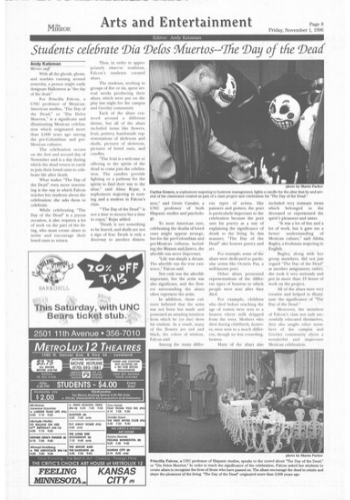 The Mirror, November 1, 1996
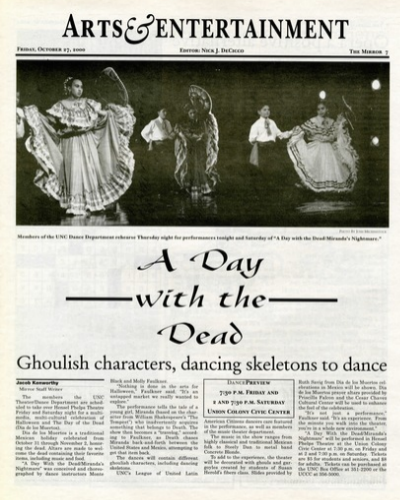 The Mirror, October 27, 2000
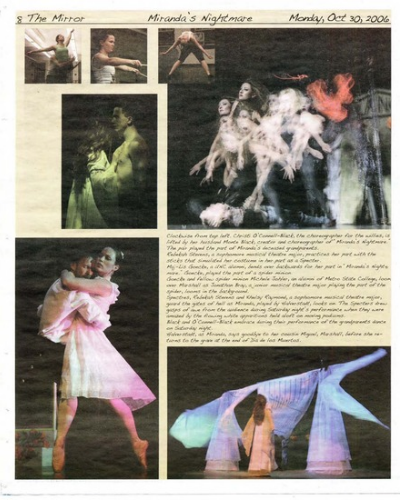 The Mirror, October 30, 2006
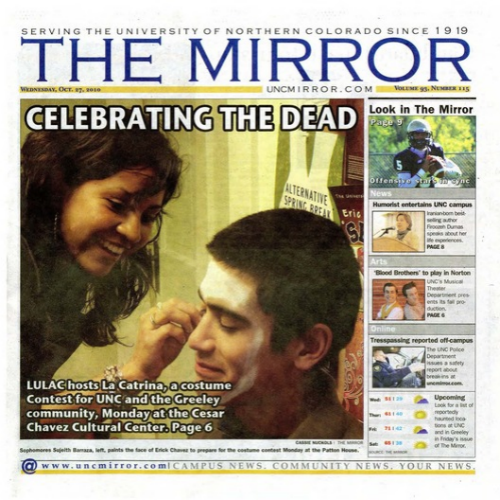 The Mirror, October 27, 2010
 The Mirror, November 2, 2015
 The Mirror, November 3, 2018