Podcast
November 11, 2026
Belonging and Servingness
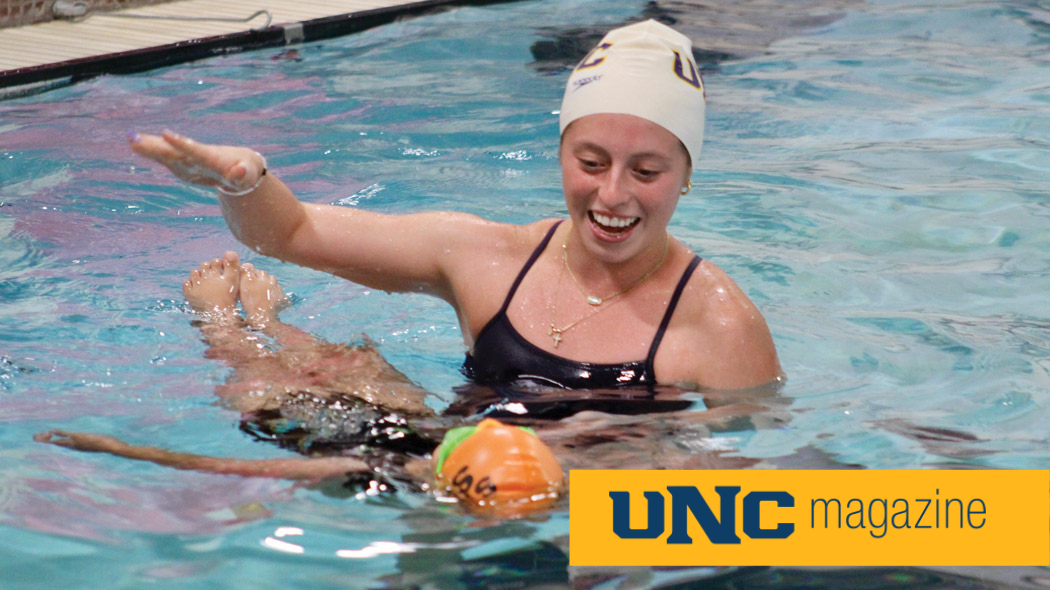
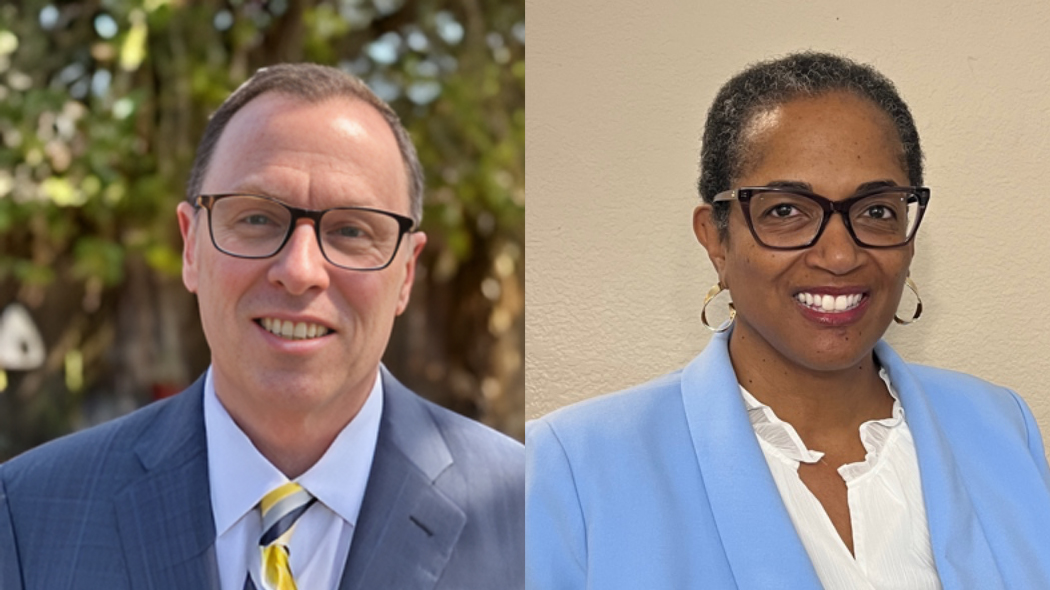
What does it take to make students feel like they truly belong at UNC? In this episode of Bear in Mind, host Kinsley Walker sits down with Keith Humphrey, Ph.D., Vice President of Student Affairs, and Tamara White, Ph.D., Executive Director for Belonging and Servingness, to talk about the future of the UNC student experience.
From helping students reach graduation to building stronger campus communities, the conversation explores how UNC is working to make students feel supported, valued and connected. They also discuss the importance of student engagement, Hispanic-serving institution initiatives, Bear Connect and how students can find their place on campus.
Whether you’re a first-year student, a transfer student or a longtime Bear, there’s a place for you at UNC. Go Bears!
Welcome back to Bear in Mind. My name is Kinsley Walker, and I’m your host. Today I’m here with Tamara White, Ph.D., the Executive Director for Belonging and Servingness, and Keith Humphrey, Ph.D., the Vice President of Student Affairs. How are you guys doing today?
Keith Humphrey, Ph.D.: Great, Kinsley. Thanks for having us
I got to start off asking, did you guys vote today?
Tamara White, Ph.D.: Absolutely
Keith Humphrey, Ph.D.: I voted a few weeks ago
I got my sticker today, and I was like, I need to wear my sticker everywhere
Keith Humphrey, Ph.D.: I had my sticker on. I remembered it and saved it, but it’s peeled off.
Is it nerdy if I wear my sticker everywhere? But then I’m like, no, it’s not nerdy. All righty. So, Keith, I’ll start my first question with you. You’ve been at UNC for a little bit now, and what have you learned about our students that have shaped your goals in student affairs?
Keith Humphrey, Ph.D.: Sure. So, I’ve been at UNC for about a year and a half, Kinsley. I haven’t learned things that I didn’t know about them through the search process. What I’ve confirmed is that our students are incredibly smart, tremendously hardworking, care deeply about this community and each other, and a lot of them are making a lot of personal sacrifices to be here at UNC. They work a lot outside of the classroom, so we are trying to reposition the student experience at UNC so that everything we’re doing from the moment they set foot on campus for new student orientation helps them get to graduation. That is our single most focused goal for students—helping them get to graduation. We’re also redesigning student engagement models the ways that students interact with programs and services so that they are accessible to them at all times a day in the modalities they want to be engaged with at UNC. We’re seeing great results from our students. They are showing up. They are participating in Bear Connect; our events are growing in numbers. So what I knew before I came here is if we apply a little more attention, resources, and love to them, they are showing up for events and programs on campus.
I talked to Keri Knight last semester about all the stuff on Bear Connect. Have you guys seen an increase in the stuff that is being put on Bear Connect this semester?
Keith Humphrey, Ph.D.: Every day we see more and more going on Bear Connect across campus, and so it’s a wonderful tool. It’s great for anyone to check out. I know community members who can go on Bear Connect and see what’s going on when they want to come to campus. So it’s a fantastic thing for students. I’m really proud of our students for adopting it and using it strongly
It’s definitely an amazing service. If any student wants to go out and explore a new thing or hobby or anything like that, there’s Bear Connect.
Keith Humphrey, Ph.D.: Yes, 100%
You said that you are working on always the second people step on campus on getting them to that graduation. How are you working on that?
Keith Humphrey, Ph.D.: So we were looking at everything that we do from a data-driven perspective to make sure that what we’re doing for students is helping them learn and grow as individuals, connecting them to their fellow bears, and that it is having a positive impact on their academic experience. So we not only look at the data as it relates to students returning and their ultimate graduation, how satisfied they are, and how they are connecting with each other; we know that when we create conditions for students to come together in community, that magical things happen. Those magical things help students stay enrolled in college and ultimately earn their degree.
What do you think that UNC should work on or could do better when it comes to supporting students and helping them feel more connected and ingrained in the university?
Keith Humphrey, Ph.D.: Well, you know, UNC is is a fantastic place because we have amazing people in student affairs amazing people all across campus, but I’m most proud of our team in student affairs that creates community for our students we do a lot with a little we like to say we punch above our weight in what we’re doing. so I think we have all the right pieces, Kinsley, and our students find that when they come here I think what we need to do better is to amplify those pieces, communicate better with students in the ways that students want to be communicated with They don’t want an email from me They want to see and hear from their peers on Instagram about the experiences they’re having on Tik Tok, on Yik Yak, so that they can they can find their there ways to connect
And so for me, it’s not necessarily about what aren’t we doing; it’s about how we’re doing it and connecting students to it
I recently talked to previous host Dannon Cox, and we were talking about how quiet UNC is about how great they are
Keith Humphrey, Ph.D.: We are very, very modest and it is it is one of the things that I don’t like about this university. There are so many amazing things happening at UNC for students. There are so many amazing students. Greeley is a hidden gem in Colorado and I really hope that as we move forward, we continue to do all those great things, but that we’re singing our pride a little bit louder
You were talking about how students don’t want an email from you. They want to see hear from their peers on Yik Yak and Instagram, which was funny because the UNC Instagram today is blowing up. We’re recording this on Election Day and it’s everyone posting their stickers that they’re voting and where to vote. It’s amazing seeing the whole community come together and help each other There’s people saying like, “Does anyone need a ride to the polling center?” I’m going right now
Keith Humphrey, Ph.D.: Yeah. I was at the election day party earlier today. It’s fantastic. The campus commons is full of students having a great time
Yeah, that’s amazing. Well, Tamara, I’m going to move to you. The executive director for belonging is kind of new. It is a new position. Not kind of, it is a new position. What are some of the biggest things you want to accomplish in this new position? And what would that look like to students?
Tamara White, Ph.D.: So when I think about my role, I think about the different parts and how that is actually going to impact students. So not only am I working with the cultural resource centers, but I’m also working with our HSI initiatives, so our Hispanic-serving institution initiatives, and then I’m also working with the education piece. And I think most of all I want our students to, and mostly our marginalized student communities, but all of our students to thrive at UNC. I want our students to feel seen. I want them to feel valued. I want them to feel supported. Not only by our cultural resource centers, but by all of our staff, all of our faculty, by everyone on campus. I think about the programming that we do. I think about all the services that we do. And I really want our students to feel a sense of belonging. I love that belonging is in my title. Because mostly I want our students to feel like they have a community on campus and really feel like UNC is theirs. To feel like they matter on campus and really feel like they have created a family and just a sense of belonging on campus. When you talk about how students feel it, I want students to feel it in everything that they do, in every place that they go on campus. To know that they’re valued and that we really want them to thrive and to finish. Like, yes, we want them to come, but we also want to make sure that they complete and graduate.
And when it comes to students feeling like they belong, how do you think other students can also support their fellow peers and helping them feel like they belong?
Tamara White, Ph.D.: I love that. So last night I did a unite session, and it was on advocacy and equity-mindedness, and there were a lot of CAs and RAs there, and we talked about what does it mean to advocate for your peers. To advocate for your residents, to advocate for other students. And it was really about making sure that people feel like they can use their voice, making sure that people feel like they can bring their own selves, their whole selves, to spaces, and making sure people feel like they can find community. Making sure people feel like they can be around and be themselves in spaces. So, yeah, I think that’s what it’s about: allowing people to be themselves and making sure you’re creating spaces for people
And this is where Bear Connect just comes in again, but this is just an episode just promoting Bear Connect. I love Bear Connect. But yeah, again, students, if they need that sense of belonging, there are amazing things on Bear Connect all the time. How does UNC being a Hispanic-serving institution really play into your work and what do you hope students take away from that? It’s such a big part of UNC’s identity.
Tamara White, Ph.D.: It is. I think that, to me, goes to the servingness piece of my role. So my full title is executive director of belonging and servingness. And the servingness comes from the Hispanic serving institution, but servingness has so many pieces to it. But that’s what I really hope students take away from all of this is that servingness is universal. It should be institutionalized, and that students should feel it in everything that they’re doing. Students should feel like they have the resources they need, the support they need, the community they need, and the access they need to really thrive and to be successful here at UNC. Hoping that they feel like they were taught how to advocate for themselves, how to be good leaders, and really have their voices heard on campus. So, I think that servingness is really about helping them to thrive and to get the services and support that they need to complete and to be successful. , yeah. And to retain.
And if there’s any students that don’t maybe don’t feel like they belong or are struggling, especially the freshmen that are new on campus or anyone who’s new on campus, transfer students, what would you say to them to make them feel more as part of the a missing puzzle piece to the school?
Tamara White, Ph.D.: I think it’s about connecting, finding a place, finding someone to connect with. So, I would say find your RA, find your CA, and ask them, you know, can I accompany you to an organization meeting? Can I accompany you to a program, to an event, and then finding something that you connect with and then sticking with it and continuing to go to those meetings or those organizations and then continuing to find the people and sticking with it and with those people. But, Keith, what would you add?
Keith Humphrey, Ph.D.: You know, I would say some of the same things. I would say take risks. You know, this is a welcoming community full of fantastic individuals. So, it’s okay to walk into a club or organization meeting on your own. I think you’ll find students are excited to see you. They’re welcome. They’re going to be welcoming of you. Reach out to any of the staff that we have on campus who are here to help you. You know, college is about trying new things. Figuring out who you are. Taking those risks. I think the risks will be rewarded immensely by the UNC community.
Definitely. Definitely. And then the next couple questions are to both of you. How do your roles work together? They seem kind of intertwined but also separate. So, how do they work together and how do you see both of your work shaping the future of UNC?
Keith Humphrey, Ph.D.: Sure. So, I’ve been a vice president now for about 15 years. It’s my second year here at UNC. I’ve never worked where it snows. But I often describe my role to people as being a snowplow. And the snowplow kind of goes down the street and clears the street so that things can happen. And so my work is often behind the scenes, kind of quiet happens in not as visibly as the snowplow, but really creates the conditions for our folks who work directly with students and lead our programs and services to be able to do that work and to not be encumbered by things that get in their way of doing the best things they possibly can do for students. So that includes someone like Tamara, who’s one of my team members. But we work together on setting strategy on vision, on looking at data and resources, and are constantly talking about how we can apply resources and approaches to make the student experience better
Tamara White, Ph.D.: Yes, Keith is my supervisor. Let’s be clear. So I love that analogy though. I think I would be the salt coming behind the plow and just really making sure-
Keith Humphrey, Ph.D.: That is really nice. I like that
Tamara White, Ph.D.: And then my team is coming behind me to really work directly with the students and make sure that they have the support and everything they need to thrive
Which is funny because we don’t get snow anymore.
Tamara White, Ph.D.: I know. We do not.
I’m waiting for it to snow. I thought it was going to snow on Halloween and it didn’t and I was so upset
Keith Humphrey, Ph.D.: It snowed twice since I’ve lived in Greeley. I’ve been very excited about both of those times. It’s kind of cool.
Okay. So, do you like the snow?
Keith Humphrey, Ph.D.: I do. It’s really pretty here. When it snows, I actually got very excited about shoveling my driveway and actually had my son shovel the driveway, but he’s now off at college. So, I’m for sure shoveling the driveway by myself the next time it snows.
Hopefully, we get a lot more snow this year, but hopefully not too much where you have to shovel every day.
Keith Humphrey, Ph.D.: It’s okay.
And then if we had this conversation again in a few years from now. What would you hope has changed about the student experience at UNC or UNC in general?
Tamara White, Ph.D.: I think I would want to, right now, when I talk to students, they don’t always have a sense of belonging. They don’t always have a sense of understanding what serving this is. And I want in a couple of years, I want for more students to have that sense of belonging. I want, when I talk to students, that they know where the cultural resource centers are. They know who the vice president of student affairs is. They know who my role is. and they feel that sense of community on campus. And that’s just a general consensus when we talk to the students. I also really want for students to know what servingness is. Like, right now I don’t think that students know that that’s a principle that’s it’s a standard. It’s something that we want as an institution, and I would love for students to understand that. So just in general, you know, walking down campus and calling out to a student and saying, hey, do you know what servingness is? They say yes, and here’s how it shows up in my classroom, and here’s how it shows up when I go to financial aid. I would love for that to happen.
Keith Humphrey, Ph.D.: Yeah, I completely agree with everything Tamara said. I think about when you asked this question, Kinsley, I think about what I would want to see at homecoming, for example. I think our student experience will be even more successful when we see large numbers of alumni and friends from clubs and organizations coming back to reunite at events like homecoming, coming back to visit our cultural and resource centers, more students in the stands at athletic events, more clubs and organizations being created by students because it’s so easy to do. More students find finding the joy in living on campus and how easy it is for them to do. So I would like just to see things like that happen would be kind of defining markers for me. You know, it’s really taking a fantastic student experience that we already have wonderful students. Wonderful, welcoming committee, and just finding ways to make it stronger and grow
What’s the difference between the roles you two have and DEI, diversity, equity, inclusion? On different campuses, different things like that.
Keith Humphrey, Ph.D.: Well, so Tamara’s role is a little more explicit in this work, but I believe all of us, every single person that works at a university and every single person who works at UNC that issues of diversity, equity, inclusion, belonging, and servingness. Apply whatever term resonates best with you is all of our work because none of us- me, Tamara, you, Kinsley, any of our fellow students- will not be successful unless we feel valued, validated, and welcome for who we are as individuals and the qualities that we bring to this community. So I think this work is essential. I think it’s important. It is not going away at UNC. It is part of who we are, and I believe it will only get stronger as we continue to do our work.
Tamara White, Ph.D.: Yeah, I would agree. I think the values of valuing everyone’s voice, making sure that everyone is included, and making sure that we’re always creating access. That’s the work that I have always done, and it’s the work that I will always do. So, I think that all of my colleagues would agree with that.
100%
Tamara White, Ph.D.: Yeah, it’s the work that we do
But thank you. Thank you. Is there anything else you guys want to add?
Keith Humphrey, Ph.D.: Go Bears!
Go Bears!
Keith Humphrey, Ph.D.: Vamos Osos!
Well, thank you, guys, so much
Thank you so much for listening to this episode of Bear in Mind. As always, I’m your host, Kinsley Walker, and I want to give such a special thanks to Tamara White, Ph.D. and Keith Humphrey, Ph.D. for coming on the podcast and telling us all these cool things and how they hope to see UNC in the future. But until the next episode, I will see you guys later. Bye!
.