
Podcast
September 21, 2026
A Blast From the Past
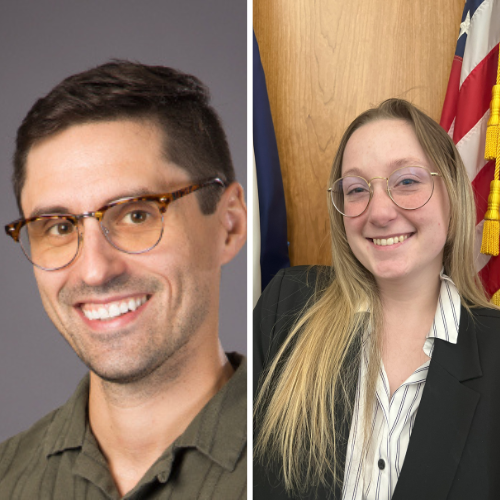
From their best episodes and most memorable anecdotes to how they envision the future of Bear in Mind, come to celebrate with us our 150th episode with Dannon Cox and Katie Nord, two of our former hosts.
To celebrate our episode #150, current host Kinsley Walker invited two former hosts to talk about their time conducting our podcast. Come celebrate with us!
Welcome back to Bear in Mind. I’m your host, Kinsley Walker. And to celebrate our 150th episode, I brought back two previous hosts and we got to talk about everything Bear in Mind, what their experience was like being a podcast host and what they’re doing now. So please stay tuned for the first part with Dannon Cox and the second part with Katie Nord.
So you were the longest-running host of Bear in Mind?
As of now.
As of right now. As of what is it? September 2026. You have been the longest-running host.
See how long that lasts.
Well, I graduate in December, so I’m not. I’m not outdoing you by any means.
You have time.
You think so? So I just do an episode every single day. What do you remember most about being a host? What was your favorite part?
I loved reaching out and learning what other people were passionate about. So it was almost a selfish journey for me because when I first started, I would I would be told, hey, reach out to this faculty member or this staff member. They’re doing something really cool. And I would, but then I still wanted to produce more, but then they didn’t have as many ideas. So then I was curious. So I would reach out to people who I would hear about and cool research and, and then just get to learn what they are wanting to do within the community or for themselves or their research.
So it was almost like a way to see UNC as a whole. And so I really got to see it from a community aspect. So it’s a lot of fun that way.
I’ve definitely been feeling that too. I get to talk to so many cool people, and I get to find out the smallest little things about campus that I didn’t even know were happening. Like, I got to talk to Keri Knight last semester about the Big Bear Fest that happens every year. It’s very cool. And I don’t want to pick favorites, and I don’t want to make you pick favorites. So I’ll ask, what was one instead that stood out to you? Maybe not a favorite, but one guest that really stuck with you stood out.
Yeah, one would be Janis Dickensheets, and she’s she’s in performing in visual arts, and we did a podcast, and she has a whole specialty in knowing Lord of the Rings music. And so she, like, delved into all of these specific components where, say, there are elves in the scene, then all of a sudden you’ll hear choral music, or if there’s orcs in this scene that you’ll hear more like metal, like music. And it was just something fascinating that I didn’t really think about. And I don’t know what sticks out to me because I do love Lord of the Rings. And so I got to learn a lot about that. So that’s that’s one of the many that, that, that, stand out.
Is there anything that you wish you would have delved more into,
Like, as in topics?
Yeah.
Yeah. Towards the end of, so I started on episode seven, and I got to 100 episodes and I want to say around like 70-ish, maybe 60-ish. It went from more focusing not just on faculty. I wanted to hear the student voices because I recognize this as a unique outlet for students to have a voice that could be broadcasted. So I really explored what our students are doing that could be, showcased. So for instance, again, a performing and visual arts student, started like an improv, group and, and he was able to talk about that. But then while doing that, he talked about his experience with UNC as well as his own life experiences. So I think bringing in the student aspect was something that I really enjoyed bringing in.
I feel like you have structured this podcast and all the hosts after you. We have just been building off of what you made. It’s an honor. So Katie taught Andrew, Andrew taught me, and we’re just continuously building. So it’s really nice to sit here with you. How did you keep motivated to make that many episodes, though?
I just loved it. I loved making them. And so I got hired by the advancement group for the marketing team, and, and then I used to, like, come into the office and then at some point, they I was just like, hey, can I just do this from home? And kind of, you know, kind of try my own approach on this. And they did. So I just kept on exploring on how I can find out, who I can reach out to.
So you started the podcast in 2017
Around there
And then you stopped in 2020?
I did.
How did you see the podcast change and the community change and grow?
Yeah. During that time, playing around with, like, time- like, how long is an episode that’s going to be listened to? It’s 30 minutes too long. We wanted to make something that’s more tangible. So I first heard of that, like, one of the, keep it around no more than 20 minutes. And when I, when I first started a lot of it, I was trying to go for a podcast of, This American Life. Are you familiar with?
Yes.
Okay. Highly produced. You’ll hear the sound of all these little music things. And I realized that that’s going to take way too much time, right? That’s so, so, so, so. I took a little, little lesson that I still try to add in as much as I could when it was necessary, but because I was walking around with just my microphone, I only had one microphone for the first few episodes. I would place it in front of the guest, and then they would talk, and then I would cut and splice and make make it try to make it engaging. Right. I would take the best quotes and add it in there. And then I wanted to try it a little bit more. So then I would find the truly best quotes and I would start the episode with that. So almost like a grab, and so that way, even if you’re not familiar with the topic, it. I wanted to make it interesting about that topic. And then I was suggested they were like, we want to hear your voice as the host, because I never talked about it. So I don’t know how many episodes in. I started to bring it and I was like, well, I need another microphone. So they bought me another microphone. So now I’m able to talk back and forth, and then that changed everything, because now here I am needing to do a conversation and a also learning topics that are very unfamiliar to me. And then trying to find like I would be listening to them and and if they did say something that was a little bit off track, but it was more interesting to the general public because I’m the general public. For me, going in as, say, the dummy who doesn’t know anything great, I get to be curious and ask firsthand and represent the greater audiences on how we’re going to do that. And so I kept that, that strategy for the majority of the rest of the time. But then again, towards the end, I wanted to bring in more student voices, so that’s where I would say in the last like, 20 episodes, the majority of them were probably students because I wanted to hear from that and have those conversations as well. So that was kind of the changes that I saw within myself as a host, as well as for Bear in Mind. And sometimes I would make them even shorter because we need those sound bites. You need to find something that’s, again, catchy for not just UNC folks, but people who are beyond campus
Right, and I have listened to podcasts for years, and I can even see this change from then to now: podcasts of ten years ago, a podcast had to be quick and snappy and funny, entertaining, but also this mix of informational when now I feel like people really desire that humanity from other people. They desire hearing real stories, but also being informed. So there’s kind of that cut-off there of people really, really, really want to feel like you are their best friend, but at the same time you’re trying to give them information. So that’s definitely been a difficult little tie in, but I believe it’s Katie Nord that would always promote every single episode on her Instagram. And so I’ve started doing that too. I’m like, come, come be engaged, come listen to my podcast. I worked so hard on it.
And that’s the that’s the best way to get it out there. I, I don’t have, well, I have one Instagram account, but it’s a troll account that I do against the City of Greeley but that is beside the point. Right. Let me be honest. And, and this is such a good marketing space because it takes a village. But also, this is you like, you are the spine right now, right? So you’re representing your representation, and voice is going to bring that out to a greater audience that say UNC. Yeah, yeah, we have we have our community and we’re able to connect with folks, but not the way, say, you have on your social media and how you’re plugging it in, but then dealing with it from I like how you said it like there’s, the informational side and then the educational side. So it’s that edutainment, if you will,
Right.
Gauge and inform and maybe even potentially persuade on depending on the topic. Right. Yeah.
And. It’s hard it’s hard to have all three factors. But also when you have an amazing guest, it’s easy to make sure you have all the factors. And, you know, not even just promoting it on Instagram. Right? Because I’ll, I’ll post it on the UNC Instagram Story, post it on my Instagram, and then I’ll post it on LinkedIn, and then I’ll post it on Facebook and everywhere else. My grandparents, every single time a new episode comes out, they’re like, ” Great episode. You did so good!”
That’s the audience you need right there. Honestly, yeah. They’re the ones to snowball that out to, to get this more into other people’s ears because we are now, I mean, I would say 2020 really hit and everyone’s here to do a podcast because we’re all stuck in silence of, well, let’s just record our conversations. And so it’s we’re saturated with it. But it’s like those kind of strategies that you have developed to help bear in mind, just stay afloat and show the relevance of it, of whatever topic. Here’s a question. How do you how do you gauge a successful episode?
I gauge it by the reaction that I get on my social media and the amount of listens on it. Okay, so when I did my episode with Keri Knight, I got outstanding feedback when I went and I looked at my messages; people are like, this was an amazing episode and that’s such a good feeling. People listen to that episode. They wanted to know more. And Carrie Knight’s such this big figure behind so much stuff at UNC. So people are like, oh my goodness, I didn’t know there was a person behind that. I feel like a lot of people don’t realize that this stuff isn’t just running itself. So that was cool. And she also got to tease at the time the musical guest for Bear Fest, which was Thomas Day, and that was a big deal. It was the first time that, they really got a tease the musical guest.
Like, that’s a really good thing. A little hook right there, a little little carrot. Yeah. Hearing something. Yeah.
And then. Yeah, just anything that I get feedback on. Good feedback on. I’ve never so far gone anyone DMing me on Instagram telling me in episodes horrible. So I can’t be doing that bad.
No, that’s the mark of success.
Right. Exactly. So hopefully this next couple months will go by smoothly. I have my next, like, five episodes planned out of what I want to do. When you finished the podcast, what were you hoping to see from it in the future?
I was hoping to see someone like you sit here and continue it. That was the main thing that I was hoping to see, because it was a very unknown time. My last episode actually had I asked people to record their experiences of COVID and send it, and then I spliced it into an episode because I didn’t we didn’t know what was going to happen. So my hope was that it just continues and it has. So thank you.
Yeah, of course. Thank you.
And I see where it’s going because there is so much saturation; I see the conversations always being there. Storytelling will never go away with humans. AI podcasts will never do something like that. They’ll never be able to get to that storytelling and the humanistic 1 to 1, maybe one to a few people. But what I see with the evolution of it is exactly what you’re doing that I did not, which is showcasing it in social media and broadcasting it in more micro, little ways. So if it’s even like little social media soundbites or showing relevance and really connecting, because we’re in an attention economy, right? We’re fighting against everyone else’s podcast. Everyone else is doomscrolling videos. So how do you separate yourself out of that? And that is exactly what you did: you’re making it, and you’re posting on, on Instagram, social, LinkedIn and all these places. And that to me seems like the best way to showcase, hey, we are out here, we’re still doing this, and come and join and listen to the conversation
Do you know who Zach Sang is? This sounds like I’m going completely off subject, but I promise you it’ll be on subject.
No.
He was a radio host and now he hosts his own podcast called The Zach Sang Show. Crazy, right? And he has on celebrities and he talks to celebrities. I went to Vegas for the journalistic conference, and I got to meet him and talk to him about this podcast, and it was such an amazing experience of him being like, oh, it was so cool. It was such an amazing experience of him being like, you. By the sounds of it, you guys are doing great. And he sat like 20 students down and he was like, if you’re doing a podcast, you should try this and this. And this and this and gave us a million ideas for what we want to do. And I hope in the future for this podcast that we get cameras in here, maybe this small, tiny little room. But people are loving visual podcasts now.
Yeah, that’s a really good one, But yeah, that’s the next evolution. Again, just to showcase and send it out in different mediums to have this opportunity, and whether it is while I’m gardening versus if I’m sitting in and I want to watch something while I’m eating.Right, right. So I love that idea. And that’s, that’s so cool. You got to talk to someone about that. And even that, I mean, this is high-quality stuff. Send it in for awards that I ended up getting to awards while I was.
Oh, really?
It was it was through a marketing regional and it was across, all the basically the Midwest and here up to Colorado. And it was against all other universities and this and this podcast won multiple times out of it. Well yeah. So, so I mean like these are things to to flex on the work that we have done because I feel like often UNC is so humble. Right here in this where, where the quote-unquote teaching college and there’s all these other bigger, you know, R1 institutions, it doesn’t mean we don’t kick ass. Right. So so why don’t we flex it with this kind of work in the community that we have that I would say the other institutions pale in comparison. Right?
When I had I had a couple, younger people reach out to me and they’re like, should I go to UNC instead of these colleges? And I was like, yes, yes, come here. Yeah. So, yeah, definitely. We have a better community. And you’re so right. UNC is so quiet about how amazing they are. They’re like, we didn’t win a sports games were not that good. And it’s like, but look at our test scores. Look at these kids going into these career fields, everything like that. What other school in Northern Colorado said, hey, “Let’s take all these journalism kids to a journalistic conference in Vegas where they can network for four days”, don’t really see anyone else doing that. So that’s very good.
Thank you for the work that you’re doing.
Thank you. Do you have anything else you want to add?
No, I’ll just say never stop being curious within this podcast. There’s always something unique you can do with it. One example I’ll just quickly say is that I interviewed for a podcast someone who was deaf, and I actually had an interpreter who sat there and we had a and we actually did a video podcast for that because they had to use sign language. And so to think innovative of what even a podcast not just sounds like, that looks like. And then, therefore what does it feel like to to an audience?
Right.
That’s all I got to share.
Thank you so much for coming on back on the podcast. I hope you had so much fun.
I did, thank you for having me.
Yeah. Now, well, let’s get out of this hot room and into something that’s not 98 degrees, right?
~Music Intermission~
All righty. We are here with Katie Nord, who is also a host of the podcast. Katie, tell us about yourself. Tell us everything.
Hello. My name is Katie Nord I am a previous host of the Bear in Mind podcast, and it’s nice to be here.
I’m excited to see you. So here’s the thing, right? I have been doing this podcast for a year now. Almost every single week or every other week that we have meetings about it. Your name gets brought up, and how amazing you did and how amazing you were. And I should do this like Katie, and I should post like Katie and Carlos pulled up your like, Instagram highlight and were like, this is how Katie would post the podcast episodes on her story. You should do that too. So now I do that too. So I have learned everything subconsciously in a distance from you.
That is hilarious. Your ears burn every once in a while.
It’s me talking about you. It’s us talking about you.
Yeah.
So it’s so nice to finally meet you.
Yeah. Thank you. My head’s getting a little big right now.
Yeah, literally anything about the podcast, they’re like, well, Katie, she did this, and she did it really well. You should try it. And I’ll be like, okay, I’ll try it.
Very sweet of them to say so.
How long did you do the podcast?
I think a little over a year, if I’m doing my math right
And what was your experience like?
I had no experience with anything podcast-related. I was completely self-taught. I had started it up kind of as a revamp because after COVID it kind of died off and they couldn’t really pick it up.
The host before me was trying things out, but they had to do a lot of hella interviews, like over the phone and Zoom, and they were still experimenting and trying to trying to revamp it. So Shawn hunted me down and he said,
You’re mine now?
He said, “Please do the podcast.” I said, okay. So, it was a lot of trial and error, but I really did enjoy it. I loved the the writing aspect and the aspect of I really like getting to know people and talking to people I would have never met, having not done the podcast and hosting all that. So it was a great way to connect with the community and the people around UNC.
What was your favorite episode you ever did?
Oh, my episode with Brian. He was the you know, I’m pretty sure he still works here. He’s the opera director, but you see, he was writing a production that was it was a Sherlock Holmes-style opera, if I remember correctly. And he was just so charismatic and so funny. And that was an episode where I flubbed and the audio got corrupted, and I had to redo all of it. But he was a good champ about it, and I think that made it a lot, almost easier to record a second time.
You’re like, I know exactly what I’m going to say. I know how you’re going to respond. This is going to be the easiest thing I’ve ever done in my life.
Right. I got the awkwardness out of the way, made many mistakes the first time, and then it’s almost felt a little better the second time.
Right? So what do you do now?
I work with the Weld County Combined Courts. I am a Judicial Clerk with their district criminal team. So I process a lot of felony cases, things like that. It’s not where I thought I would end up, but it’s very interesting. It’s a very interesting job.
That was such a cool title of what you do. You’re like, let me put on my nice little blouse and tell you the cool stuff I do now. That’s so cool.
It sounds cool in theory. It sounds cool. It’s interesting. There’s a lot of it. If I could talk about it legally, I would. And it’s a lot of interesting things. But I am sworn to legal secrecy.
That’s funny. When me and Dannon Cox were just talking about. We’re really focusing in this podcast episode about where the podcast is going to be in the future. Right. And we were just talking. He was like, maybe it’s going to be true crime.
I think true crime is one of the most popular genres. Well, and that’s the thing about the joke I make with my job is there is always crime. So, I will always having job security,
You never have to stress about it, ever. So how many episodes did you do? Roughly?
Oh, I think I did about one a month, if I’m correct. So probably about 12 episodes.
Okay. And what was your favorite part of doing episodes?
Shockingly, my favorite part was the editing. I liked the audio editing just because it’s so tedious and I wouldn’t. I don’t want to say mind-numbing, but I didn’t have to be as social. I’m a I’m pretty introverted, shockingly enough. So as much as I love talking to people, I also enjoy just chugging and plugging in on the keyboard and making everything sound good. And oh my gosh, you meet so many people with this job and just trying to get to know everyone. And I think you can get to know people and get more interesting things out of them when they feel more comfortable with you, right? I think the hardest part is just forcing yourself out of that comfort zone. But I think you’re I’ve been listening to your episode.
Oh really. Oh my goodness. What’s your favorite? Do you have a favorite?
Well, I actually think you are very- you, I love how charismatic you were in your past. The torch episode. Thank you. And you still sound very passionate about what you do. And I was like, wow, I think you’re in good hands. I think it’s fine.
Thank you. So we were talking a lot about the future of the podcast. Right. What do you hope to see in the future of the podcast?
That’s a good one. I would love to see the future hosts reaching out and continuing to meet new people and show what kind of bright minds and students and teachers and staff we have at UNC. I think. I think at college we tend to get pretty narrow-minded. I have to focus on just my journalism; I focus on just my communications. We get limited to which buildings we’re in frequently, and that kind of it makes it so we can see a lot of what’s actually on campus. Unless we’re going out and unless we’re going out and really trying to find these new events and these new people and whatever little free time you may have with your courses and trying to work and things like that. I think there’s a lot of people that you may not have never met or never have even known about, like subjects or new things. If you if you listen to the podcast, you’ll learn a lot of new things around campus and ways to branch out, and not only just things on campus, but general things about life that you may not have known otherwise.
Right? See, your answer was so much more sophisticated. I was like, we need cameras. We need to turn this into a show. I was like, we could put a camera right there. We could put a camera right there. We could put a camera right there, turn it into a show. Because all the podcasts are shows now, which confuses me because I like to listen to a podcast.
I thought that was the whole point of a podcast was to listen to it. Now people are watching it.
You know, I think if we get cameras in here, we also need to make them incredibly low quality so no one can see the sweat beads on my forehead.
Oh, because it’s so hot?
So hot. See I can see the appeal of the video things, but yeah, if it’s a podcast, I’m not watching my screen.
Right. I’m putting it on, I’m cleaning my house, I’m cleaning my apartment.
Right. Also, when I come in half the time, when I was recording I was wearing like PJs and sweatpants. Right? I don’t want people to see me like that.
You know what? I think the low-quality idea is perfect.
It’s like eight bit
When you were host, how did you decide what the audience wanted? How did you decide what was a good fit for Bear in Mind?
Yeah, well, there were a few different things I considered. There was timeliness. Like, is this something that a listener could or is this something that the audience could listen to three months from now or a year from now and still find some kind of benefit? Like, I don’t want to just do a podcast about something that’s only going to happen for a month and then never happen again, right? There’s no longevity in that. So timeliness was really important. I wanted it to have some kind of relation to the university, of course, whether that be staff, students, professors, things like that. But I also wanted it to be interesting to not just UNC related people, but anyone, which means I had to find not only a honed in subject for the university, but also with a broadened aspect and an overall theme that can be found anywhere and interesting to anyone.
Right? And when you think back on your time with Bear in Mind. And all the conversations you’ve had, what do you think makes Bear in Mind so different from other podcasts, other even university podcasts?
I think Bear in Mind is different in the sense that it has a community connected to it. It’s not just I’m going to talk about politics the whole time. I’m going to talk about what actually could be interesting or what you can learn from it. There’s a big educational aspect that I think a lot of podcasts may not pay attention to. Sometimes they just end up being rambling. Not to say I didn’t ramble on during a lot of my podcasts, but I would hope that they had some kind of educational value. Or at least they were entertaining. I wanted them to be a bit of a mix: entertaining, funny, but also educational. And you could learn something from the episode about people, or just about the school, or about a topic you may not have looked into otherwise.
I learned so much on this podcast from all the different guests that come in here. Oh my goodness, I’m so much smarter. Being the host of this podcast,
I can feel my brain like growing in size.
What’s the most surprising thing you learned?
In a weird way, I learned a lot about public relations and the way things can change, the way that people look at the university. Weirdly enough, a lot of my ideas, well, I did have to run them by our PR team. And then they were like, oh, you want to think about that for a second? Like, let’s what do you think that image would have? So I think I had to have a good a good look into the broader side of things rather than being narrow-minded. Sometimes you get, like a one-track mind and then you have to think like, hey, wait a minute, right? This may not be the most impressive thing in the world that you may think it’s a really interesting topic. And then you are like… uugh, that’s actually really not that fun.
Right? How did your followers on Instagram and friends and family react when you have a new episode come out?
People are very supportive. I don’t know if it’s necessary- people were really nice about it. I think I probably overwhelmed people with the amount of poking I was doing, like, “oh, you should listen to the new episode. I worked really hard on it”. All right. I think I got a few dedicated fans, one of them being my grandma.
My grandma loves listening to my podcast. Shout-out to my grandma
Number one fan, Judy, I see you.
My grandparents. When my first episode came out, they figured out how to download Spotify and listen to it.
Yes, my grandma couldn’t figure it out so I had to send her a link over email and say click on this link and it’ll pull you up.
And then she called you, and she was like, “Is this a real email?”
This is your name, right? Right. But I think my family and friends were always very supportive about it. It was it really was a very great experience. I didn’t ever think I would end up doing it. Like, that’s not where I thought I would end up being. But it was so much fun. It was such a great time.
And you. Did you pass the baton to Andrew? Yeah. So I’m passing the baton here in December. I graduate in December. What advice do you have for me for getting the next host ready?
Make sure they’re I would say it’s important to be comfortable behind the mic before you’re just thrown into the world. So maybe having them sit behind you is fun. Maybe sit with them for an episode or do a practice episode with them. There are a lot of things I did not do with Andrew that I probably should have done.
That’s okay. Andrew didn’t do it with me.
Now that you think about it, it would probably be good to do like a practice episode with them, maybe talk about how them talk about things are really interested in and, talk about what they want to do so they feel more comfortable and then, maybe walk them through the routine of, this is how I edit. This is the time frame I use. I do this, this and this, you know, stuff like that. Right.
And you have any tips for me in general for posting, for podcasting, hosting, anything specifically? I really struggle with the editing part.
The editing. See, I would always just say, don’t put it off until the last minute.
That’s exactly what I do.
Yeah, yeah, I that was my hardest part was I would put it off and I’d be like, I have to get this done by tomorrow. So I’d spend like 12-hour days in the studio just editing and I, I was a real stickler for attention to detail, and I didn’t want things to sound bad. And if it sounded bad, it would eat at me. So I would say, don’t be too hard on yourself. And, as long as you’re happy with how the interview went out and you had a good time, then I think automatically it’s going to be good.
Is there anything else you want to add?
I think a lot of people worry about after college and where you’re going to end up and what’s going to happen, and I had a whole epiphany about this and a bit of a crash out. Honestly, I thought, I’m going to go into journalism, I’m going to be a broadcaster or something along those lines. And I have my life weirdly planned out for something I had no preparation for. I think you will be taken in many different directions. It may not start off where you want to be, but as long as you’re passionate about it and you may learn that you have more interesting things that you may not have known otherwise. Did I think I would end up working where I am? No. Absolutely not. But I have met wonderful people and made wonderful connections and I think, give yourself grace, give yourself time, and your skills are always transferable, and your kindness and your talents can always be reapplied in different settings. It may not be exactly podcasting in a shoebox that you’re used to doing or working in a studio that you are familiar with. It may end up being your traveling, and you’re doing stuff on the road, or working a desk job that you would have never wanted to do, but I think the world works in mysterious ways. I think everything happens for a reason. So just continue to apply yourself, and also don’t give up on your passions. I think that’s my biggest regret is that I haven’t had a lot of time to really put forward to doing what I, what I love. I haven’t had time to do podcasting or video editing. So, I’ve been taking time to record little mini vlogs cuz I’m not posting them.
Hey, why not post them? I posted a little video about Twilight on YouTube a year ago, and it has a thousand views.
Imagine a thousand people sitting in a room.
Right? That’s a lot of people. That’s a lot of people. So I think you should totally do it and put yourself out there. Well, thank you so much for coming on to the podcast, Katie. How do you feel coming back on?
I feel very nervous.
Don’t be nervous. I had so much fun talking to you. It’s so cool finally meeting someone that they promote so much and talks amazingly about them.
I’m embarrassed.
No, don’t be, don’t be. So, thank you.
Thank you for having me. Great time.
Thank you so much for listening to this episode of Bear in Mind. As always, I’m your host, Kinsley Walker, and I cannot wait for you guys to listen to the next couple episodes this semester. I am so excited to get started! But until then, see you later!