Podcast
May 13, 2026
Helping Educators Reach Their Summit
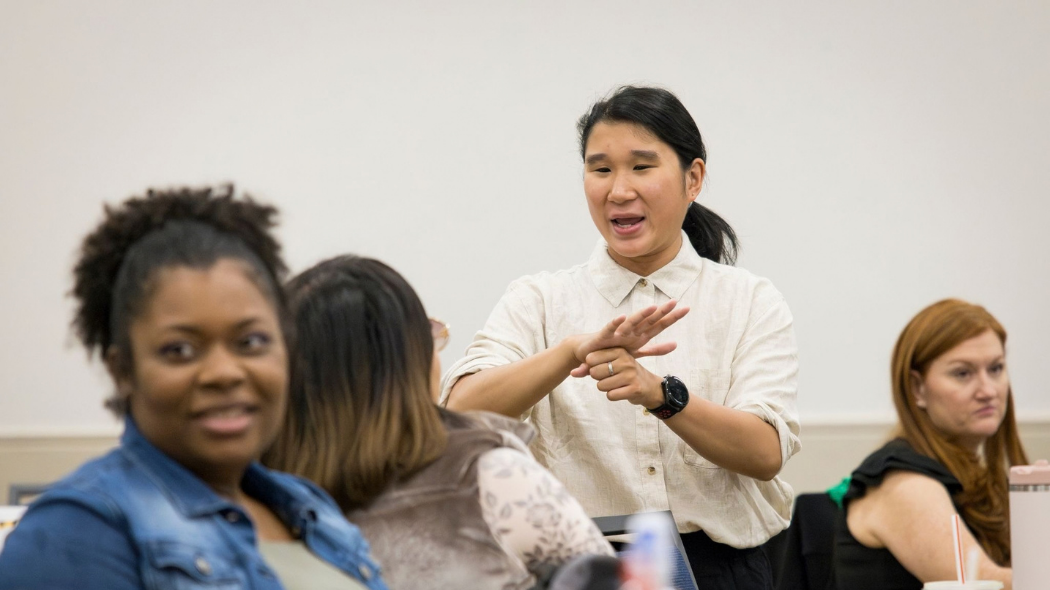
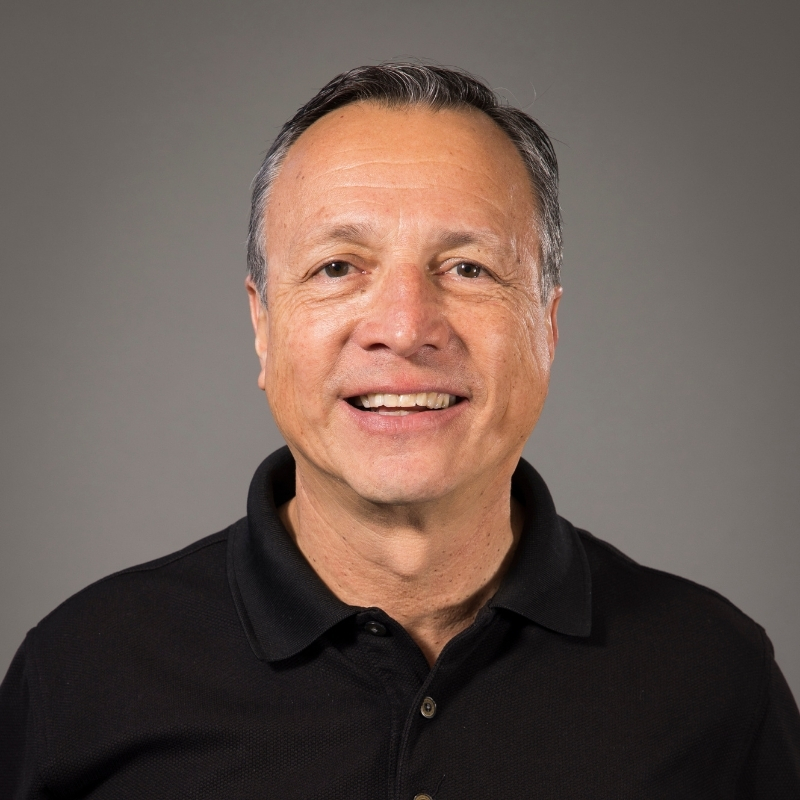
Aldo Romero, director of UNC’s Cumbres Teacher Preparation Program, discusses how the program supports future Culturally and Linguistically Diverse (CLD) educators through mentorship, leadership development, scholarships, and hands-on classroom experience. Romero also explains the importance of CLD education, shares inspiring student success stories, and talks about how Cumbres is helping prepare teachers to support students from all backgrounds.
In this episode, Kinsley Walker sits with Aldo Romero, who explains to us the relevance of supporting Culturally and Linguistically Diverse Education students and how Cumbres, the program that directs, has been doing this for over 20 years.
Welcome back to Bear In Mind. I’m your host, as always, Kinsley Walker. Today I got to talk to Aldo Romero from the Cumbres Teacher Preparation Program, and he talked to us about how they prepare future teachers and support culturally and linguistically diverse K-12 students. He also shared some success stories that he has seen from the preparation program and tells you everything you need to know if you’re interested. So if that sounds like something you need, stay tuned. Thank you so much for doing Bear In Mind today. If you want to start off, who are you? What do you do?
Thank you very much, Kinsley, for having me. My name is Aldo Romero, and I am the director of the Cumbres Teacher Preparation Program here at UNC.
And what is that program?
Perfect. Great question. So, Cumbres is a co-curricular program and learning community that supports students who are majoring in education. So all incoming students who are pursuing a degree in education- it could be elementary,secondary, K-12, special ed, and so on and so forth. But one key element of Cumbres is that they have to also declare what is called an endorsement in CLD education. I will explain what CLD stands for. CLD stands for Culturally and Linguistically Diverse Education. Fortunately for us, it is fortunate that the Colorado Department of Education provided that inclusive term because, nationwide, in some other states continues to be English as a second language. So what that means is that all pre-service teachers, all students pursuing a degree in education, we not only have a license to teach, but also we be able to have that additional certification to support all students from all over the world who come to the US. So, for example, people coming from Asia, from Africa, from Europe, from the Americas. So obviously, students will be receiving training to support those students to be successful in K-12.
What do students need to be able to join this program?
Great question. So as a co-curricular and scholarship program, students need to declare a major in education. So it could be elementary education, K-12. History. Secondary education. We have physics as a secondary education. We have arts education, music education. But as I indicated, Kinsley, a key component to declare also the endorsement and CLD education. Cumbres has three main components. You mind if I may explain that to you?
Yeah. Go for it.
So the three main components. So in addition to declaring a major in education and by the way, we are actually able to recruit students to support students only on our Greeley campus because we believe in the in-person engagement with students. And obviously we take into consideration the importance of student development. So the three main components of the program are as follows. First, we have what I call what we call a learning community in the classroom. Number one. Number two, mentorship. And number three is leadership development. Let me explain briefly each component. So learning community in the classroom, as you may know, Kinsley, many seniors in high school and many students coming or incoming students to UNC, they already bring these days so many college credits. So in the past, we would offer many cultural classes in which students engage with their peers and their faculty members teaching the class. However, given that so many seniors and transfer students bring in so many college credits, we only are able to offer one what I call a cohort class. In this respect, students, incoming students. And when I say incoming students to the Cumbres program, I’m not only referring to traditional, students, but also nontraditional students. We also recruit transfer students from community colleges. So in that respect, the first exposure that they have to UNC and the classroom is to connect with their peers in Cumbres, but also with a faculty member. And in this respect, we also hope that they will be successful. And if they’re not being successful, we can actually tap into the professor and say, you know, can I talk to Aldo Romero? He’s not doing great. What can we do to support his success in this class and in Cumbres? So that’s the first component of the learning community in the classroom. The second component, I don’t know whether you know this, but, pre-service teachers, any student pursuing a degree in education might not have the opportunity to be in the classroom until they’re beginning what she called the practical or practicum or student teaching. Third year, fourth year. However, in Cumbres, thanks to the great connections and professional connection we have, we are experienced teachers in District Six, in Greeley, and sometimes in Thompson School District and in Loveland. We are able to provide an additional support for students to be in the classroom earlier on. So as soon as they come to the first year in Cumbres, we place them with experienced teachers. Those experienced teachers in the classroom may have been, students in Cumbres, but may not have been Cumbres students, but also they know about Cumbres and they support, the the mission and vision of Cumbres. So that’s a great opportunity for any incoming students to be in the classroom and experience that, that the connection to the teachers, the students, but also the K-12 environment and by doing that, we hope that they can reaffirm the conviction that they want to become teachers. So that’s the second component. And the last component of the program is what we call leadership development. And the leadership development in itself has two subcomponents. Number one, we provide on a regular basis leadership workshops in which the topic varies. So for example, as I indicated to you, Kinsley, we strongly believe in the importance of student success, not only in terms of academics, but also we are very well aware of their well-being. Student development is a key component. So for example, we have invited to our workshops, our colleagues in the Division of Student Affairs, in which they provide what resources we have on campus in terms of supporting students to be successful not only with respect to their well-being, but academically. We also we have connections with, our school of teacher education and our faculty members. And they, no more than willing to present topics about the history of English as a second language, in the US and so on and so forth. And then the final subcomponent of, of the leadership development is that for students, active members of Cumbres, eligible to receive the scholarship, they also need to complete a leadership, a capstone, if you will, in which not only they showcase their leadership skills, but also not only, what they have acquired, as pre-service teachers, but also the knowledge they have acquired, but also the skills they have, develop as pre-service teachers. So the topics of the leadership projects vary as well. It could be a fundraiser or fundraising for a local library to get additional books, or perhaps supporting the family of a student whose first language is not English. So the topics vary a lot.
You seem like you love what you do. It’s very obvious.
Thank you. Yeah. Well, you know, I’ve been the director of the Cumbres department since January 2014. So, I mean, I really am committed to supporting the students. And obviously I’ve been doing this since, well, many years ago, 20 years. And actually, in the first few human social sciences originally. And then I would since I became the director of University College of Education Behavioral Sciences. But obviously, I am well aware of the importance of being connected on campus in terms of not only learning about academics, but also with multiple resources that are available.
How many students would you say are in this program?
Very good question. So we are graduating as we speak in a few weeks, a couple of students. And we are also in the process of recruiting new students for the 26-27 academic year. Active members, we may have around, based on those new students who are coming and those who may be graduating now in May and December. I would say 70 to 75 active members.
Nice. Are you hoping that you get more members as the years go on?
Absolutely. And of course, this is possible only if we have enough funding to support these scholarships. And I would like to just share how important it is, the connections we have with our, longstanding donors, but also identify new donors. And, really recently, as part of this campaign of fundraising, Cumbres was able to raise $7,000 a little bit more. And then I appreciate the support of many colleagues on campus, not only the division of UNC advancement, development and, the foundation, but also the multiple donors that we have that makes this program possible.
$7,000 is amazing. That’s amazing.
Thank you. Thank you. Yeah. And again, it’s not only what are we doing in Cumbres, but also the support of many colleagues on campus.
Right. Well, hopefully, at least my hope with this podcast is that someone hears it and they’re like, this is what I want to do. This is perfect for me.
Absolutely, yes. And again, if they have any questions, they can connect with me, and I provide my contact information. My name is Aldo Romero, and you can email me or visit our website.
Right. And you explained what the requirements kind of are. But what’s the enrollment process like?
Well, the first thing the students need to be aware of – be admitted to UNC first. So we also collaborate with our division of well, the academic affairs, but also student affairs, and the Office of Admissions. So we have in close collaboration with them, literally. Last Saturday we participated in another admissions event. So again, the first thing they need to know is to be admitted to UNC once, they have been admitted to UNC and are more than convinced.
So, willing to declare the education major they can apply to Cumbres. Once we receive their application, we schedule an interview one-on-one. It could be in person if they’re local. It could be virtually. And then we begin recruiting students. And obviously, we have already recruited 20, almost 25 students for the new incoming year, which is unheard of. And we are only at the end of April. So, yes, that’s the process. And of course, we have a general meeting at the beginning of the school year in which students sign a contract, an agreement to make sure that we are accountable not only to our donors, but also to students, accountable to their own college experience and commitment to pursue a degree in education.
Just seeing your passion and your excitement, the first thing that comes to my head is what’s your favorite part of everything you do?
That’s a great question, Kinsley. Thank you for asking that. Kinsley. Well, the first thing is to be able to provide support for any student and regardless of their background. I think to anyone coming to a college, a four-year college, I am committed to providing support in any way I can. So we have an open-door policy in which students can stop by. You don’t have to make appointments. Probably best if you’re very well organized. But, I mean, we have an open-door policy in which we welcome students at any time. And, also in many respects, we have students, the majority of our students, again, as I said, maybe first-generation students, probably 70% of students are first-generation students. But also in terms of demographics, our students on Campus Y, we have a we are we are about 28% Hispanic or Latino students. Cumbre historically and currently have about 60, 65%, they self-identify as students of color or Hispanic. So again, I think my commitment is to support students regardless of their background.
And then what’s an example of success you can give of the students of your program?
Very good question. So an example of success is as I indicated to make sure that students not only gain knowledge about their academic programs, but also are well supported in their student development, in their college experience. So again, not only to graduate with that teaching licensure and CLD endorsement that we should mention, but also to be successful beyond school, beyond the university, to be successful and support those and new immigrants coming from all over the world.
When it comes to success, what’s where are you seeing your students go after they graduate? Are they staying in America or are they going all over the world?
Good question. So yes, I think overall I think many students stay in-state and also in some states here in the US, but also some students continue going to school. I had a recent meeting with students. And, you know, I’m not sure what I want to do. Some people say or some faculty members indicate, perhaps you want to do and continue with your graduate school. Perhaps you want to gain some experience in the classroom for three years and then apply for graduate school. So I think, they’re very motivated, and many of them, the majority would go into the teaching profession and perhaps they might come back to UNC or other higher education institutions to pursue it or graduate school.
What’s the importance of CLD in the state?
Absolutely. I would say CLD just to make sure that our audience is aware of what CLD entails. So CLD stands for culturally linguistically diverse education. As I indicated prior, CLD or the Colorado Department of Education adopted this term, which, in my opinion, is a very inclusive term. Nationwide, in other states, for example, when I go and present to conference about Cumbres and UNC I need to clarify this means English as a second language because. So, some departments of education in different states, they have not adopted a more inclusive term. So what does this mean? It means that the pre-service teachers pursuing the degree in education have that additional certification to support those new immigrants in the country whose first language is not English. As I have indicated as well, they might come from Europe, Asia, Africa, or the Americas. So it is important to speak of those languages. I don’t know whether, you know, but, statistically in District Six, the last time I checked, there were more than 75 languages spoken. In K-12. So the Cumbres students will have that additional endorsement. And there are many. Don’t misunderstand me. There are other non-Cumbres students who are also pursuing a degree in education. With that sealed endorsement, I wish we could also recruit them, but I have seen that, as I indicated, it is dependent upon funding. So again but those sealed doors, students licensed teachers will be able to support those students in the in the grades K-12 system whose first language is not English. So again, immigration is happening regardless of what people say. And then as we were talking, we are actually seeing people coming across our borders and say, I need to be enrolled in K-12. So, our Cumbres students, we support those students whose first language is not English to be successful in English in K-12.
So you’re seeing students from all around the world?
Yes.
What’s the top three languages you see in the program?
I think it depends on the state. For example. So in Colorado, of course, Spanish is a major language, also is Chinese. And I think in some areas Arabic. But we have multiple languages like Farsi, Korean and so on, so forth. There are many, many of them, which, as I said, this District Six has originally identified more than 80 languages, but I think only is about 70 languages.
Yeah. That’s crazy. That’s a lot of different languages. And I only know one. So these people are coming there and there. I want to know how many people don’t know about it right?
Absolutely. So again, I we appreciate you having me here and promote the program. And obviously not only promote Cumbres but also in general, I think we I’m very committed to provide support for you and UNC, and for those who are listening, I think UNC or like other very high, very large higher education institutions, we are committed to providing and welcoming students to a community, not an institution. This is what I keep saying to my to my audience is that my students, you know, the mid-size university that we are, at UNC, we are able to connect meaningfully with our peers and with our teachers. And we are faculty members and with, administrators. I think that is the success of UNC in many respects.
If anyone’s having any anxiety about coming into this program, what would you say to them?
Well, the first thing I would say, take care of your well-being first. I may not be a psychologist or counselor to some very good colleagues that are, very supportive of that. So the first thing would be that and then connect with me. I mean, I’m happy to, I am bilingual. My first language is Spanish, and I am able to communicate with them. There are Spanish speakers, and even with their family members or guardians or parents, sometimes they are hesitant about that. And they say, what if something happens? So no. And then connect with me, and I’m happy to connect and schedule a virtual interview or an in-person interview as well. So we have many, success stories and again, I remember this young man and I think he’s not sure I think he graduated a couple of years ago from UNC. He came from Mexico. He was born and raised in Mexico City. Fully bilingual and bi-cultural. And then, he was working full time. Realistically, I’m talking really full time, probably 40 hours per week. You know, doing a local, manufacturer store, place or company and, he graduated with a degree in special education with the CLD endorsement. But he wasn’t easy because he was completing his second year. And then due to his family challenges, he had to take a break. And then we insisted on the importance that he was doing great academically. But he had to have he had to respond to his family’s needs. And then he became adad. And then finally he came back after two years and completed his degree. And he’s currently a special ed teacher and called the other local Greeley Urban School District, I believe last time I checked with Fernando, he’s a teacher in Northridge.
Cool. How cool is that?
Yeah. So just an example. Of course. As I indicated, we not only, try to support students with limitations, but also try to go beyond. There are many students who also need additional support. And as I said, I think having that network of support is key. And I always say, just doing this, you know, I am not a mind reader. We are not mind readers. I don’t know what’s going on. You need to tell them. You need to communicate with me. I might not have the answer to your questions or your queries of your concerns, but I might be able to direct you to the right person, right? Or sometimes right.
That’s so cool. So now he’s teaching and he has a kid and that’s amazing. That’s amazing.
We celebrated his graduation probably a couple of years ago.
Yeah. That’s so cool. Yeah. And then you were saying earlier, I asked you, like, you’re so passionate about this. Personally, like from your experience, where did your passion for this come from?
I think my passion from this comes from providing support, as I said, and providing the opportunities to be educated to anyone. I think education opens doors and education at this level opens more doors. So I think that passion has to be transmitted and communicated and embedded in what we do. And not only, again, as I indicated and I always say this, not only we discussed the importance of academic success because it is important, but also the importance of social success, engagement, meaningful engagement, meaningful engagement with your peers when you are in your college experience, but also when you graduate meaningful engagement with your colleagues at work, many meaningful engagement with your, students, and so on, so forth, so I think my passion has to do with my conviction that we need to provide support for anyone, regardless of their background.
So how did you guys get him to where he is now?
Well, very good question. Kinsley. So, Fernando, a very committed young man who wanted to pursue an education in the U.S. So, I think when we first recruited him, he just heard about the program. I think he graduated from Northridge, I believe, or from one of the local high schools. And then I think the, the key aspect of Cumbres and again, I don’t want to say ultimately this is just that the Cumbres team was able to successfully guide anyone. In the case of Fernando, I remember when he when this young man decided to take time off and then we didn’t hear back and I said, well, I pick up the phone now on Teams, I can just call anyone. And I said, okay, may I speak with Fernando? You know, Fernando, I haven’t heard back from you. And obviously he indicated I was able to not only leave messages for him at his home, but also he responded immediately. So I think we can go beyond what we do, because I could have said, sit down in my office or just work virtually and say, you know, no, I’m not going to do this. But I said, you know, I have a list of students who I haven’t heard. And I know Fernando took time off because of multiple family obligations and commitments. But I said, let me give him a call and say, when are you coming back? When are you coming back? So I picked up the phone and I called and I said, oh, ma’am, may I speak with Fernando? Is Fernando available? And then finally he wasn’t. And then he returned my call and I said, oh yeah, Aldo. I’m thinking of coming back in the Fall. But, you know, I’ve been facing challenges about finances and all of that. And I said, let’s just sit down and talk about that. Maybe we can find additional funding for you and so on, so forth. So again, if I were just to sit down and say, you know, oh, now this student probably, might not come back. No, I think I have a list of all those recruited students. And I said, oh, why is this person not returning my calls? So let’s, let’s call let’s find out. Let’s follow up. I think a key element of what we do in Cumbres is to follow up and be persistent and insistent.
So can I can you give a message, please? Can you send me an email and find out what’s going on? One thing that is very important as well, and this is not talking about Fernando only, but in general. So, as you know, it is important to maintain a good standing GPA. So for Cumbres students, in order to receive the scholarship and all the benefits, they have to have at least a 2.75 GPA, which is very reasonable, but some students don’t know how to maintain that.
So instead of saying, okay, you know, you are not in Cumbres anymore because you are below 2.75, no, no, no, I said, let’s meet. Your GPA is below. Let’s just meet and make sure that we plan with your academic advisor how to bring that GPA back up so they’re not out of the program. On the contrary, that’s when they need us more to follow up and provide support.
And that’s also motivational, I hope someone’s listening to this and are like, this is inspiring. I want to go into this. So, anyone who is listening that wants to know more, where do they reach you? How do they reach you?
Well, you can go to the university website at unco.edu/ebs/cumbres, or also email me emailing me at aldo.romero@unco.edu.
Perfect. Well thank you so much for doing Bear In Mind today. So fun.
Thank you very much for inviting me and I’m happy to connect anytime soon.
Absolutely. I hope someone at least reaches out from listening to this show.
I am sure they will.
Thank you. Okay. Bye bye.
Thank you so much for listening to this episode of Bear in Mind. Thank you, Aldo Romero, for coming on and listening to this episode. It was so fun to record. I love learning new stuff on campus that I never knew existed before. If you’re interested in learning more, you can always go to unco.edu/ebs/cumbres. That’s going to wrap it up for the last podcast of this semester. I hope you guys have an amazing summer. And I can’t wait to talk to you guys starting in August.