
Article
August 21, 2026
Written by Sydney Kern
Putting Humans in Context: Faculty Member Brings Biological Anthropology to Kosovo
Britney Kyle is looking to expand academia in the European country to give students new prospectives on the country’s past
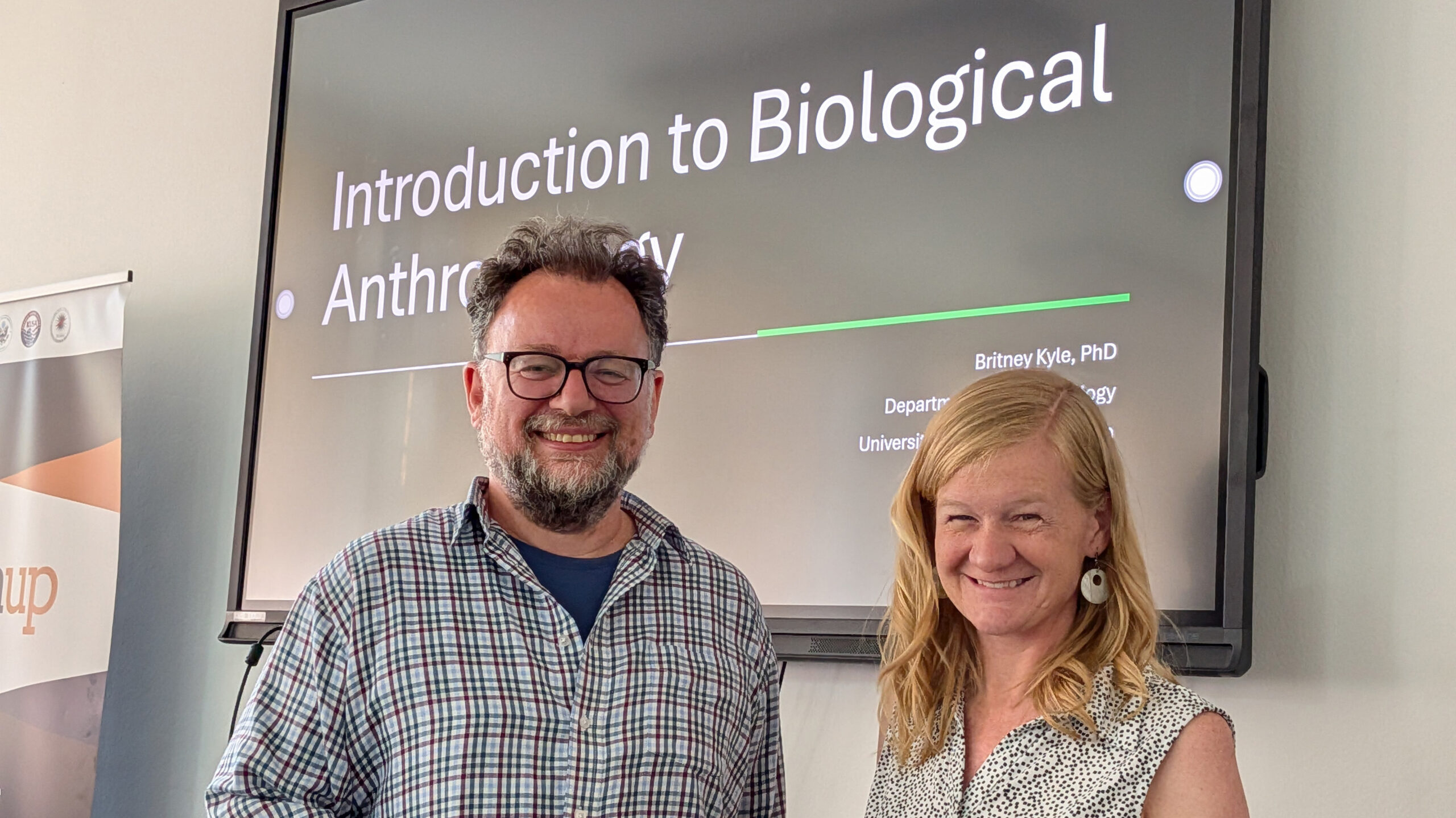
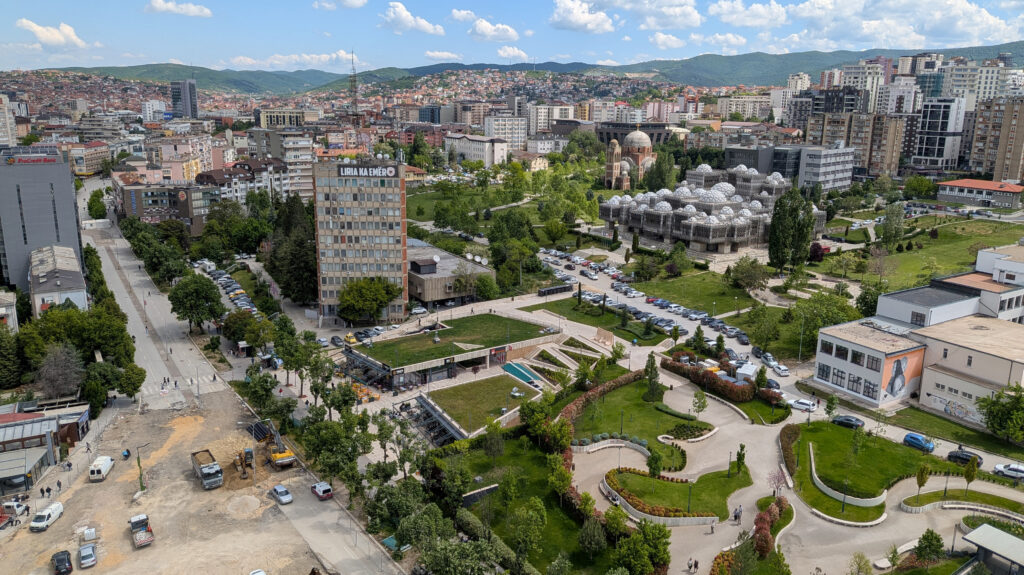
Anthropology Professor and Department Chair Britney Kyle, Ph.D., spent her sabbatical sharing her expertise in examining human skeletons with students and faculty from the University of Prishtina in Kosovo, a country in Southeast Europe.
During a five-week partnership resulting from her selection for the prestigious Fulbright U.S. Scholar Program, she traveled across the country with her family and taught students about biological anthropology –– the scientific study of human evolution, biology and human variation.
At the University of Prishtina, the Department of Anthropology doesn’t have courses on this type of science, but they’d like to in the future.
“They already have an anthropology department, but they just teach cultural anthropology and archeology, so they are interested in trying to add biological anthropology,” Kyle explained.
While Kyle’s day-to-day duty was to educate the students on how the process of examining human remains gives insight into how humans have adapted to different environments, she also had a larger task to fill. Kyle was asked to present this information in a way that would encourage the students to pursue biological anthropology as a career.
“A big part of it was me trying to inspire their students to think about going to graduate school in another country so that, eventually, they might have people from Kosovo with the skills to teach in a future biological anthropology department at the University of Prishtina,” said Kyle.
Bringing a new type of academia to the University of Prishtina and the country of Kosovo will take a handful of years to achieve. A student will need to pursue a doctoral degree in biological anthropology to become a specialist in the field. Then, they can return home, become a faculty member and begin teaching the courses.
While it could be a six- or seven-year-long waiting game, Kyle has seen this archetype be successful. Over the past decade, she has been conducting research in Albania and began mentoring a student who is now in the process of getting his Ph.D. in Biological Anthropology in Florida. His goal is to do the same and bring his knowledge back to his country.
“It’s a really rewarding experience,” Kyle said.
Now, she is seeing that same promise in Kosovo.
“One student said he is all about this career path, and that he will become that future faculty member,” said Kyle. “And then I worked with another student who’s getting her Ph.D. in France, and she’s like, ‘I’m going to beat that guy to the punch’.”
Regardless of who becomes the first educator, the need for a biological anthropology specialist in Kosovo goes beyond opening a new departmental program; the country has a lot of opportunity to learn about its own history.
“Studying human skeletons is the most direct indicator of what life was like for people in the past,” Kyle said. “It shows nutritional deficiencies, the food that you ate and whether you were sick or not. All of that gets reflected in our bones, and so you can learn what life was like for individuals.”
-
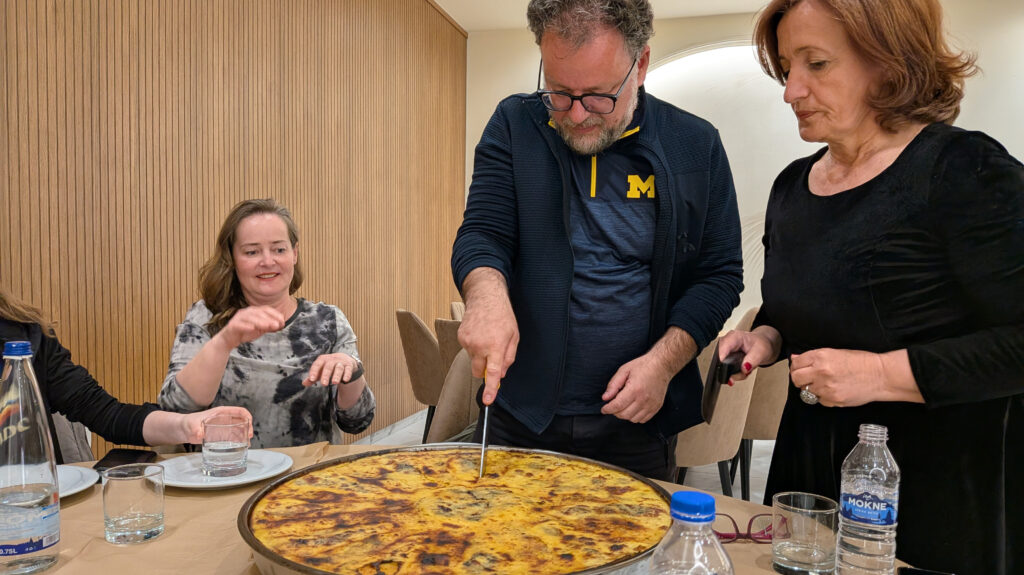 Arsim Canolli, Ph.D., cutting a traditional cornbread flija
 -
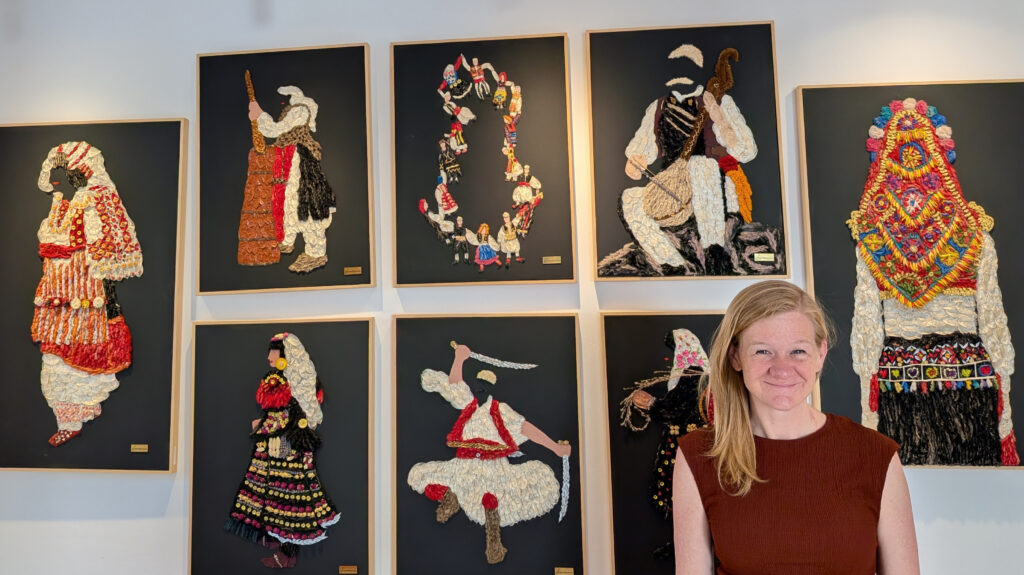 Britney Kyle in front of an art display showing traditional Albanian costumes made from pieces of plants
 -
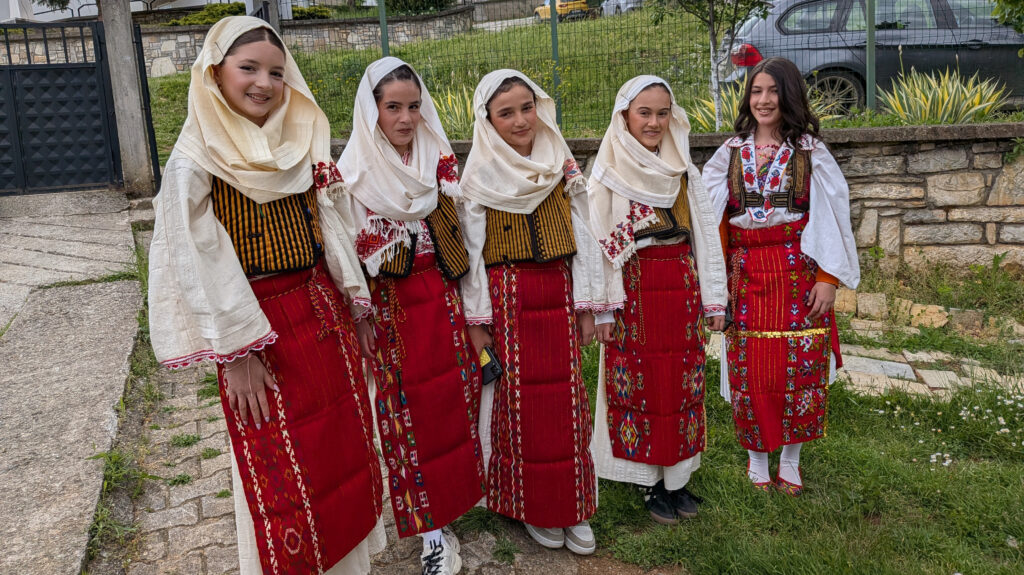 Girls in traditional costume before a performance at the Hasi Jehon Folklore Festival
 -
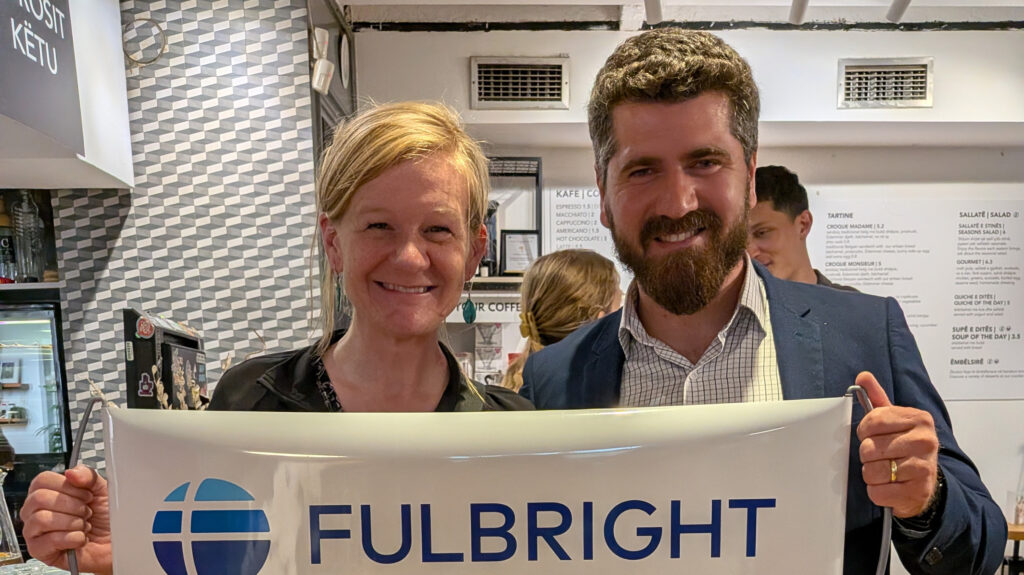 Britney Kyle and Ilir Culaj at a Fulbright gathering hosted by the US Embassy
Kyle says Kosovo scientists have plenty of human remains to examine due to past wars; they just don’t have a specialist who knows how to interpret them.
“There have been some people from abroad, like Americans and some people from France and other European countries, who have helped analyze some of the skeletons, but no one local can tell their own stories,” Kyle said.
To get the word out about the opportunity to advance studies in Kosovo, Kyle appeared on two TV shows and a radio show during her stay. She was also asked to return and teach biological anthropology for a whole school year, and while she won’t be able to take on that opportunity, she knows that the country is moving in the right direction.
“I feel like my visit laid the foundation, and they’re really trying to run with it. I think it’s very likely that they will be able to get that biological anthropology program off the ground,” Kyle said. “It’s validating that this is something that they really want and are interested in.”
Aside from partnering with the University of Prishtina, Kyle and her family were also able to experience concerts, museums filled with Albanian costumes, and local cuisine.
“I have never felt so welcome in another country,” Kyle said. “It was really amazing.”