Article
November 2, 2026
Written by Duard Headley
Bears in the STORM: A Unique Research Journey
On an isolated island a thousand miles from home, UNC Meteorology students are gaining hands-on skills with their eyes on the skies
On a remote island 30 miles from the nearest shoreline, broad, sandy beaches give way to waters so blue, one could easily think they were in the Caribbean.
Here, the night skies are clearer than almost anywhere in the country, with meteors that streak overhead and breezes that blow in gently from the vast, azure expanse that surrounds the island.
Florida? No. California? Try again.
Here, on Beaver Island, in the middle of northern Lake Michigan, a handful of students and faculty from the University of Northern Colorado (UNC) have gathered for the past few years, eyes turned skyward and minds ready to learn.
During that time, Beaver Island has been the site of the Student Training for Observational Research in Meteorology (STORM) program, a ten day research experience funded by a grant from the National Science Foundation (NSF). On the trip, Meteorology students from UNC and Central Michigan University (CMU) work alongside faculty from both institutions to gain hands-on experience with drones, weather balloons, mobile research stations and more.
Wendi Flynn, Ph.D., professor of Meteorology in UNC’s College of Natural and Health Sciences, fostered a collaboration with her peers at CMU, providing her students the opportunity to travel across the country and join CMU students in building the skills they’ll need as aspiring meteorologists.
“I include hands-on elements in my classes whenever I can, but this is something that lets them go much more in-depth,” Flynn said. “This immersive camp experience gives students lots of hands-on experience with a wide variety of meteorological instruments back-to-back-to-back.”
The location and fieldwork aren’t the only things that make the STORM program unique, though. Where most internships and work opportunities are geared toward students in their junior or senior years, STORM is aimed specifically at those going into their sophomore year.
“A lot of times, students find that internships and work experiences require some experience, right? [Something like STORM] is a pretty innovative way to help fill in the gaps for students who want to have practical experience going into their junior and senior years,” Flynn said.
On top of that, thanks in large part to the NSF grant funding, it’s a paid research opportunity, reducing potential conflicts for students who may need to choose between academic enrichment and summer employment.
Eyes on the Skies
During their time on the island, students are given the chance to get real experience in the field, working with a wide variety of meteorological instruments.
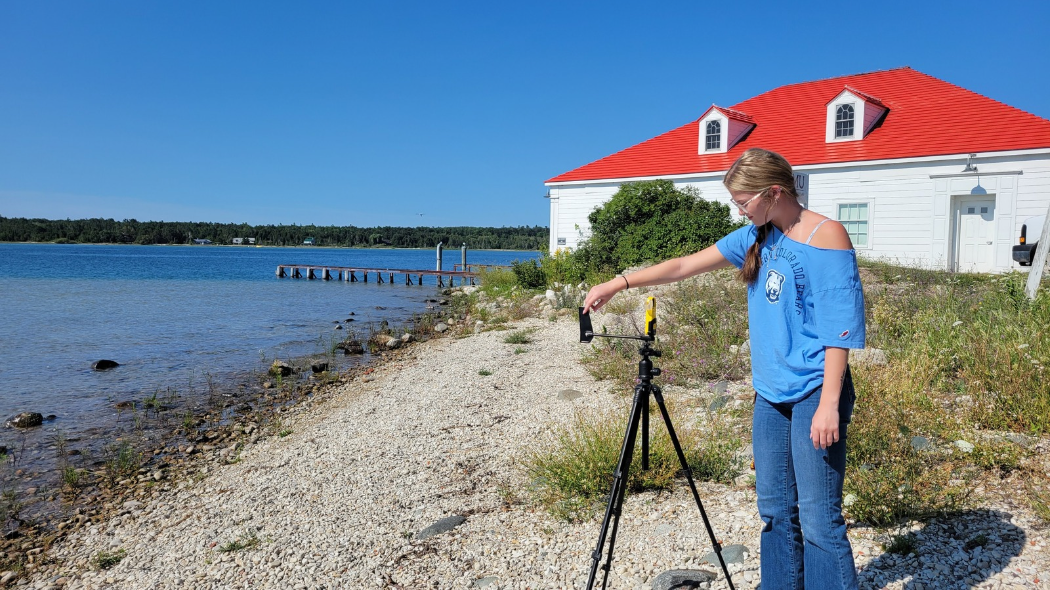
These include a mobile mesonet (an instrumented weather research vehicle), radiosondes (weather balloons), drones and surface weather stations.
The goal is to get students familiar early in their learning journeys with the equipment they could be dealing with on a daily basis as professionals in the field of meteorology.
Throughout the week, students switch between different teams, taking turns working with different instruments. One day might be spent driving around in CMU’s mobile mesonet van, while another would see students working on launching weather balloons over the island, taking measurements with equipment called a Kestrel meter or analyzing the comprehensive data collected by the other teams.
-
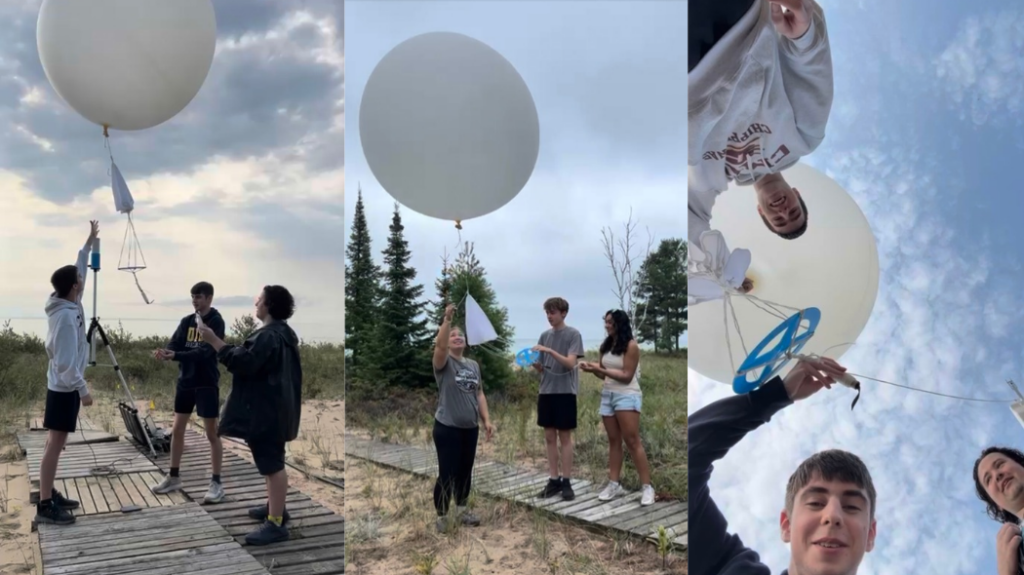 Launching weather balloons
-
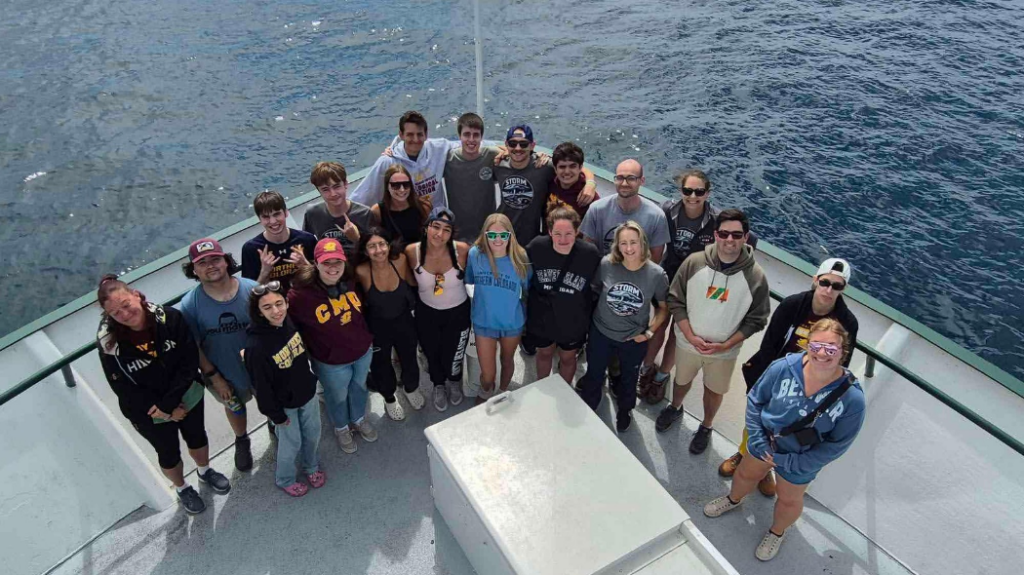 The STORM crew out on the lake
-
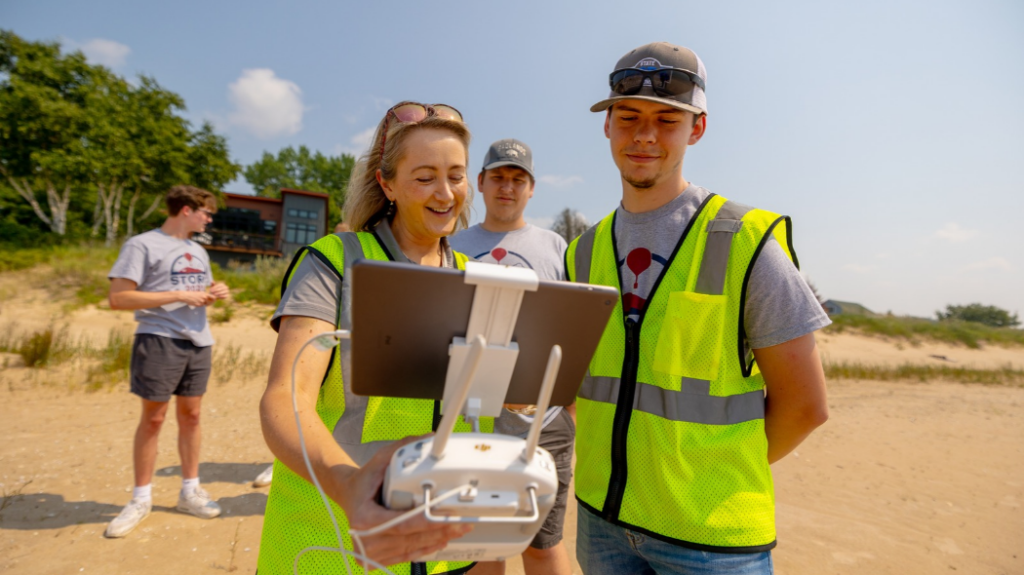 Dr. Flynn piloting a drone
-
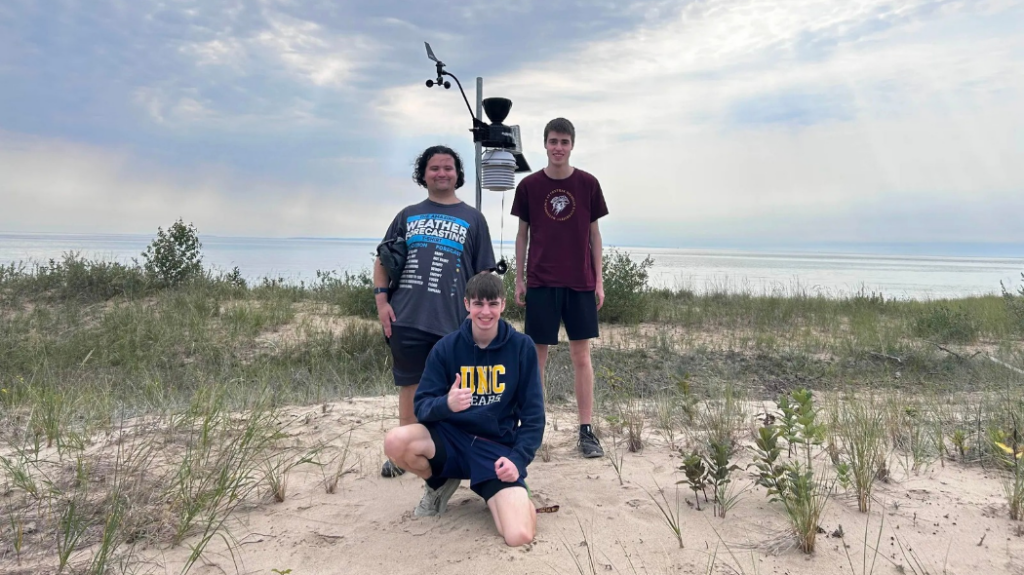 Beachside weather monitoring
-
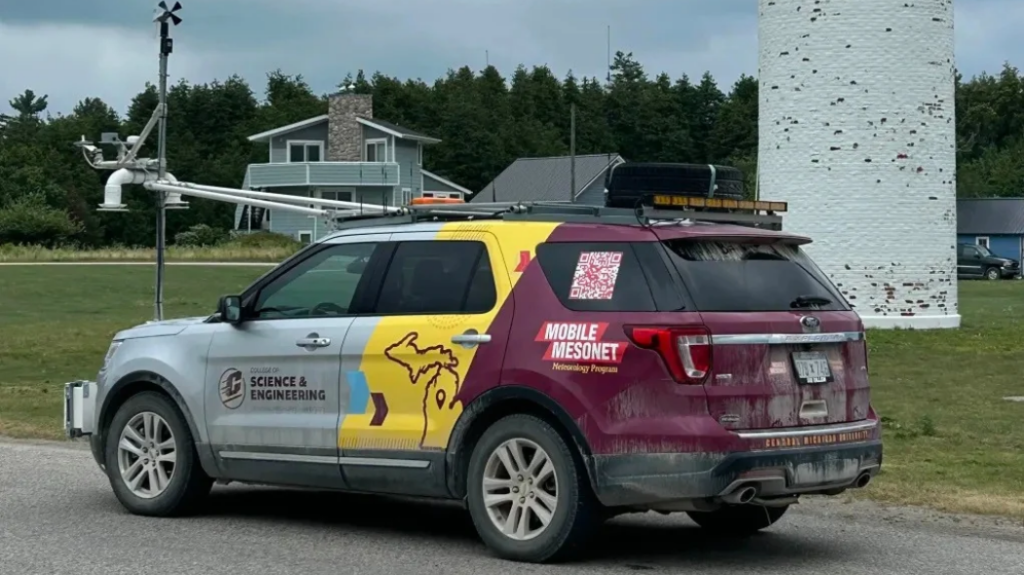 The STORM camp’s mobile mesonet van
-
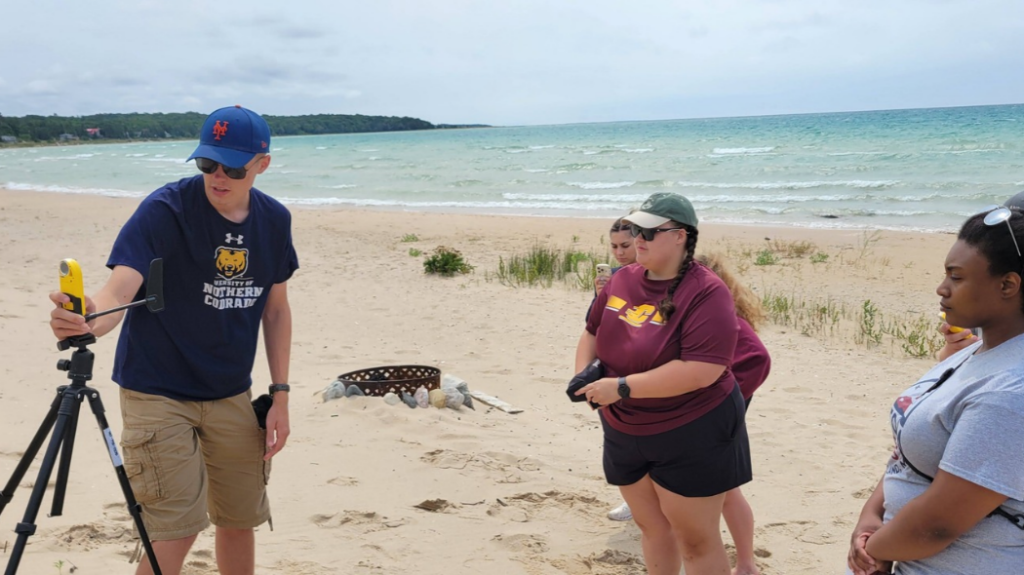 UNC and CMU collaborations at the camp
Cedric Blanco, a sophomore Meteorology student who attended the program in the summer of 2026, said the experience gave him an incredible amount of confidence when it came to working with the equipment.
“Working with things like the windsonde or the Kestrel, we did it so many times that by the time we left the island, I really felt like I could do everything flawlessly,” Blanco said. “By the end, [my CMU friend] Troy and I were speedrunning to see how fast we could set them up — I think we got it down to two or three seconds.”
In addition to the practical skills the students gain during the program, there’s something to be said for the excitement and engagement that working in the field brings with it — things that a classroom lecture simply can’t replicate.
That was certainly true for Hannah Rideout, a sophomore Meteorology major who also attended the program last summer.
“One of my favorite moments was getting to release a windsonde [a type of weather balloon] for the first time,” Rideout said. “I had spent all morning inputting data, so when it was finally my turn to release one, it was so fun to be a part of that process. I felt like a little kid releasing a balloon into the sky.”
For Flynn, the opportunity that students get to work directly with relevant meteorological equipment does more than build their skillsets.
“The work they do out there is all their own,” Flynn said. “It helps them build confidence in their abilities, but it also helps them realize that they’re doing the things that scientists do — they’re becoming scientists in real time as they do this work.”
Learning Together, No Matter the Weather
As the days passed during the summer 2026 STORM trip, the weather on Beaver Island remained, for the most part, calm and clear.
But even on a cloudless day, there’s always data to collect, techniques to hone and — in the midst of it all — bonds to form.
As they rotated throughout their duties, UNC and CMU students were placed on the same teams, working, learning and building their confidence together.
Sophomore Meteorology major Alyse Back found that aspect of the trip particularly memorable.
“The experience was so much fun. I met so many new people who I get to call my friends and peers and who might one day be fellow graduate students or co-workers,” Back said. “We still talk and get to see each other at annual meetings for [the American Meteorological Society] and other conventions.”
Blanco concurred, remarking on the strength of the connections he was able to make in such a short time.
“[Because of Troy], I have a new best friend all thanks to this trip — one I talk to all the time.”
As a faculty member, Flynn emphasized the importance of the program’s collaborative aspect, speaking to how vital the connections made by the students can be for their careers going forward.
“We’re very focused on helping the students develop these practical meteorological skills, but also on helping them build connections with each other, their peers and faculty in a really authentic way,” Flynn said. “In a lot of ways, those things are just as important as the science they learn.”
Despite the program’s titular acronym, the only storms that manifested did so on the final day of the trip, as if the island was sad to see the students go.
But as they returned to the plains and mountains of Colorado, they did so with a newfound sense of confidence, familiarity with the tools of their trade and a variety of budding connections with their peers across the country.
“It was a great opportunity for networking. We got to know two CMU professors and a good chunk of CMU students,” Rideout said. “So, not only was it great for preparing us on the technical skills, it also helped us get into the social aspect of getting to know people who might be strong connections for us in the future.”
Clouds on the Horizon
While the STORM program has been a unique, rewarding opportunity for the past few years, the summer of 2026 was the final trip that was funded by the NSF grant.
“We’re looking into a number of different funding possibilities,” Flynn said. “It’s a tough environment at the moment, but this is such an overwhelmingly positive experience in so many ways that we’re really committed to keeping it going.”
According to Flynn, potential funding sources exist both internally at UNC and externally, including partnering with organizations like the companies that make some of the instruments the students work with, searching for other NSF grants or looking into certain kinds of crowdfunding.
For Rideout, the benefits of programs like STORM are as clear as the skies above Beaver Island.
“While internships like this are preparing us for our careers, they’re also helping us to grow as people and pushing us to grow in a way that we never would have otherwise,” Rideout said. “I think that’s such an important thing to keep providing for students.”