
UNC Magazine
June 25, 2026
Written by Duard Headley
Mapping the Medical Frontier
UNC’s Complementary Health and Integrative Physiology Center is tackling big questions surrounding some of medicine’s least-researched methods
Come one, come all! Step right up and read the story to end all stories. After you’ve read this incredible article, all your aches, pains, weariness and worries will simply melt away like summertime snow. Yes, all this and more can be yours for the low, low price of a single session of reading.
Sound too good to be true?
For thousands of years, humans have worked to make lives happier, healthier and longer through the field of medicine.
From the earliest recorded instances of healing salves and poultices, to time-honored traditions like Chinese medicinal cooking, to the creation of life-saving pharmaceuticals like penicillin, the medically-inclined of the world have tirelessly sought to combine innovation with care to unlock the myriad secrets of healing.
But for every tried medicine and tested remedy, there are just as many products, pills and potions that don’t actually possess the healing powers they claim. Snake oils, cure-alls, panaceas, scams and hoaxes have existed for nearly as long as the field of medicine itself.
These deceptive products promise all sorts of miraculous healing properties. In reality, they’re often harmless placebos but at worst, actively detrimental. For someone with a real medical condition, taking these “snake oils” can keep them from getting the care they need.
With the field of medicine so vast, varied and full of potential pitfalls, how can the average person possibly differentiate between what’s helpful, what’s a hoax and what’s harmful?
Unveiling Medical Mysteries
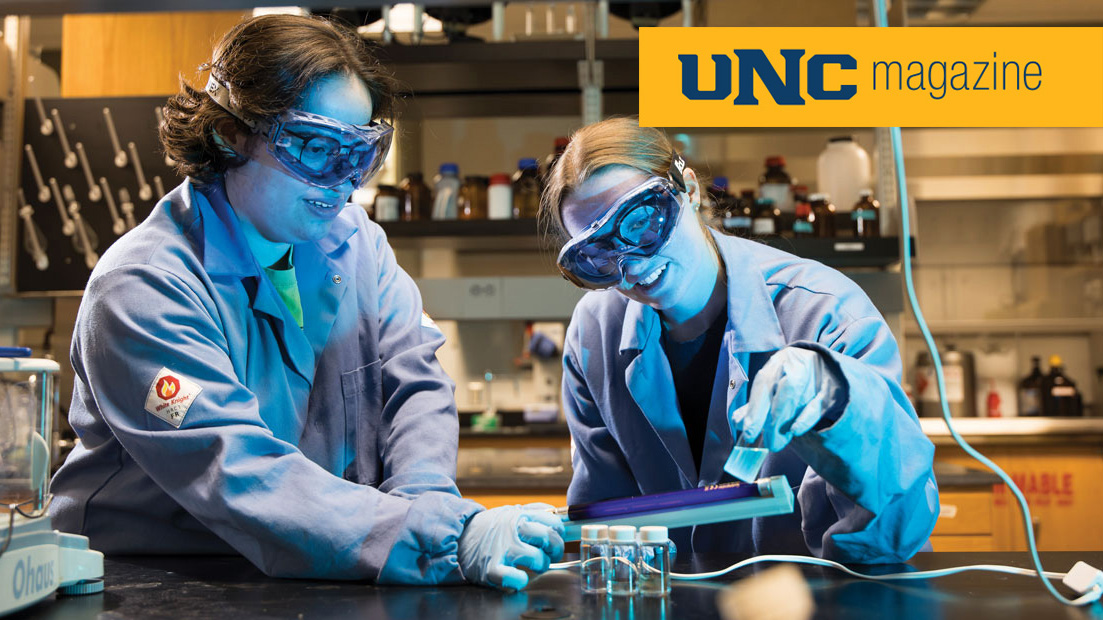
Spread across several lab spaces in Gunter Hall on UNC’s campus, a group of faculty and student researchers are tackling new questions every day, all with the goal of getting to the bottom of some of medicine’s most trending mysteries.
From cannabis to cold plunges, the Complementary Health and Integrative Physiology Center (CHIPC) is focused on providing tangible, scientific data relating to a variety of alternative health treatments.
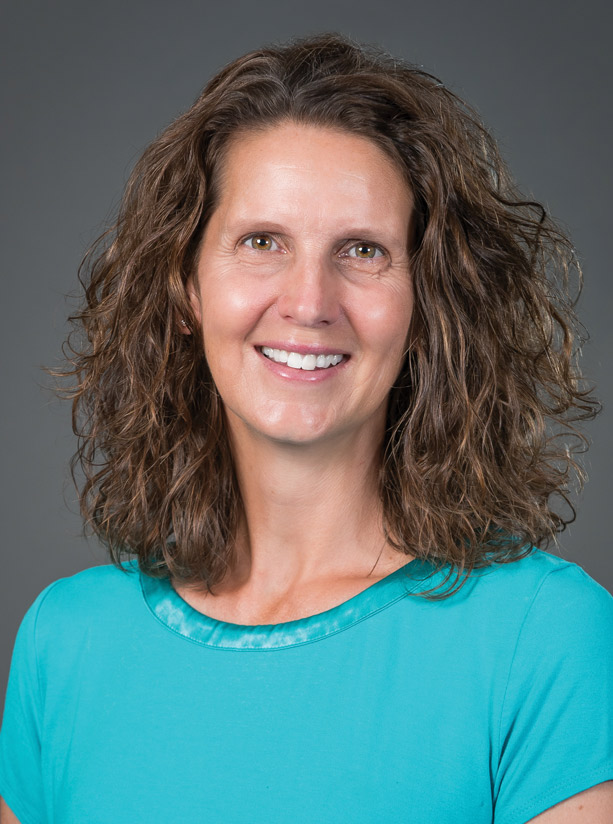
Led by CHIPC Founder and Director Laura Stewart, Ph.D., professor of Kinesiology, Nutrition and Dietetics in the College of Natural and Health Sciences, the center conducts clinical trials, health interventions, in-depth studies and more.
“We’re trying to break down some of the walls between science and what people are hearing in the community, because there’s often a big disconnect there,” Stewart said. “We want to help people understand if CBD could work for them, if it’s a good idea for them to use cannabis, when and how to use supplements, exercises and interventions along those lines.”
In addition to the examples Stewart mentioned, complementary, alternative and integrative medicines encompass a large array of treatments and techniques that fall outside standard medical care. For one reason or another, many of these treatments are lacking concrete research to back up their effectiveness.
That’s something the CHIPC team is striving to change, because according to Stewart, traditional medicine shouldn’t necessarily be the first or only option for those looking to improve their health.
“Often, complementary and integrative medicines should be the first treatments considered; activities like moving your body, doing some meditation, breathwork or other methods that don’t require a pharmacological intervention,” Stewart said. “Pharmaceuticals — including GLP-1s like Ozempic — can be great and very beneficial. But at the same time, we don’t know what the real, long-term side effects of some of those drugs might be.”
On the Cutting Edge
Since its formal creation in 2021, CHIPC has examined the efficacy of many different complementary health techniques, several of which have been the topic of recent medical and cultural debate.
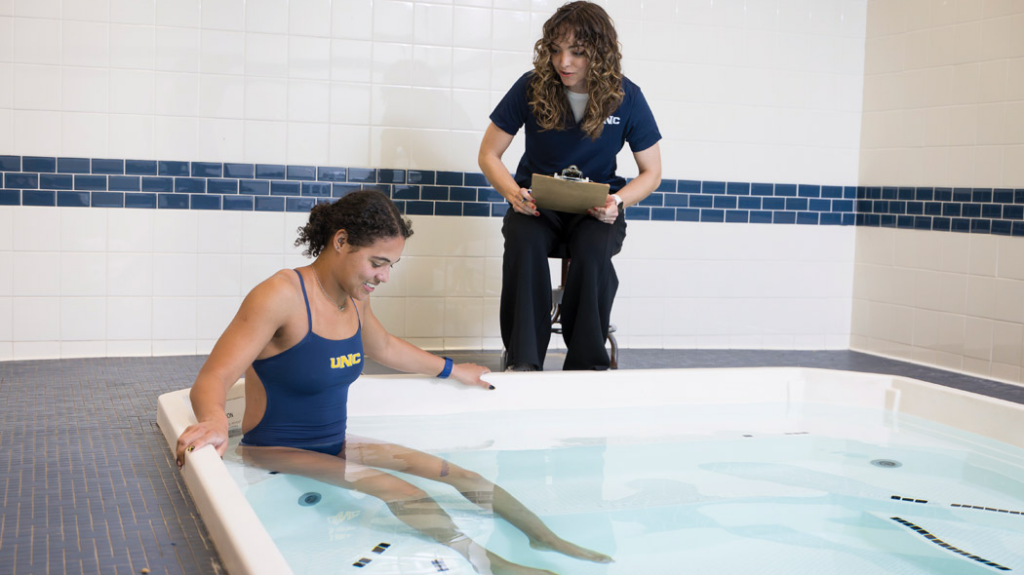
CHIPC has conducted research on the cognitive impacts of cannabis use, the effects of CBD on physical endurance — particularly as it’s tied to women’s health — how high-intensity training and breath interventions impact the function of the body’s cancer-killing cells, the effect of cold plunges and showers on overall brain and body well-being and more.
The next topic slated for examination is centered around berberine, a natural supplement used to supposedly help with glycemic conditions related to diabetes, as well as for its potential anti-inflammatory properties.
Keola Tamanaha, M.S. ’23, a doctoral student in the Exercise Physiology program, will be taking the lead on that study as a part of his graduate dissertation. Throughout his time working with CHIPC, Tamanaha said he’s come to appreciate the importance of conducting research into alternative medicine.
“Take the world of fitness influencers, for example. There are a lot of claims being thrown around about a lot of products, treatments, exercise modalities, etc. that don’t really have any scientific backing,” Tamanaha said. “But these influencers can have huge followings. If their followers can’t or don’t do their own research, they might end up taking false claims at face value.”
Without research like the kind CHIPC does, not only would it be more difficult to determine which treatments have merit and which don’t, some potentially beneficial sources of care might go unnoticed and unutilized.
“One of the biggest issues associated with complementary and alternative medicine is just the lack of research out there,” Tamanaha said. “For instance, if a patient says to you one day, ‘I heard online that berberine can improve my blood glucose levels’ and asks if it might work for them, you need to have a good explanation ready to go as to why it might or might not be a good fit.”
To ensure their research is as thorough as possible, the CHIPC team frequently collaborates with UNC’s Biology department during their studies. Through cooperation with Biology Professor Nicholas Pullen and Associate Professor James Haughian, the center can combine their expertise on exercise science with an in-depth physiological perspective.
“Our main focus is translational; we look at the effects of these interventions on the whole body and explore some of the mechanisms that might be at play,” Stewart said. “To do that, we often collaborate with our friends in the Biology department. They’ve assisted us with looking at things like immune cell numbers and functions as they relate to inflammation and cancer cell killing capacity.”
The faculty of UNC’s Biology department aren’t the only individuals CHIPC works with during its research projects. In fact, their research would be next-to-impossible without participants to undergo the trials, exercises and interventions to draw data from.
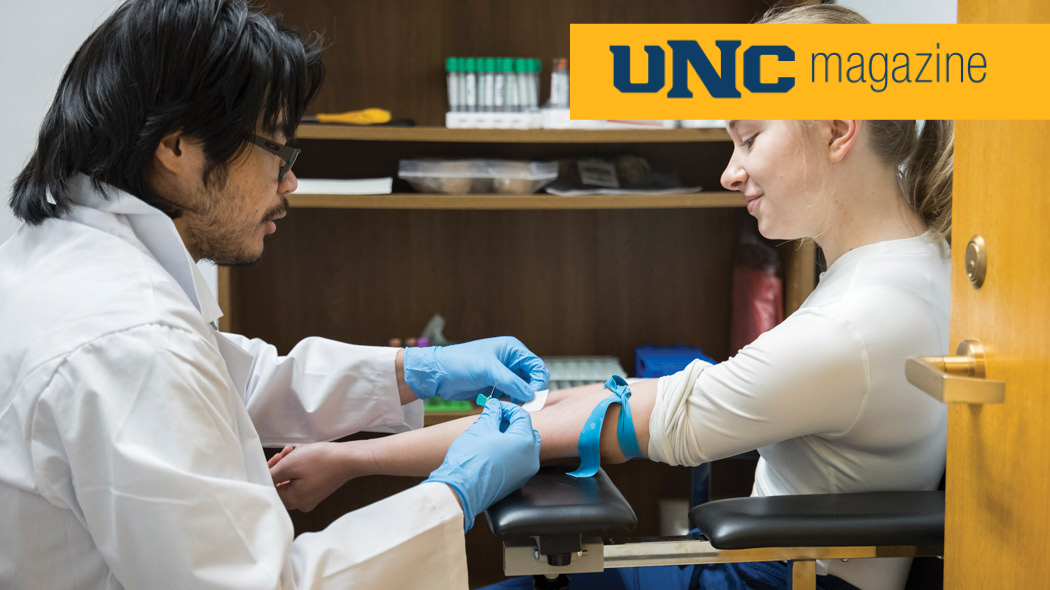
The center recruits from Greeley and the broader northern Colorado area, bringing in community members to play a role in the research. These participants are involved in a number of ways, whether it’s signing up for a multi-week stint of taking frequent cold plunges or reporting back on the efficacy of intense, high-interval exercise regimens.
“We wouldn’t be able to do any of what we do without our wonderful community,” Stewart said. “The information we’re eventually able to provide is undeniably beneficial to those involved, as well to anyone looking for more information on these topics. We love to give back through service and research as often as we can.”
Over the years, the CHIPC team has discovered a variety of interesting findings through their research.
Although concrete conclusions are difficult to draw, and undeniable facts only come with years of trial, error, review and application, the team has seen some promising results
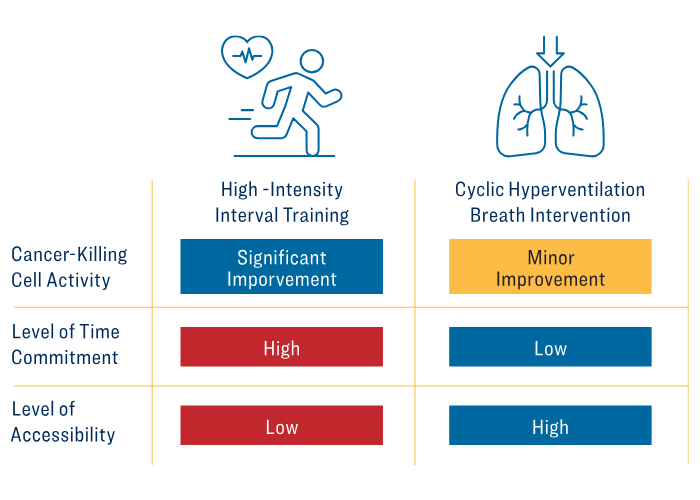
“In terms of conclusions, we’ve seen that high-intensity interval training — even just in short bouts — improves your cells’ natural ability to kill cancer cells,” Stewart said.
“In addition, breath interventions also improved that ability, albeit at lower levels.”
As is the case with any study the team undertakes, Stewart is most interested in how their findings can be translated into tangible, actionable benefits for the broader community.
“Our thoughts on these breath interventions are that they might be something that is more accessible for people; something they can do when recovering from surgery or when they’re not feeling well to help, even in a small way, to improve immune function.”
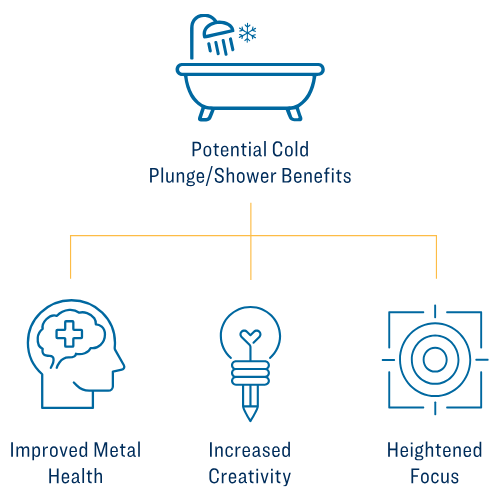
Though CHIPC’s work examining cold plunges and cold showers is still in the process of being reviewed, Tamanaha is optimistic about the potential findings.
“We’re still in the process of analyzing the data, but we are seeing some pretty pronounced changes in terms of mental health effects, as well as improvements in focus, attention and other measures of cognitive function,” Tamanaha said. “It’s still too early to make concrete claims, but there is some very cool evidence to support that [both methods] could be potential vehicles for improving measures related to body health, wellness and cognition.”
As health fads rise and fall and claims continue to be made about supplements, exercises and diets, CHIPC is sure to be on the cutting edge of integrative investigation.
“More and more, people are wanting to take control of their health,” Stewart said. “And often, it doesn’t need to involve a lot of money or a special treatment. Even just having education on what’s out there can be incredibly empowering.”
Inspiring Aspiring Investigators
Despite Stewart’s passion for the work she and the CHIPC team are engaged with, there’s one thing she values even more highly.
“First and foremost, it’s about the students; training them on how to interact with people, how to develop a good, meaningful project and how to ask the questions that people want to know,” Stewart said. “Now, more than ever, we need to be training scientists that are excited about science and about exploring new grounds.”
And by all accounts, that attitude is infectious.
Tamanaha cites working with Stewart as one of the most impactful things he’s experienced while at UNC.
“Working with Dr. Stewart in the CHIPC lab has really allowed me to expand my horizons as a researcher,” Tamanaha said. “At other labs in other schools, you might get pigeonholed into working on what your advisor is really interested in. With Dr. Stewart, if you have an idea, she’s going to figure out a way to get you to do that research; she’ll figure out ways to get you funded and she’ll figure out ways to facilitate your interest.”
While research is a huge part of what CHIPC focuses on, according to Stewart, it’s not the only thing. Just as the center’s research topics are geared toward expanding the horizons of medicine, so too is Stewart focused on expanding the horizons of her students.
“We’re looking at exploring more entrepreneurial initiatives instead of keeping everything focused on academia,” Stewart said. “For example, looking at what it’s like to work for a company that runs clinical trials or working with existing commercial entities to disseminate health information. I want to open their eyes to the paths that are out there aside from the traditional route of pure academia.”
This broadened focus on areas outside of academia speaks to both CHIPC and the university’s goals of equipping UNC students with the skills and tools they need to thrive in the ever-changing career landscape that awaits them once they graduate.
Whether it’s through collaborative research projects, developing exciting new questions to ask, preparing for careers post-graduation or working with members of the community, to Stewart, the work done by UNC students is what makes CHIPC everything that it is.
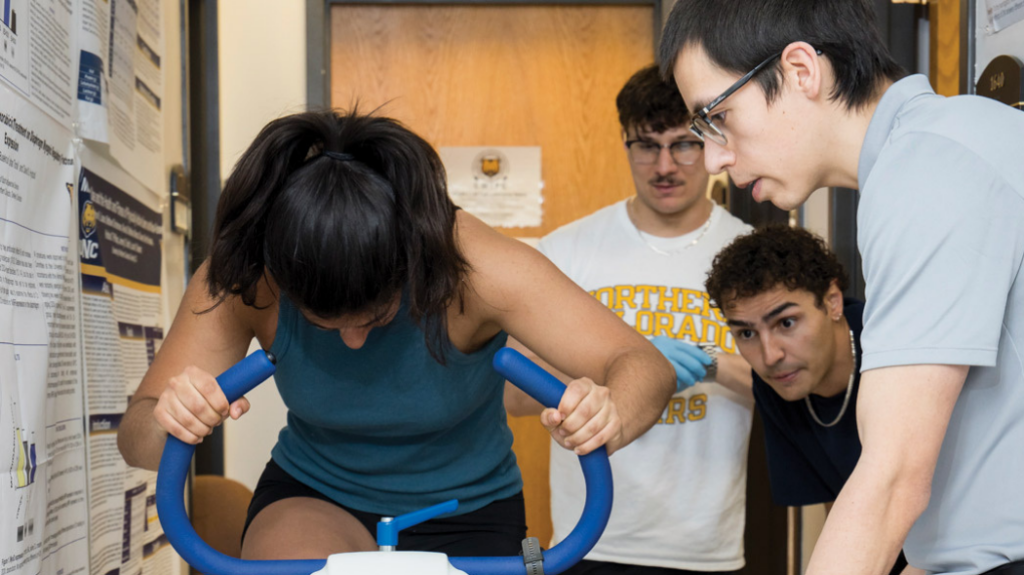
“Students are involved in every aspect of what we do, from gathering info about a topic, to helping design our research studies, exploring the questions we’re developing, collecting data, doing presentations and writing research proposals or papers,” Stewart said. “Without our students, we simply couldn’t exist.”
Looking to New Horizons
At the beginning of this article, claims were made about some miraculous things reading it might do. While that may have been a snake oil pitch, the work being done by Stewart and CHIPC is anything but.
As the team continues to strive to provide tangible, science-backed answers to some of the most hot-button questions in the world of alternative medicine, Stewart said she won’t be content to rest on
her laurels.
In the future, she hopes to see the center grow, expanding its capabilities to recruit community participants even further, increasing the breadth and scope of the studies the team can take on and giving more UNC students the chance to experience what it’s like to be explorers mapping uncharted territory in the field of medical research.
“We’re just at the tip of the iceberg of what we can really do,” Stewart said. “I can’t wait to see where we go from here.”