
Podcast
April 17, 2026
Kinsley Walker and Carlos José Pérez Sámano
Everything You Need to Know About Wildfires
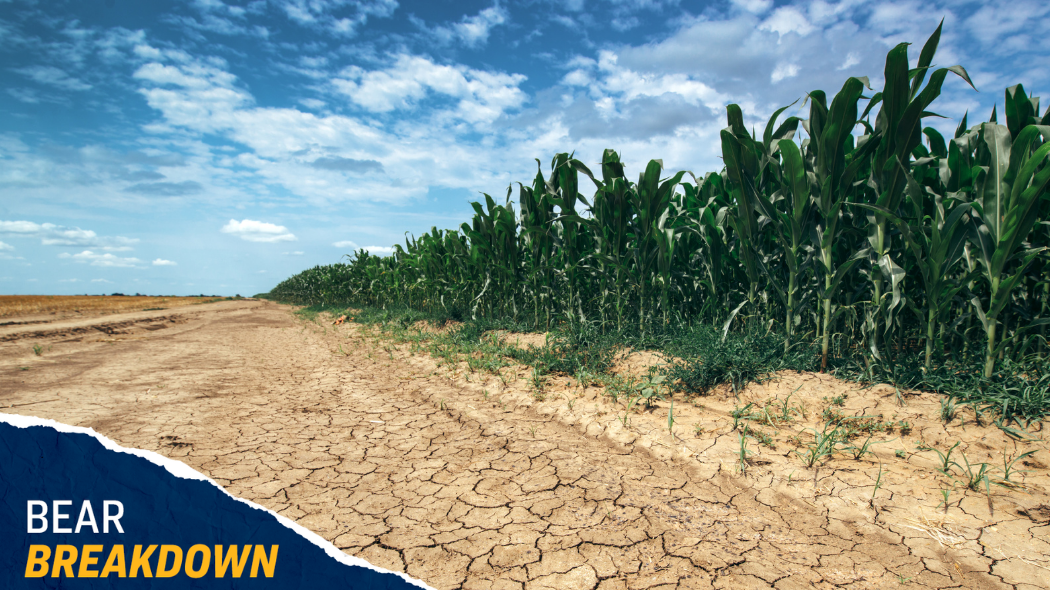
From debunking common myths about fires to explaining how climate change, drought, and human activity are shaping today’s wildfire risks, this conversation with Scott Franklin, Ph.D., offers a deeper look into the science behind the flames. Whether you live in the city or near the mountains, this episode provides essential insights on staying informed and prepared during an increasingly intense fire season.
In this episode of Bear in Mind, host Kinsley Walker sits down with Scott Franklin, Ph.D., to break down the realities of wildfire season in Colorado.
Welcome back to Bear in Mind. I’m your host, Kinsley Walker, and I got to talk to Doctor Scott Franklin about wildfires in Colorado and how we can prevent them, or what we can do to help if wildfires do come and how bad this season really is going to be with wildfires. This is a really informative episode. So if you’ve been questioning how the lack of snow is going to impact our summer, this is the episode you don’t want to miss.Let’s get started. Okay, so thank you so much for doing Bear In Mind today. I’m going to have you start with introducing yourself to our listeners. Who are you? What do you do? What do you research?
Oh, okay. Thank you. So my name is Scott Franklin. I am a professor in biological sciences. I started here about 2008.Mostly what I look at is disturbances and how communities, plant communities specifically, respond to disturbances. So I look at everything from flooding to fire to fracking, and how communities are responding to those many types of disturbances, both anthropogenic and natural.
We’re talking about wildfires today, right? And what about your interest about these plants and all of that, how does that contribute to wildfires? How does that cause them or make them worse?
Well, so whenever you’re studying natural communities and how they function, disturbance becomes a part of that. And fires are widespread in many locations. I started in the eastern deciduous forest, and their fires are not near as big or near as broad as they are here. It’s much different than what they were historically, but I did my dissertation research on fire, and we did a bunch of prescribed fires in some oak hickory forests. Where I could set the fire and then step across the fire line. And it’s just a very different circumstance than when you come out here to conifer forests. And, and you don’t want to get anywhere near that fire line. That’s just way too hot. But I’ve always had an interest in it because fire has had a bad name. And kind of like snakes, if you’re in the animal world, they do some wonderful things and great things for us. Their services ecologically are very important. They’re required to be part of these systems because many species depend on them. And so fire has always intrigued me as how can we use it as a management tool, successfully and safely? And how can we, view it in a way that is part of the environment as opposed to being always negative?
So is that like the most interesting part to you is how we view fire?
Well, I guess the interesting part to me is how plants are responding to fire, because they’ve evolved to this, disturbance for many years. And, how the various ways that they are able to respond to it and the different, evolved characteristics and the evolved structures that they have those, that’s all really fascinating to me as well.
I’d like to debunk some of the things that we hear about fires. Right.
I appreciate that.
You just said that fires aren’t always bad. Right? So I guess my thing is when people hear fire, they’re automatically scared. There are automatically thinking, oh no, how can I keep myself safe? Things like that. So kind of can you go more into that? Are fires always bad or are they always good?
They are not always good. If there’s a fire in my house, I think very differently about that fire than I do if there’s one in the forest. I think, you know, it’s like any risk to me, if you’re aware and you know where you can get information. I think that’s very important for understanding the risk fire imposes to you. Most folks that live in a city, it’s not a major issue for them. Most folks that live in the wildland urban interface, this is as you’re going up into the foothills and up into the mountains. They’re going to have a bigger risk. And those folks that are kind of out in the middle of nowhere and surrounded by forest, they have the biggest risk. And if you look at the insurance companies, they know this. Right? So,fire insurance in Fort Collins is maybe a few hundred dollars per year. But it can range up to $4,500 per year if you’re in a high-risk zone. The beauty is Colorado actually has a map, so you can look up your address and know what kind of fire risk zone you’re in. You’ll probably know by paying your fire insurance bill as well.
And then you said just now that folks in the city don’t have as much risk, right? So, is it maybe impossible for fires to go into the city? How do fires spread in the city? Has that happened before?
It certainly has. We had a prescribed fire that was just a couple of years ago, set down near Denver. And that expanded into 1200 different homes, I believe. So that was one of the worst wildfires, although it was kind of prescribed. But that was one of the worst fires we’ve had move through a city. But the night Chicago died was all about when Chicago burned to the ground in the late 1800s. So it’s not like it does not happen. It’s just a lot less ignition sources and a lot less fuelsto really keep it moving. In the city, we’re always within minutes of responding to a fire. And so maintaining that to one unit is always a really high possibility. If it takes you 20 minutes to get to a wildfire, it may already be hundreds of hectares in size. So it’s a lot harder to stop that once it gets rolling
Kind of going back to the myth versus fact, we’ve been seeing fires a lot right in the past ten to 20 years. Are we having more fires today and recently than we have had in the past? Or is it just because we’re seeing more media exposure of it that we’re thinking, oh, we have more fires now?
Yeah, it’s a really good question. If we look back historically, the entire world has less fires than it used to have, partly because we’re more urbanized than we used to be. But if we think about it, is this really high fire for when humans are occupying the landscape, then? Yes. We’re dealing with a lot more fires and a lot larger fires than what typically happened. In Colorado, we’ve had kind of a set of storms come together, you might say, a perfect storm, where we had suppressed fire for nearly a century. Part of the, put it out by 10 a.m. policy. The Smokey the Bear policy. Fires are not good in our national forests. They were set up as product for us, right? We were supposed to be able to use that timber. That’s the whole idea of Forest Service land. So having a fire there, you’re losing your timber. That attitude kind of went away around 1970, 1980, somewhere in that area, where we came to realize that those fires were actually required for many species in the forest. So, we needed to start letting some of these areas burn. But after 80 years of suppression, a lot of fuel has built up. So now you’ve got a problem where that fire, once it gets started, is very hard to control and actually burns a little bit differently than it did historically. It can burn quite a bit hotter. In addition to that, we had a massive outbreak of mountain pine beetle, and that added not really fuels to the landscape, but a different dryness of those fuels to the landscape. Colorado is the number one state in the country for dry lightning strikes. So, we have the potential for wildfires every year, all the time. Not to mention all the human errors that we can potentially put on the landscape as well. So campfires that get out of control or that sort of thing. So, things are a little different, and we need to see them as different.
But I think at the same time, we need to see fire, and it has to be a part of the system. So how do we put it back into this system in a safe and manageable way? So that’s what a lot of people are working on right now.
And with it being such a dry winter, does that necessarily mean that it’s going to be a rougher summer with fires? Does that kind of dictate how the fire season is going to be?
Yeah. So the main things that are controlling when fires and how big fires occur is how much fuel do you have. And so if you’ve had several years where you’ve had drought, you have really dry fuels, but the plants may not have grown very well, so you might not have as much grass. If you have several good years where the grass is growing really well, the trees are growing really well, and all of a sudden, then you have a couple of years of drought, then you’ve got a bunch of fuels built up, and so you can have some really significant fires at that time. The longer dry time you have, the more chance you have for fire, because it’s just partly chance right now. Many lightning storms might come through. So the longer fire season we have, the drier the fuels can be and the more chances for lightning strikes. So, yeah, I think we’re in for a fire season. You might say.
Hopefully not too bad of one. And hopefully everyone stays safe.
Yeah, well, they’re hoping for. Is it a super El Niño this winter? So whatever burns will have a lot of snow on it this winter.
Okay. Good idea. Make up for the snow we didn’t get this past season.
That is the hope. I’m sure a lot of ski places would love that.
Oh, yeah. Definitely. And back to again, the truth versus fact. Or, Truth versus myth. I hear a lot of people say like, well, once a wildfire is too big, there’s nothing I can do. Or once there’s a fire, there’s nothing really I can do. I call 911 and I move on with my day. What can we do to prevent fires, if anything?
Oh, there’s a lot, actually. Yeah, especially if you’re living in those locations. There are several things you can do around your property. There are actually plenty of information out there. So you can look online and it will tell you zones that you can control and what you should do within a certain set of feet from your property line. And you can have state foresters come out and assess your property for fire risk. There are lots of things you can do to have building kind of structures that are less flammable roofing material especially, because sparks will fly for miles sometimes. And land on roofs. And if they just go out on the roof, no problem. If you have cedar shingles, it might be a problem. So there are definitely some things we can do there. If you’re out and you’re camping or fishing and having a good time in the mountains, just pay attention to the fire policy. Rocky Mountain National Park already has a burn ban. No fire, allowed right now in the park. And I think that’s probably going to come from the Forest Service pretty soon. So if you like campfires and you like camping, I’d go now. Because my guess is that will be banned pretty soon. But as long as we’re paying attention to those and we’re being careful, I think we can avoid that as much as possible.
So really, all it is, is you need to be cognizant. You need to be aware of what’s going on. Don’t start a little bonfire and then abandon it in the middle of the woods.
Yeah. Don’t think you’re going to be the person that doesn’t let it get out of control, because you just never know when wind comes up or something goes kind of crazy.
It can just become very unpredictable.
It can, yeah.
Yeah. And then you said that infrastructure, different types of infrastructure is built to prevent fires. Or maybe resist from the fire taking down a house or building. Is that a type of infrastructure that we’re seeing across Colorado already? And do we see it across Colorado?
Oh, I think so. Absolutely. Most houses that are being rebuilt from these previous fires are following pretty strict guidelines on how to rebuild those, and you can save insurance by rebuilding them the right way as well. So, the idea of what you use for building materials, the idea of how much clearance you have around your home, a lot of people are paying very close attention to that. I think it was a few years ago. I think it might have been the High Park fire where the sheriff or the person in charge of putting out fires in the area basically said that if it looked like the homeowner had worked hard to try and keep their area, then they worked hard to try and save it. But if it didn’t look like the homeowner gave any effort to it, they weren’t going to risk their lives to try and go for that. So yeah, do as much as you can.
And I mean, it’s just crazy to me that even I mean, obviously, like you said, we’ve had great fires in big cities, but that’s crazy to me. Like you’re never in Denver and you’re like, a fire could break out right now. You never really think about that. You think about it more when you’re in the mountains. And you see all those dead trees and dead plants. And how long does it take all of that to grow back once it does get burnt and die?
Well, in the past, historically, I think it was anywhere from 50 to 100 years and you’d have a nice forest back. What we’re seeing now is very little regeneration in some of these much larger fires, because it takes longer for the seed source to actually get there to regenerate those areas. So we’re not actually sure how long it’s going to take for the regeneration on, say, Cameron Peak Fire. Those were really big fires. And the seed sources are a long way away. Now, cities like Greeley who have water in those areas, and they’re trying to maintain the quality of that water, are seeding those areas. So they’re putting out all kinds of seed, and they’ll throw out mulch bark to try and control erosion. So a lot of people are doing a lot of things to try and keep the quality of water as best as possible, which ultimately will help the forest regenerate as well. That’s the whole idea: they’re using the forest to help maintain that water quality. So, for most fires that are not that big, they regenerate actually quite quickly. It’s the really large fires and the really hot fires that are a little bit new to the landscape. We’re totally. Well, I’d say we’re not sure how long it’s going to take for those to respond. I guess the one other thing I’d mentioned regarding cities and areas are power lines. We’ve seen this in California, and we know it’s a risk here. Power lines that are above ground in high, windy areas potentially lead to fires as well in cities. So, a big community in California was taken out due to power lines. My wife works at Timnath Elementary and they’ve already had a day off because it was so windy. They were afraid of the power lines coming down and causing a fire. So, or some other problem for that matter. So, there is that risk, that we should mention and the urban locations.
The power lines, I just feel like it kind of hit this big chunk of Colorado. I don’t even remember when, I want to say, maybe the beginning of January. Maybe November. All the days are starting to blur together. It was so windy that we were losing power everywhere in the state because we didn’t want any more fires.
Yeah, they just shut down the grid.
So that’s crazy. With the plants and the animals and everything. I mean, losing their homes, dying in these fires.Is there anything like a day to day person like me can do to maybe help promote that growth back or help animals? Anything like that?
Yeah. It’s always fun to be a part of groups that are conservation-oriented. I’ve always enjoyed that myself. So, there are people that go out and plant on a fairly regular basis, especially long trails, because, one of the things we know is that after fires move through, those standing dead snags are really big hazards. So, trail maintenance for getting those snags cut back. And then also planting new trees. There’s a lot of that that can go on. Organizations will work for reintroductions. This is not quite as common post-fire, really. While our fires are big, there’s usually still other populations in the area, so we don’t need to really reintroduce populations.
But we do need to somehow manage those. If we think about overwintering animals, especially, there’s very little food in a burn area. Overwintering. It’s hard enough when you haven’t had a burn. But when you’ve had a burn, it’s much less so those animals will move to other locations. We just need to be aware that that’s happening. And not necessarily be welcoming. But don’t just shoot everything you see walking around. So, I think awareness of the fact that the animals are having to relocate as well is also a big positive.
Is that when we start seeing the animals more and more of eastern Colorado, kind of that, like Johnstown, Windsor area, is after fires or floods? Is that kind of when they start?
It’s interesting. It could be, you know, we’ve had a moose come out to Greeley right one time and I’m not sure what that was for. Just a wandering minstrel or something, I guess. But, it certainly could be that loss of habitat due to fires would drive them to look for other locations.
Because I know where I live in Johnstown, we have a mountain lion.
Oh, yeah?
That’s been there for a couple of years. And we’re like, you’re not supposed to be here,
Just your pet.
Go home. Yeah, we take them on walks every morning. And then when you when you think about fires, at least what I think about fires, right. It reminds me of, like, the Colorado 100-year flood. Right. The theory that there’s going to be a great flood every 100 years. Is there a similar kind of idea around that with fires? Is there going to be a great fire every 100 years? How true are either of those statements, things like that?
They’re certainly true. So, they’re really based on climate. So, if we have a really dry period of years that lasts a while and the fuels are drier and drier each year, then the likelihood of a larger fire can happen. So, the fact that we get droughts every 20 to 30 years, and that’s a fairly regular cycle, means that fires could potentially happen. That often as well. So, 1980s was a major drought. It was early, while mid 2000, about a decade, 15, 16 years ago, was a pretty good drought for several years in a row. The 40s was a pretty good drought. Back in the 30s was, sorry, the 50s and 30s were both good droughts. So it happens periodically because of climate, which ultimately, creates the conditions for high fire.Same thing with flooding. So periodically we will get these. Well, super El Nino events or something like that that occurs. And so the storms that occur are much bigger, which leads to much larger flooding. So, while they’re predictable within a range 100 year floods, 500 year floods, etc. based on their magnitude, you cannot predict the day. And I think one of the first things that started to come out of climate science when people were looking at this is that these 400, to 500-yearfloods, larger fires that should happen every 40 or 50 years, were happening every couple of years. So, the frequency of the higher magnitude was clearly increasing due to, climate change, among other factors.
What can we do about climate change?
What can we do about it as individuals? That’s tough. Right. Well, certainly the choices we make, as far as what we use. So, in general, climate change is caused by two main gases. So, carbon dioxide and methane, both of those we are increasing the amount that’s going into the atmosphere. Not that it’s the only amount. And so humans are maybe responsible for a 7% or so increase in carbon dioxide, for example. But that 7% ends up being quite a bit. And leads to increases in the amount of energy that’s captured that’s trying to leave our atmosphere. So it almost forms a bigger blanket over Earth. So, the more of those gases you have, the warmer Earth is going to be overall. So, the less we use those gases, or the more we can sequester those gases in some way, that’s the way that we can help with climate change. So, there are folks working on how do we pull carbon dioxide and methane out of the air and stored underground again, just like, how are we pulling it out of ground mining and burning it as fossil fuel? So, the less fossil fuels we use, the less we get from the petroleum industry or the other materials we can use instead of those materials. Anytime you can make those choices is great. If you’re using sandwich bags every day to take your sandwich to work, maybe that’s something that you could change to using a structure that lasts a little longer. How far you go to work if you can commute with somebody or not, if you can take the bus. Those choices that we make, they help. If we look along the Front Range, you can clearly see the haze of pollution from all of the driving that we do in this area. And it partly has to do with fracking as well. There’s a lot of oil industry we have, especially here in Weld County. So, all of that kind of comes together and and you can do your little part. But you can also vote for the people that are going to make the bigger picture, suggestions and policies at the state and national level. I mean, Colorado, I think, is one of the leading states for trying to make as many changes as possible to try and decrease climate change. We have a lot of renewable energy in this state. We are trying now to put in a train, finally, for the Front Range; there’s all kinds of things the state does really well, I think. So, you know, choosing those leaders that will make those decisions and put those policies in place is maybe the biggest thing we can do as an individual. Other than the daily choices that we make.
Thank you so much for doing the podcast today. You taught me so much about fires and climate change and wildlife, so thank you for coming in.
It’s my pleasure.
Wraps up this episode of Bear in Mind, a big, big thank you to Doctor Scott Franklin for coming on and talking to us about wildfires and what we can expect, how to help. Genuinely. Everything you need to know about wildfires, I believe, is in this episode right here. Thank you guys so much again for listening to this episode of Bear in Mind, where I keep you connected to what’s happening around the University of Northern Colorado. I’m Kinsley Walker, and I’ll catch you next time.