

Biological Sciences BS
- Major
- BS
- In-Person
- Greeley
- Cell & Molecular Biology
- Ecology & Evolutionary Biology
- Liberal Arts Concentration
- Pre-health & Biomedical Sciences
- Licensure: Science (Grades 6-12)
4 Years
Program Overview
Our Biology major offers five concentrations, a flexible curriculum and field and research experiences that will help you get a job in your chosen field.
Located between the Rocky Mountains and the high plains, the University of Northern Colorado is an ideal place to study the biological sciences. Our city of Greeley also has a lively health and innovation scene.
With surroundings like these, it’s only natural that our faculty members are experts in snake venom, bird songs, and lichen. They also work on pressing issues like habitat loss, climate change, public health, and cancer research.
As a biological sciences student here, you’ll learn from exceptional professors who put students first. They will mentor and inspire you — and help you find your true north.
You’ll go beyond the classroom into cutting-edge research labs on campus and out to forests, wetlands and grasslands. Explore the science of life, whether that is cells or ecosystems.
The Biological Sciences BS at UNC requires 120 credits, including:
31 Credits – Liberal Arts Curriculum
General education classes include a mix of math, writing, arts and humanities, social and behavioral sciences, natural and physical sciences, and cultural and international studies.
95* Credits – Required Major Courses
You will take foundational courses, as well as required and elective classes for your chosen concentration. You’ll also complete a capstone or student-teaching experience. *Secondary teaching students will take 66 major courses from biology, with the remaining credits coming from the education department.
Students work closely with an advisor to plan coursework and ensure all requirements are met. View full degree requirements in the academic catalog buttons below.
Degree Requirements – Cell and Molecular Biology Concentration
Degree Requirements – Ecology and Evolutionary Biology Concentration
Degree Requirements – Pre-Health and Biomedical Sciences Concentration
Add a scientific edge to your degree with the 20-credit Biological Sciences minor at UNC. Designed for students majoring in other disciplines, this flexible minor lets you explore the areas of biology that interest you most—whether that’s human health, ecology, genetics or microbiology. It pairs especially well with majors like chemistry, psychology, sport and exercise science, dietetics, nutrition, or environmental and sustainability studies.
For detailed course requirements, visit the academic catalog button below.
This plan is a recommended schedule to complete this bachelor’s degree in 4 years. Courses are subject to availability. Students must consult with their major advisor to receive information on any additional graduation requirements and course sequence guidance.
Four-Year Plan – Cell and Molecular Biology Concentration
Four-Year Plan – Ecology and Evolutionary Biology Concentration
Four-Year Plan – Pre-Health and Biomedical Sciences Concentration
Concentrations & Careers
Here’s a closer look at our five biological sciences concentrations, including pathways to careers and continued education options for each area.
This concentration gives you a strong understanding of biology, focusing on the basic unit of life: the cell.
You’ll be ready for careers in public health, medical research, pharmaceuticals, forensic, agriculture, and animal science.
This concentration also prepares you for graduate and professional school in a wide variety of fields such as microbiology, genetics, and physiology.
A strong science and mathematics background from high school or introductory courses at UNC will help you to succeed in this program.
This concentration area builds a solid background in the biological principles of all living systems. With coursework rich in real-world learning, you’ll study plants, animals, and other organisms in their natural settings.
After graduation, you can work in the public or private sector for agencies like the National Park Service or Bureau of Land Management. Or you can find positions in environmental education or ecological research.
You can also pursue graduate programs in fields like plant science, wildlife biology, ecology, or forestry.
A strong science and mathematics background from high school or introductory courses at UNC will help you to succeed in this program.
Sample Careers & Continued Education
Students in this concentration go on to careers with organizations like:
- U.S. Forest Service
- U.S. Fish and Wildlife Service
- U.S. Army Corps of Engineers
- Great Basin Bird Observatory
And they may also pursue graduate and professional school in areas such as:
- M.S. in Food Safety
- M.S. in Wildlife Ecology
- PhD. in Conservation Biology
This flexible concentration is ideal if you want a broad understanding of biology or wish to combine biology with another major at UNC.
You’ll be ready for careers in business, biotechnology, science communication, museums, and related fields. You can also pursue graduate programs in fields such as microbiology, physiology, ecology, and genetics.
If you’re interested in pursuing a career in human and animal health professions, this is the concentration for you.
You’ll fulfill prerequisites for medical, veterinary, dentistry, chiropractic, or paramedical professional schools. You can also consider research-based graduate programs in areas like microbiology and physiology.
You can also pursue careers in health communication, pharmaceutical sales, biotechnology, or government labs like the Centers for Disease Control.
A strong science and mathematics background from high school or introductory courses at UNC will help you to succeed in this program.
Learn More – Pre-Health and Biomedical Sciences Concentration
Sample Careers & Continued Education
This concentration can lead you to careers such as:
- Pulmonary Physician at the Department of Veteran Affairs
- Research Scientist at Johnson & Johnson
- Food Safety Hygienist
You can also pursue graduate and professional school in areas such as:
- M.S. in Cell/Cellular Molecular Biology
- Master’s Public Health (MPH)
- M.S. in Bioinformatics
- M.S. in Food Safety
If you’ve always wanted to teach middle or high school science, this concentration is for you.
You’ll build a strong foundation in biology and instructional techniques. You’ll also gain practical experience through fieldwork and student teaching. Upon successful graduation, you’ll be eligible for the state licensing exam.
This concentration also prepares you to pursue graduate programs in the biological sciences.
Why UNC for Biology?
Plant Specimens in the UNC Herbarium
Biology majors can also learn from a teaching greenhouse and a natural history museum that's home to 1,700 specimens.
Engaged Student Groups
Get involved with the Biology Student Association, Tri Beta (honor society), PreHealth Professionals Club, or Student LEAF (Leadership for Environmental Action Fund).
Research Labs
Participate in laboratory and field research to get more out of your coursework. This includes neurophysiology (studying the wiring of the brain), cancer cells and the biochemistry of snake venom.
Close-Knit. Collaborative. Cutting-Edge.
Research Opportunities
Conduct research and present your findings at our annual symposium. Or work alongside a faculty mentor, and maybe even earn a co-author credit on a published paper.
Labs & Facilities
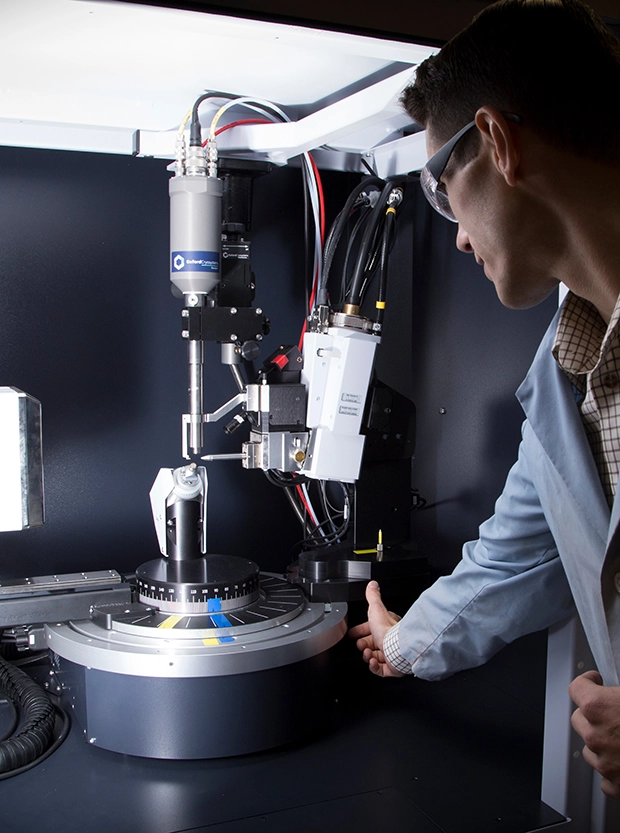
Learn and experiment in cutting edge labs. Study the intricacies of plant life in our greenhouse and herbarium. Venture into the field with faculty members.
Department Activities & Involvement
Our department offers activities like grad school workshops, guest speakers, and chili cook-offs.
Meet our People

PERFECT FIT
"The professors, staff, and faculty truly care about their students’ success and wellbeing inside and outside the classroom. My peers are determined and intelligent and made me want to work harder to be a better student and a better person."
Hannah Wilson ’23
Pre-Health & Biomedical Sciences Concentration
INSPIRED TEACHING
"UNC is a great place to teach and do science! The students at UNC are highly motivated to learn and a lot of fun to work with in the classroom or in the laboratory. The other faculty and staff in biology are fantastic — it's a really happy place to be."
Dr. Gregory DeKrey
Professor
DEEP RELATIONSHIPS
"UNC made it easy for me to meet new people and form connections that have since helped me succeed in many ways. I have not only received an education at UNC, but also a family."
Leah Werblun ’22
Pre-Health
RESEARCH DRIVEN
"I like the combination of teaching and research at UNC. My students and I conduct field studies in Colorado ecosystems that have been affected by flood, fire, and man-made disturbances such as oil drilling."
Dr. Scott Franklin
Professor and Department Chair

Professional Licensure
UNC’s professional licensure programs are designed to lead to Colorado licensure.
Each state sets their own requirements, so a UNC program might not lead to licensure in other states. Visit the UNC Professional Licensure page to learn more about which states UNC programs meet educational requirements for licensure. It’s important to understand requirements in the state where you plan to work. Visit the State Licensure Boards page to find each state’s licensing agency and contact information.
Have Questions? We’re Here to Help!
Biological Sciences
Biology is the study of life. Where did the first organisms come from and how has life changed over millennia? How do we function as individuals – what makes us respond differently to temperature or disease? Biology seeks to understand how organisms function in a changing environment.
- biology@unco.edu
- 970-351-2921
- Ross Hall Room 2480