
Article
February 19, 2026
Written by Student Writer Austin Watts, Contributions from Jill Burgett
Passing the Baton: Three Generations, One Musical Path
From 1969 to 2026, the White/Stream family shares a legacy of music education and "hearing in color" at UNC
It was a cold winter morning at the University of Northern Colorado (UNC) in 1972. Chris White ’73, M.A. ’80, and a group of fellow junior music majors had just finished an 8 a.m. music history lecture and were making the short walk to *Brown’s, a former popular student shop, for coffee and sweet rolls.
Later that day, White would head to a rehearsal for the UNC Concert Choir under the direction of the legendary Howard Skinner, former dean of the College of Performing and Visual Arts. It was there that he would meet a young woman named Dona, ’74. He couldn’t have known then that Dona would become his wife, or that 25 years later, their daughters, Jennifer and Cathy, would follow them into that same choir room in Frasier Hall. Or even that half a century after that first cup of coffee, the legacy would continue with Jennifer’s daughter, Abigail, making her own mark on the UNC community.
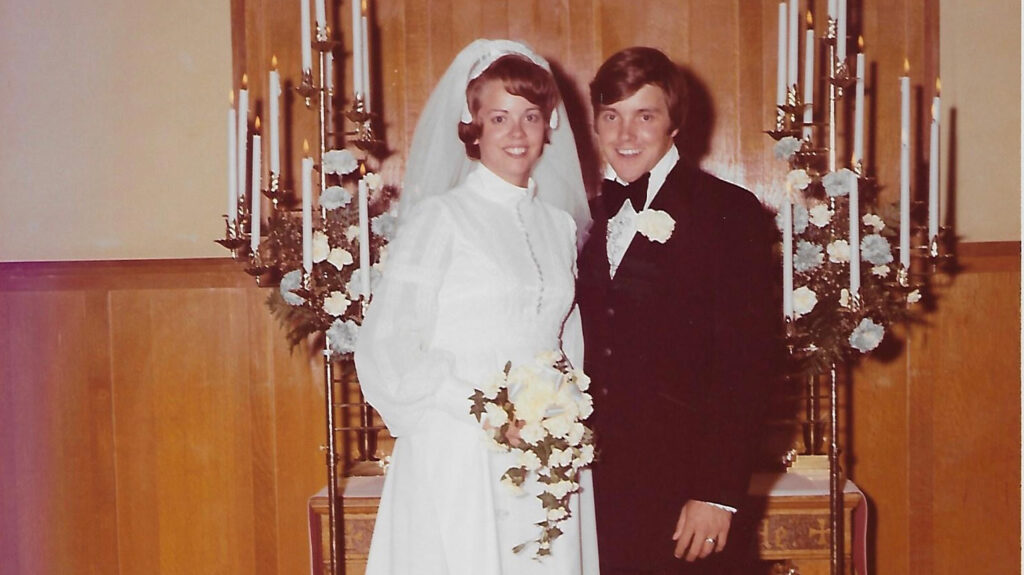
All five family members fell in love with music and education, choosing the same school – UNC – to tune their skills and pursue music education as their career path.
The Opening Movement: Chris and Dona’s Story
The first to earn a Music Education degree at UNC, Chris began his teaching career in junior high and high school choral music in Colorado Springs, returning to UNC for his master’s in 1980 and later earning a doctoral degree at the University of Colorado Boulder. His career took him through several collegiate positions, culminating as the director of the school of music at East Texas A&M University. He says he owes his success and teaching style to Skinner’s influence, highlighting his emphasis on score study, rehearsal preparation and rehearsal technique, all of which he applies to his own work as a choral conductor.
“The most unique benefit that many of my fellow UNC students and I did not fully appreciate at the time was the repertoire of significant large works that we performed with orchestra,” Chris commented. “During Dona’s and my studies, we performed Beethoven’s 9th Symphony, Vaughan Williams’ Dona Nobis Pacem, Bloch’s Sacred Service, Bach’s Mass in B Minor, several Mozart concerted Masses and Bernstein’s Mass. Dr. Skinner’s selection, preparation and performances of these iconic masterpieces of choral music elevated our music experience to a level commensurate with the nation’s best universities and conservatories.”
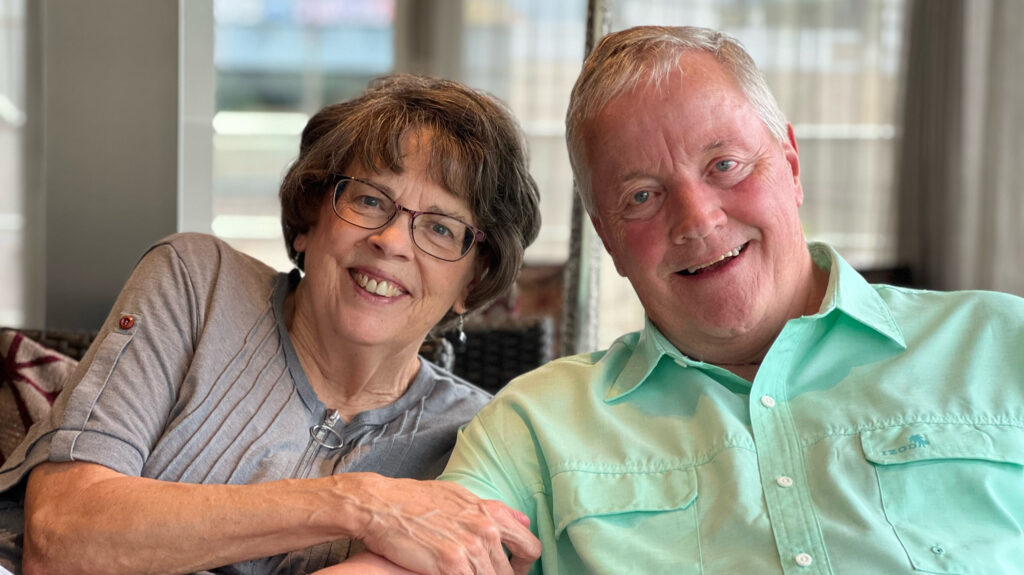
Chris followed suit, annually programming similarly large works with orchestras throughout his career, especially during his time at East Texas A&M University, so that students and patrons alike could enjoy an experience reminiscent of his own.
Meanwhile, Dona built her own distinguished career in elementary and middle school vocal music, first in Colorado and later in Texas, where she discovered her passion for teaching middle school singers. She attributed this to her love of guiding preteen students through their unique journey of self-discovery by providing an environment built on belonging and purpose.
“When a student joined the choir, they discovered [that] the whole is greater than the sum of its parts,” she said. “In other words, though the student may not find his or her voice to be remarkable, they would realize that the collective sound of a multitude of students all singing together was quite beautiful.”
Dona is a firm believer that the study and performance of music teaches children goal setting, discipline, problem-solving, teamwork, and self-esteem; and her children and grandchildren are no exception. She feels that by passing down her and her husband’s love of music, she has given her children and grandchildren the tools to appreciate the world around them in a heightened way.
“The study of any medium of art enhances one’s ability to perceive and find beauty in the human experience — the performance or creation of art allows one to meaningfully and positively express one’s response to that experience,” Dona said “With regard to music, it is like my children and grandchildren hear in color while others are limited to black and white.”
An Intergenerational Crescendo: The “White Sisters” Duo
For their daughters, Jennifer (White) Stream, ’01, and Cathy (White) Keller, ’03, the second generation of music educators, this ability to “hear in color” has guided them into their own prosperous careers in classrooms across Colorado.
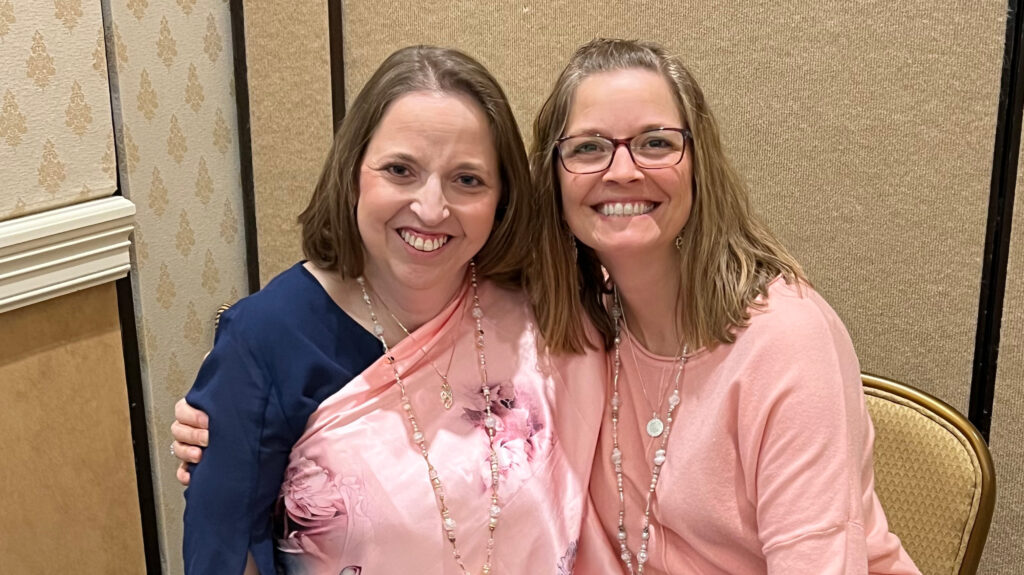
“My sister and I grew up immersed in the world of music education,” Jennifer said. “Unaware that our futures began as we played in the halls, auditoriums and classrooms of both our parents. We became the adopted siblings of so many of my father’s students, and we remain close to several of them even today.”
It wasn’t just the time spent with musicians that jump-started Jennifer’s musical journey: her family also turned to it to help her cope with an illness. Diagnosed with juvenile rheumatoid arthritis at age 3, her parents quickly introduced her to the violin and piano to minimize the long-term effects.
These early lessons laid the foundation for a musical career that reached its stride during her college years. After sharing a dorm for years at UNC, the “White Sisters” duo became highly successful music educators. Cathy teaches at Prairie Ridge Elementary in the St. Vrain Valley School District and is married to the band director at Fairview High School in Boulder. Previously, she served as director of choirs at Fossil Ridge High School for two years and as an elementary music teacher at Thimmig Elementary School for another two years.
Jennifer began her career teaching strings for Morgan County School District for 10 years before spending the past 15 years as an elementary music teacher. Additionally, she is an active member of the Colorado Music Educator Association (CMEA) and Colorado All-State Choir boards.
While her professional life is defined by dedication and leadership, her personal UNC legacy is cemented by a spirited sense of play that she has since shared with her daughter Abigail. In fact, one of Jennifer’s favorite memories on campus centers on a legendary April Fool’s prank: she and a band of friends managed to tune the Gunter Hall bells to a haunting minor key, a mischievous feat that reportedly left students and faculty on edge for the rest of the day.
For Jennifer, the matter of sharing teaching strategies has long been intertwined with her career. She has been known to invite one or both of her parents into her classroom to guest conduct or even teach in her absence.
“However,” she teased, “I have come to realize that my family’s teaching methods in the classroom are heavily influenced by our personalities… which are quite passionate and different from one another.”
The Next Refrain: Abigail Composes Her Own Future
Jennifer’s daughter Abigail isn’t just a keeper of her mother’s tales, though; she is currently composing her own chapter of the family’s musical legacy. Abigail, now a freshman Music Education student, said that being at UNC feels like coming home, and nowhere is that sense of belonging stronger than at the Howard M. Skinner Music Library.
“The first time I set foot in the music library, it was surreal to think about the fact that Howard Skinner was my grandfather’s choir director when he was at UNC for his bachelor’s,” she said. “Now he has a building named after him. That was the connection point where I thought, ‘Oh my gosh, I’m actually here.’”
Abigail’s educational roots are anchored by both parents, who met right here on campus. Jennifer and Zach Stream first crossed paths in a bowling class, thanks to an introduction from Cathy. While Zach didn’t follow the musical route, he found his own rhythm in the classroom. A UNC History alumnus, he now teaches American History at Fort Morgan High School. For Abigal, her father represents the gold standard of the profession.
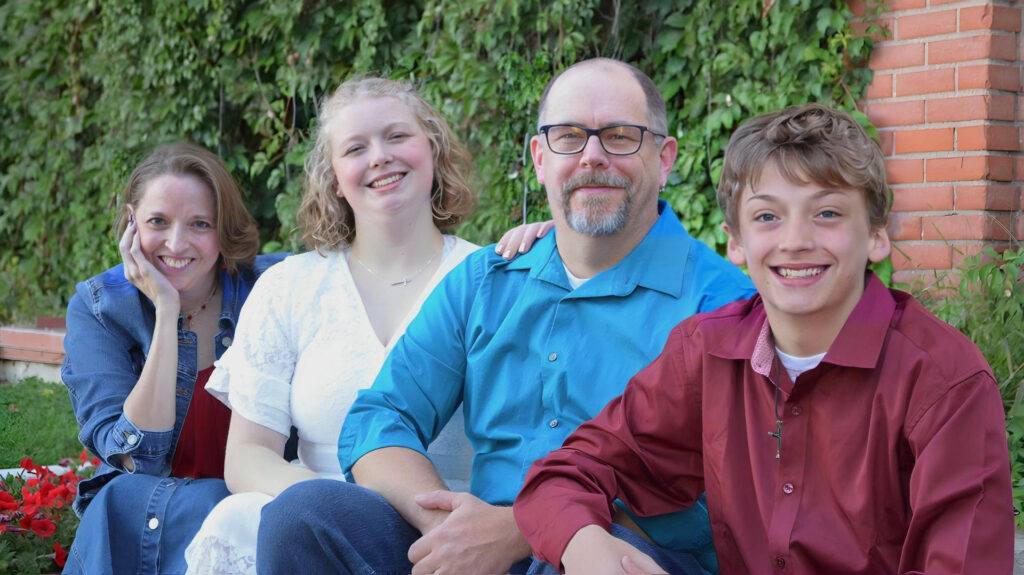
“Even on the toughest days, he always manages to find a way to connect with students, put a smile on someone’s face, and make an impact daily,” Abigail said of her father.
As a fourth-generation educator on both sides of her family, Abigail’s impactful first moments at UNC were a long time coming: she’s known that she wanted to become a music educator since the seventh grade.
“I remember my orchestra teacher made a huge impact on me,” Abigail recalled. “I wanted to be like her and give kids an outlet for expressing themselves through music. It’s always been my firm belief that music is the universal language.”
When asked how it felt to drop Abigail off for her first day at UNC, only one word came to Jennifer’s mind: “surreal.”
“I am excited for Abbey, but I am also nervous for her. Our society as a whole often fails to recognize the importance of the arts, but I know my girl is up to the challenge. I also trust UNC to provide her with the skills she will need to serve Colorado as an invaluable music advocate. That said, I am also like any other mom who dreaded dropping off by far one of my favorite humans in the world, and I cried for a week.”
Having several industry veterans on speed dial is a massive perk for Abigail, though she’s selective about who gets the call. Her choice of mentor depends entirely on the day’s dilemma. When she’s diving into the technical weeds of music theory or history, she looks to her grandfather, Chris. But when the challenge shifts to the human elements of navigating the delicate interpersonal connections with students and fellow musicians, her mother, Jennifer, is the first one she dials.
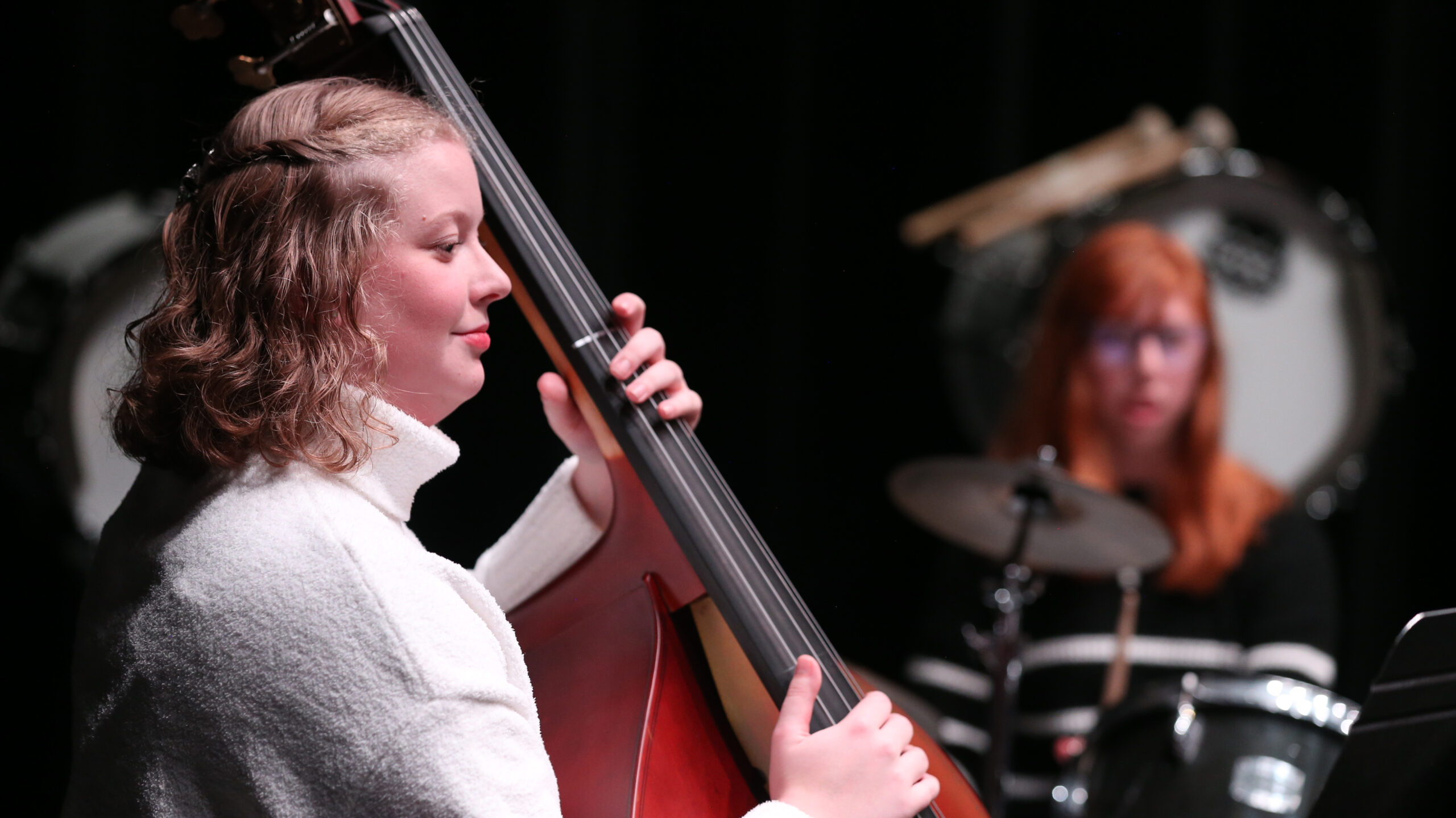
With a double emphasis in Classical Voice and Jazz Bass, Abigail is certainly building her own musical identity. After graduation, she sees herself in an elementary school music classroom.
“I’d like to teach elementary choir mostly, but the instrumental jazz side of me also wants to start a modern band with those kids,” she remarked, adding, “Lord knows those little kids love to bang on drums and just make noise.”
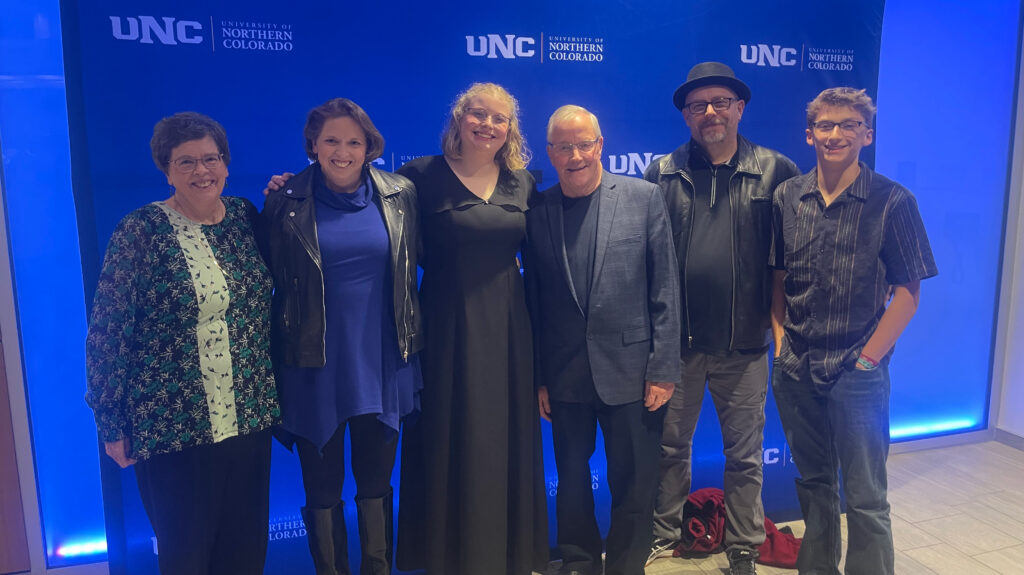
With a half-century legacy on her shoulders, Abigail has some high hopes for her time at UNC. In addition to her aspiration to partner with local religious organizations to increase music accessibility in the region, she also hopes to pull an April Fool’s Day prank of her own before walking across the commencement stage. Whatever her path holds, Abigail is excited to make her own mark on her family’s legacy, both at UNC and beyond.
Brown’s College Store: A Generational Heartbeat
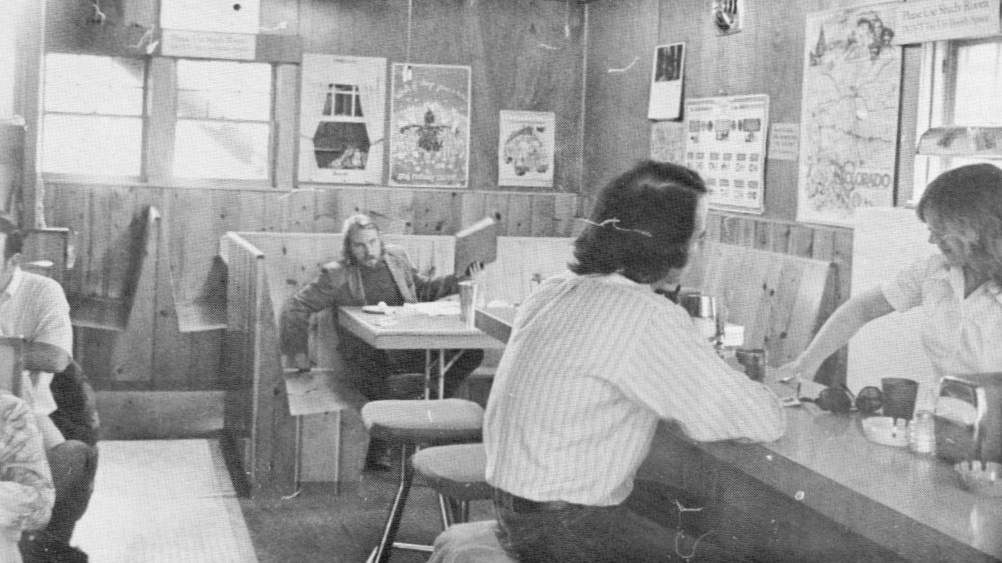
Located on the southeast corner of 8th Avenue and 17th Street, Brown’s College Store was a cherished UNC landmark for decades. Originally built in 1917, the two-story frame house operated under various names before Donald “Don” Brown took over in the mid-1950’s. The store was famous for its old-fashioned atmosphere, featuring wooden booths, a long soda fountain counter and a signature menu of “Brownburgers,” homemade omelets and buttered cinnamon rolls, which Don usually brushed himself, and Chris White described as “addictive.” Inside, faculty took coffee breaks and students were famously ordered by Don to use the back booths for studying to ensure they “got their grades.”
“You know Brown loved you if he yelled at you when you walked in or told you to get back to class and quit skipping,” Chris White recalled.
The Brown’s era ended with Don’s passing in March 1975, in spite of brief efforts by new owners to keep the business alive. The building was later demolished to make way for the downtown Greeley expansion. Yet the legacy of its self-declared “stubborn lowman” owner lives on through generations of alumni like Chris, who remember his unique brand of “mock sarcasm” and fierce dedication to their success.
Special thanks to Leah Bookman for her research assistance and for curating the archival sources used here.