

Gaming SEL Lab
Social and Emotional Learning (SEL) Through Games
At the Gaming SEL Lab in the Educational Technology department, we study how games can support SEL skill development in fun and meaningful ways. Our goal is to explore how digital tools like games can help kids grow emotionally and socially while they play and learn. New research shows that social and emotional learning skills can be taught and games are a powerful way to do it.
How Games Help Kids Build Social and Emotional Skills
Games give kids a safe space to explore and practice emotions without real-life consequences. With the right support from adults, games can help children:
- Understand and manage their feelings
- See things from other people’s points of view
- Show care and concern for others
- Practice kind and helpful behaviors
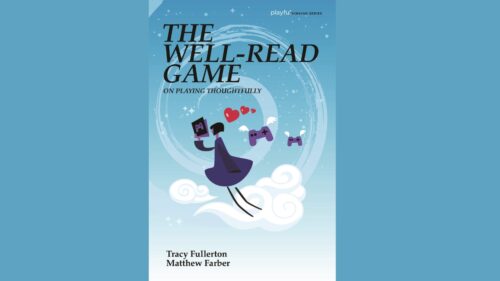
The Well Read Game Book
In The Well-Read Game, Tracy Fullerton and Matthew Farber look at what you feel and think while playing games. It’s not just about winning or how the game looks—it’s about the personal stories in your head, the questions you ask, and how you react as you play. It’s all about your own experience during the game.
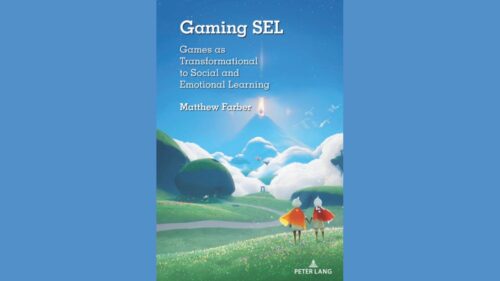
Gaming SEL
This book shows how games can help you build important social and emotional skills. Through play, you can learn to understand others, notice your own feelings, and work better with people. Gaming SEL makes learning these skills fun, helpful, and easy to connect with.
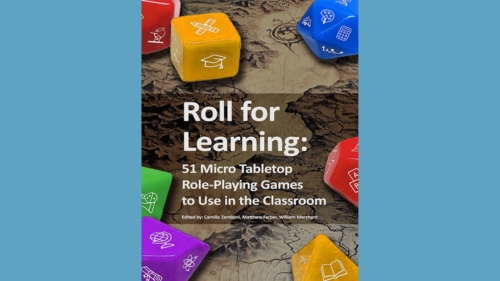
Roll for Learning
The Roll for Learning Game Book can be used in the Classroom. This gives teachers a fun and helpful way to make learning more exciting. It includes 51 short role-playing games that help students work together, be creative, and build social skills. With these games, teachers can turn lessons into fun, interactive stories where students take the lead.
Want engaging lesson plans for your classroom?
Our Curriculum and Games are free lesson plans around existing commercial games that can be downloaded and adapted in your classroom.
- Time Society Chronicles: Independence!, a U.S. history-based game created with Erin Drake Kajioka.
- Walden, a game EDU “Self-reliance” module, Survival Game cards: (free print-and-play version) or (deck for purchase)
- Walden, a game EDU “Where I Lived” module, Lost in the Shuffle cards & instructions: (free print-and-play version) or (deck for purchase)
- Check out our Gaming SEL itch.io page for additional resources.
- Game Design Studio Toolkit, published by iThrive Games.
- Museum of Me, What Remains of Edith Finch game-based curriculum, published by iThrive Games.
- Bury me, my Love game-based curriculum, published by UNESCO Mahatma Gandhi Institute of Education for Peace and Sustainable Development.
- Walden, a game EDU, game-based curriculum, published by USC Game Innovation Lab.
-
Zamboni, C., Farber, M., & Merchant, W. (Eds.) (2024). Roll for Learning: 51 Micro Tabletop Role-Playing Games to Use in the Classroom. Play Story Press.
-
Farber, M., & Merchant, W. (2024).Cultivating Esportspersonship: How Scholastic Esports Coaches Perceive Facilitating Positive Youth Development. Simulation & Gaming. https://journals.sagepub.com/doi/10.1177/10468781241299131
- Farber, M., Erekson, J. (Spring 2023). Going beyond the page: Pairing children’s literature with video games. Children and Libraries, 21(1), 6-13.
- Farber, M., Merchant, W. (2024). Awkward moment. In Kat Schrier, Rachel Kowert, Diana Leonard, Tarja Porkka-Kontturi (Ed.), Learning, Education, and Games: 50 Games to Use for Inclusion, Equity, and Justice. Carnegie Mellon ETC Press.
- Farber, M., Merchant, W. (2023). Unlocking hidden rules of office hours: A game jam on the first-generation college students’ experiences. In Remi Kalir, Danielle Filipiak (Ed.), Proceedings of the 2022 Connected Learning Summit. Pittsburgh, PA: Carnegie Mellon ETC Press.
- Farber, M., & Merchant, W. (2022). Insights from investigating early childhood ebooks on literacy, cognitive development, and social and emotional learning outcomes. E-Learning and Digital Media. DOI: 10.1177/20427530221108538
- Mukund, V., Sharma, M., Srivatsa, A., Sharma, R., Farber, M., & Singh, N. C. (2022). Effects of a digital game-based course in building adolescents’ knowledge and social-emotional competencies. Games for Health Journal. 11(1), 1-12. DOI: 10.1089/g4h.2021.0138
- Farber, M. (2022). How games give players “the feels” (book excerpt). Journal of Games, Self, and Society, 3(1), 74-84. DOI: 10.1184/R1/12215417
Frequently Asked Questions
Yes, we offer consulting services. If you are interested, please contact our Gaming SEL Lab co-directors listed at the bottom of this page.
The lab is mostly virtual. We sometimes meet on campus, too, at the Inspire Center in McKee Hall, Room 223.
Our Partners and Collaborators




Questions? Contact Us!
Matthew Farber
Associate Professor
William Merchant
Associate Professor