
Urban Education Blog
March 20, 2026
Erin Hart
CUE March 2026 Newsletter
Building Reading and Writing Skills at the Center for Urban Education
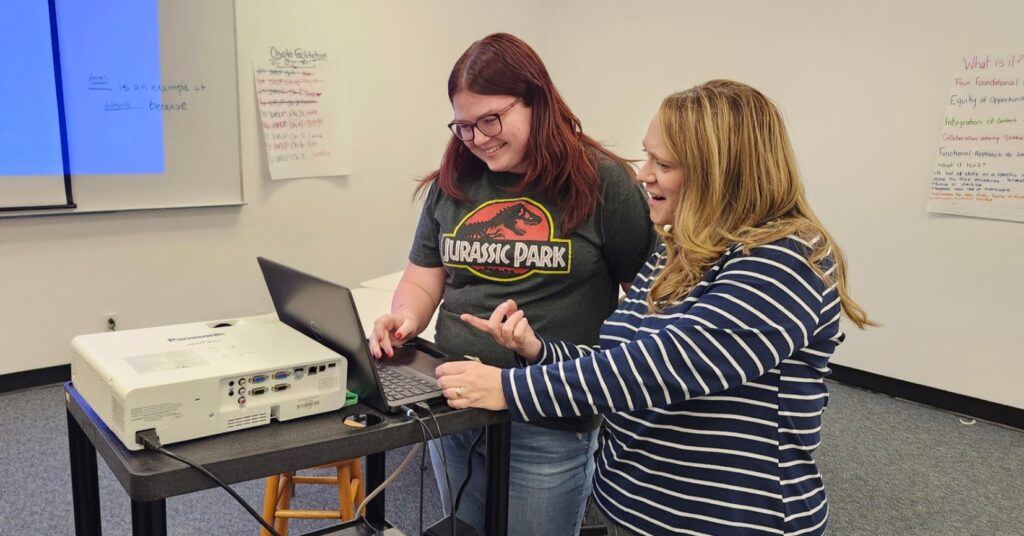
CUE Professor Courtney Goertz with a student in the Teaching
Culturally and Linguistically Diverse and Multilingual Learners Course
Creating a Program that Intentionally Builds Reading and Writing Skills
In our courses at the UNC Center for Urban Education, instructors ask students to develop strong proficiencies in reading and writing so they become highly literate for life. Literate people contribute more as democratic citizens as they rely on their understanding of cultural sensitivities to improve the world around them.
By regularly completing reading and writing tasks in their courses, teacher candidates gain clarity about the important work that teachers do to help their students realize their academic and social emotional potential. We work together to challenge the idea that there are low expectations for any student.
How We Structure the Program
At the Center, we structure classes to enhance teacher candidates’ proficiency in reading and writing in every course and throughout our four-year teacher preparation program.
In our apprenticeship model, faculty and mentors connect main ideas that students learn in their courses to practical, daily, field-based experiences. Professors and mentors ensure that learning opportunities are personalized, rigorous, and joyful.
Students edit their own and one another’s work to develop more complete, more elaborate, and more highly organized responses so they move beyond their initial thinking. Through regular intellectual engagement and ownership of their learning and growth, they push their thinking in new directions and reexamine their ideas and beliefs.
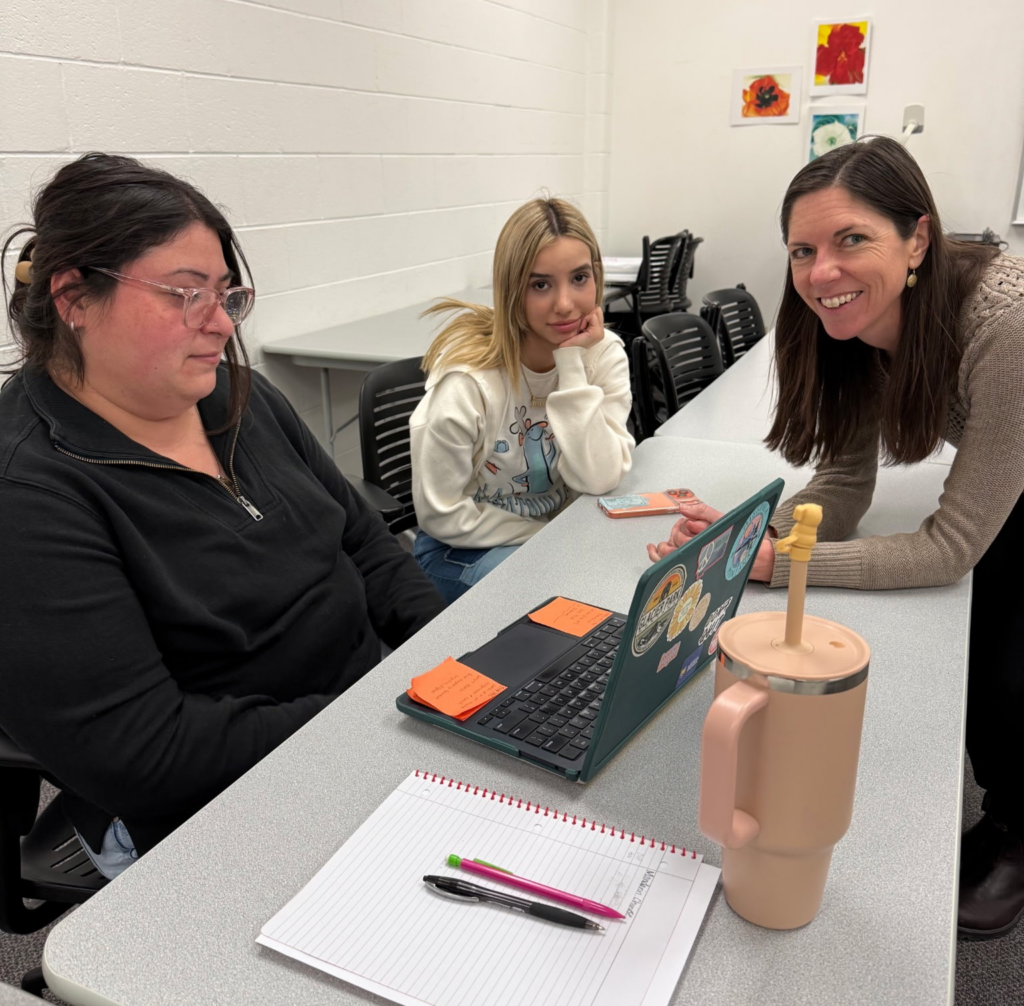
CUE Professor Annie Trujillo with students in the Diverse Early Language Course
How Professors Incorporate Reading and Writing into Courses
Special Education
In the Culture of Special Education course, Professor Anna Winston asks teacher candidates to write a brief research paper. Students state their claim and collect evidence to support their claim from primary and secondary sources. This writing assignment gives students an opportunity to synthesize important concepts.
Students research genuine questions and compare findings and ideas from multiple sources. Tony Personette, a current CUE teacher candidate is collecting evidence for the following claim:
“In Cedar Rapids Community School District v. Garret F. (1999), the Supreme Court held that school districts must provide necessary nursing services during the school day if a student needs them to attend school, which means schools cannot refuse services just because they are expensive or medical in nature, as long as they don’t require a physician.”
In another special education course, students practice and gain proficiency in writing technical evaluation reports and individual education programs. They read case studies and professional articles to understand how to write culturally responsive, parent-friendly documents that also meet legal requirements for educational assessments and plans.
Earth and Life Sciences
In this course, the professor assigns weekly nonfiction scientific texts related to the week’s topic. Students write responses to open-ended questions which the professor uses to measures their reading comprehension and understanding of the science concepts.
Class discussion is a core aspect of how the professor teaches this course, and students use it to deepen and refine student thinking. The professor encourages students to share their own subject matter knowledge and their opinions about the ethical concerns related to science before they submit written assessments at the end of class periods.
In addition, students sharpen their ability to understand technical writing during lab activities. Students must read detailed instructions and follow them in order to successfully complete the lab assignments.
Disability and Language Development
In Professor Jessica Hovland’s disability and language development course, students have opportunities to understand research studies, dissect differing perspectives across professional literature, and analyze the portrayal of disability and diversity in popular media. Students share their learning and experiences with their peers by participating in discussions and completing written projects and presentations that integrate various professional and popular sources.
With time for cognitive collaboration, teacher candidates listen to and interact with one another about the ideas at hand. When students are responding to the work of classmates, with adequate time for thinking, they can compare viewpoints and increase their motivation for learning.
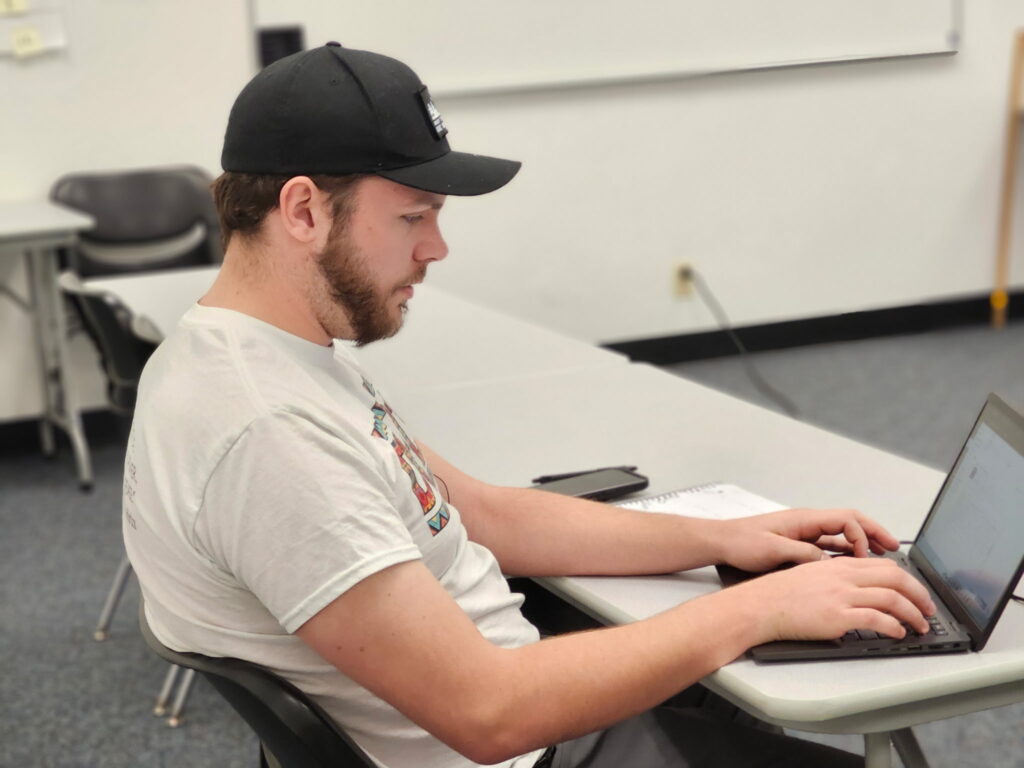
CUE teacher candidate in the Disability and Language Development course
Teaching CLD and Multilingual Learners
In Professor Courtney Goertz’s Methods and Approaches for Teaching Culturally and Linguistically Diverse and Multilingual Learners course, teacher candidates build reading skills in several ways:
Weekly Professional Text Readings
Students read course textbooks (e.g., Unlocking Multilingual Learners’ Potential, The SIOP Model), WIDA standards, research articles, and professional chapters to build foundational knowledge in language and literacy development.
Critical Reading for Discussion Facilitation
Students prepare reading notes in advance to actively participate in discussions that require deep comprehension and application to classroom practice.
Reading as Analytical Practice
Students analyze WIDA Performance Level Descriptors (PLDs), assessment data, and student language samples to interpret language development and instructional needs.
Multimodal Text Engagement
Students engage with podcasts (e.g., Immigration Nation), film (e.g., Why Reading is Hard), and professional standards.
Students build writing skills in multiple ways:
Case Study Analyses
Students write multiple formal analyses of a focal multilingual learner, including:
- Classroom observation analysis
- Interview transcript and analysis
- Written language sample analysis
- Evidence-based instructional support recommendations
Professional Reflections (Self, Peer, and Learning Reflections)
Students compose structured reflections that support metacognition, professional growth, and feedback to peers.
Discussion Facilitation Preparation
Students develop written discussion questions and guiding materials to support collaborative learning.
Professional Presentation Materials
Students create a written “Menu of Supports” (a one- to two-page professional flyer) aligned to WIDA descriptors to guide instructional planning.
APA-Formatted Academic Writing
All written assignments follow professional conventions (e.g., APA formatting and citations).
Dr. Rosanne Fulton, CUE Director, said, “Teacher candidates at CUE report that in many cases, faculty push them to excel beyond their own expectations by regularly providing time for private thinking and reasoning. We are proud of our students’ growth and contributions to Denver’s urban schools.”