

Educational Psychology PhD
- Doctoral
- PhD
- In-Person
- Greeley
Program Overview
Gain a solid foundation in research, teaching and leadership in UNC’s Educational Psychology Doctor of Philosophy program. The PhD program prepares you for diverse professional pathways including instruction, evaluation, test construction, educational research, educational consulting for business and public schools, and university teaching.
In addition to a rigorous course curriculum, you’ll learn through direct collaboration on research projects with faculty members, service experiences and involvement in student organizations. Our program is flexible, and we help you design a course of study that best fits your academic and professional goals.
Students may apply for admission to the PhD in Educational Psychology and complete their MA in Educational Psychology along the way to the doctoral degree.
Students can apply directly to the PhD in Educational Psychology and earn their MA along the way. This streamlined option:
- Uses the same application and admission criteria as the Ph.D.
- Admits students as doctoral students from the start, making them eligible for assistantships
- Reduces total coursework (89 credits instead of 98)
Students complete all MA requirements and receive the MA degree before moving into doctoral candidacy.
Before the program reviews your application, you must apply to the Graduate School at the University of Northern Colorado. Missing materials may delay evaluation.
The Graduate School is waiving application fees for all current UNC students and alumni! (The waiver applies only to the UNC Graduate School application.)
To be considered, applicants must:
- Hold a bachelor’s or master’s degree from an accredited institution (or equivalent from a recognized foreign institution).
- Have a cumulative GPA of 3.00 or higher (on a 4.00 scale) for your most recent or current degree.
- Complete the online application.
Still completing your degree?
- Admission is based on your current GPA.
- You must submit your official transcript showing your conferred degree and final GPA during your first semester.
- If your final GPA is below 3.00, the program may set additional requirements that must be completed within one year to remain enrolled.
*If you have completed 18 or more credit hours of a master’s degree, your master’s GPA will be used for admission evaluation.
The PhD in Educational Psychology includes a blend of foundational coursework, research training, and hands-on doctoral experiences. For full course descriptions and detailed requirements, please refer to the Educational Psychology PhD section in the catalog.
A doctoral minor in educational psychology provides students with foundational knowledge of human learning, motivation, and development. The minor is a complement to other psychology and education PhD programs such as counseling psychology, school psychology, educational studies, applied statistics and research methods, discipline-specific education programs (e.g., biology education), and others.
Why Choose Educational Psychology PhD?
You’ll explore:
- Cognition and the brain
- Motivation, goals, affect, and interest
- Learning design and instructional effectiveness
- Assessment and measurement
- Technology and learning
- Educational and social psychology of organizations
- Research methodology

A Flexible, Supportive Program
You’ll work closely with faculty to design a program of study tailored to your interests and career goals. Coursework is paired with hands-on research experience, including opportunities to collaborate with faculty on active projects. Faculty are committed to strong mentoring relationships that support students throughout their careers.

Shape the Future of Learning
Educational Psychology tackles some of today’s most pressing questions in education:
How do we make learning meaningful and authentic?
What supports critical thinking, creativity, and self-directed learning?
How do we design effective instruction for diverse populations, including gifted learners and students from underrepresented groups?
How can assessment drive—not hinder—learning?
How do cognition, motivation, technology, and environment interact to influence how people learn?

Life in the Program: Student Perspectives
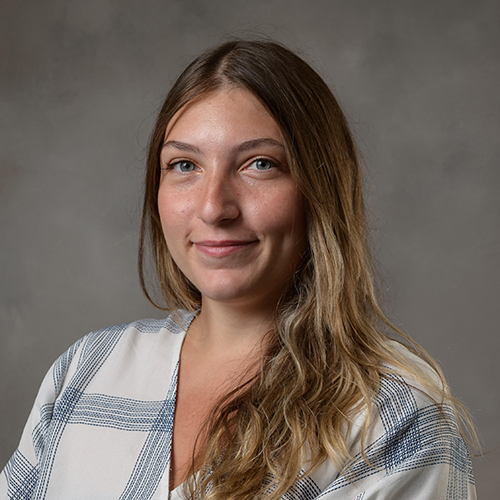
High Expectations That Inspire Growth
They expect very highly of me, which pushes me to work hard, present the best material and be the best student and version of myself I can. It’s not easy, but it’s worth it because I can see the results of that hard work.
Caterina Belle Azzarello-Nichols
Educational Psychology Phd

Teaching with Curiosity and Heart
I want to be able to pass on my love of learning. I’m a curious person, so I role model asking questions.
Kimberly Crystal Monroe
Educational Psychology Phd

Have questions? We're here to help!
Psychological Sciences
The School of Psychological Sciences is nationally recognized as a top psychology program, offering students personalized mentorship, hands-on research opportunities, and career guidance to prepare for graduate study or professional success.
- 970-351-2957
- McKee Hall 14