

Climate Science BS
- Major
- BS
- In-Person
- Greeley
- Meteorology
4 Years
Program Overview
At UNC you won’t just learn about climate science, you’ll put it into practice. The Climate Science BS is a multidisciplinary program that blends meteorology, geology, chemistry, physics and environmental studies. You’ll explore the forces shaping our atmosphere, study the impacts of global warming on communities and ecosystems, and develop solutions for climate change adaptation and mitigation.
You’ll learn in small classes with faculty who bring expertise from research, forecasting and fieldwork. UNC’s location in northern Colorado places you at the center of an environmentally dynamic region, with access to the Rocky Mountains, Great Plains and desert Southwest for hands-on research. Students also gain experience with state-of-the-art forecasting models and technology, preparing them for both careers and graduate study.
With two paths to choose from, the multidisciplinary Climate Science degree and a Meteorology concentration that you can add to tailor your degree to match your goals. No matter which direction you take, you’ll graduate with the knowledge, practical training and perspective to make a difference in how the world understands and responds to climate change.
All students in our Climate Science BS program complete a strong foundation in biology, chemistry, physics, mathematics, environmental earth science and meteorology. From there, you’ll choose the general Climate Science degree or add a Meteorology concentration, tailoring your studies to match your career goals.
The Climate Science BS requires 120 credits, including:
- Liberal Arts Curriculum (31 credits):
General education courses in writing, math, arts and humanities, social sciences and natural sciences. Many science courses also count toward the major, keeping you on track to graduate in four years. - Required Major Courses (78–81 credits):
All students take coursework in chemistry, biology, physics, statistics, GIS, scientific writing, and core meteorology and climate science classes. Each track adds its own specialized focus:- Climate Science (78 credits):
Builds expertise in climate monitoring, risk assessment and environmental systems. Coursework covers ecology, hydrology, soils, climatology, paleoclimatology and extreme weather. Students gain hands-on research and field experience with opportunities to study abroad or complete an internship. - Meteorology Concentration (81 credits):
Meets American Meteorological Society and National Weather Association standards. Students complete advanced coursework in thermodynamics, dynamic meteorology, forecasting and mesoscale meteorology. You’ll gain extensive practice with forecasting models and technology, preparing for careers with government agencies, private companies or graduate programs in atmospheric science.
- Climate Science (78 credits):
- University-Wide Credits (8–27 credits):
Additional courses to reach the 120-credit minimum. Students who apply recommended courses to both the liberal arts curriculum and major requirements may have more electives available.
Students work closely with an assigned advisor each semester to plan their coursework and stay on track for graduation. Meteorology students are required to take the Weather Forecasting Seminar twice for a total of 2 credits. Federal government meteorology jobs and many graduate programs also require advanced math coursework, so students should consult their advisor to ensure they meet those expectations.
View full degree requirements in the academic catalog using the buttons below.
This plan is a recommended schedule to complete your bachelor’s degree in 4 years. You must consult their major advisor for information on any additional graduation requirements and course sequence guidance.
Taking Science Beyond the Classroom
Help Make the Planet COOLER
Learn by doing real work that matters.
Through COOLER (Community Collaboration and Learning for Climate Resilience), you’ll partner with local organizations on projects that strengthen northern Colorado’s response to climate change. Here, you’re not just studying environmental challenges — you’re helping solve them.
While building professional skills in research, communication and collaborative problem-solving, you’ll see firsthand how science translates into community action and measurable impact.
Keep Your Eyes on the Skies
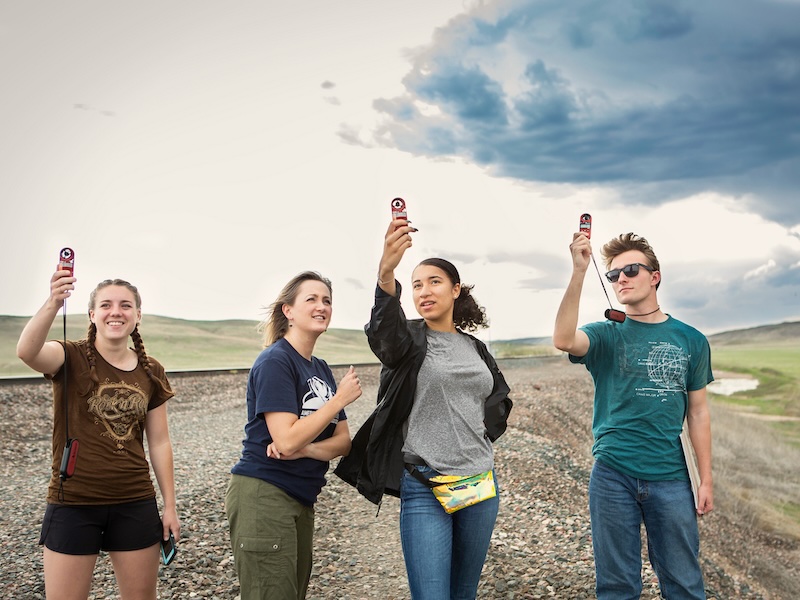
If you take our Climate Science and Meteorology class, you’ll have the chance to join faculty on a storm-chasing expedition — putting classroom theory to the test in real severe weather events. Offered every other spring, this hands-on course takes you into the field to observe, predict and analyze the atmospheric dynamics you’ve been studying all year.
Discover why meteorology education is thrilling and very real.
Students track storms capable of producing tornadoes across seven states in the Midwest in 10 days..
Connect with Fellow Weather Enthusiasts
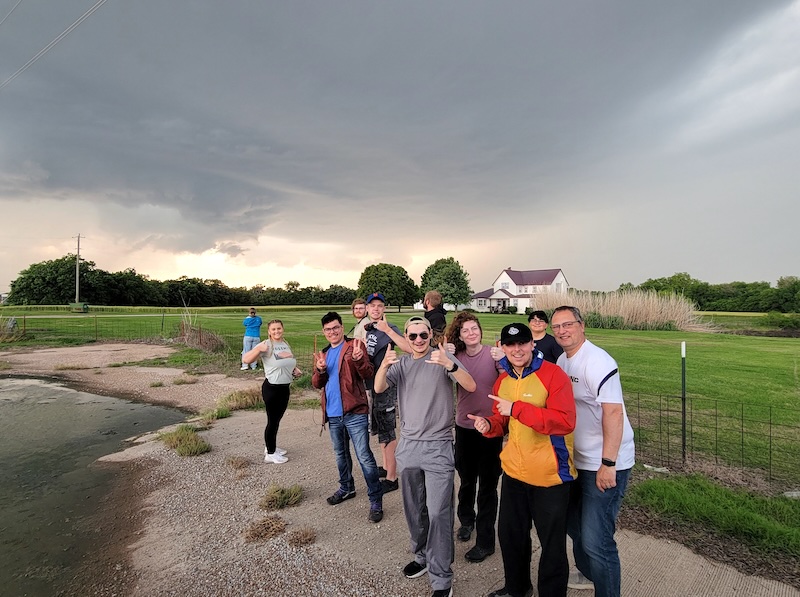
UNC’s student chapter of the American Meteorological Society brings together students who are passionate about weather and atmospheric science — whether you’re majoring in meteorology or just fascinated by storms.
Through guest speakers, field trips, service projects and social events, you’ll explore career paths in meteorology, deepen your understanding of atmospheric and oceanic sciences, and build lasting friendships with people who share your curiosity about the natural world.
It’s where your interest in weather becomes a community.
For more than 20 years, students have formed strong bonds about all things weather-related through our student chapter of the American Meteorological Society.
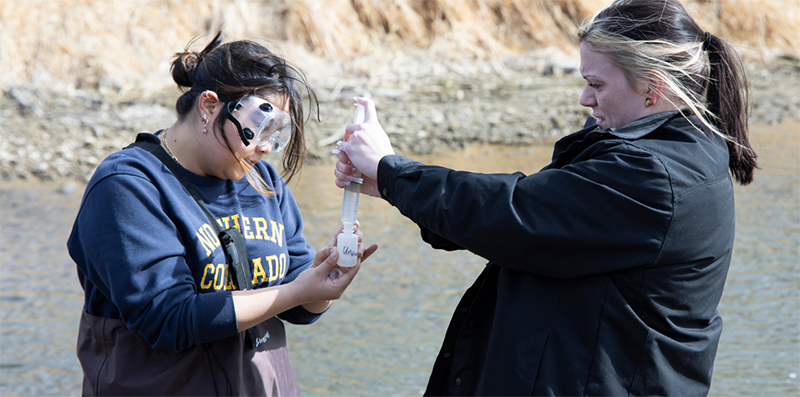
After nearly two decades offline, Greeley’s River Watch monitoring site is collecting data again — thanks to UNC faculty and students who partnered with the River Management Society to restore the station.
Now, students conduct regular water quality testing on the Cache la Poudre River, contributing essential environmental data to the community while gaining hands-on experience in field research and water resource management.
Have Questions? We’re Here to Help!
Earth and Atmospheric Sciences
Understanding how the Earth works is key to protecting it. Our programs prepare students for careers in environmental science, geology, meteorology, and climate studies. You’ll benefit from small class sizes, dedicated instructors and engaging, hands-on science activities. With the Rocky Mountains and Colorado’s unique weather nearby, you’ll have an incredible outdoor classroom to explore and learn from daily.
- eas@unco.edu
- 970-351-2398
- Ross Hall 3235