

Meet the McNair Community
McNair Scholars, past and present
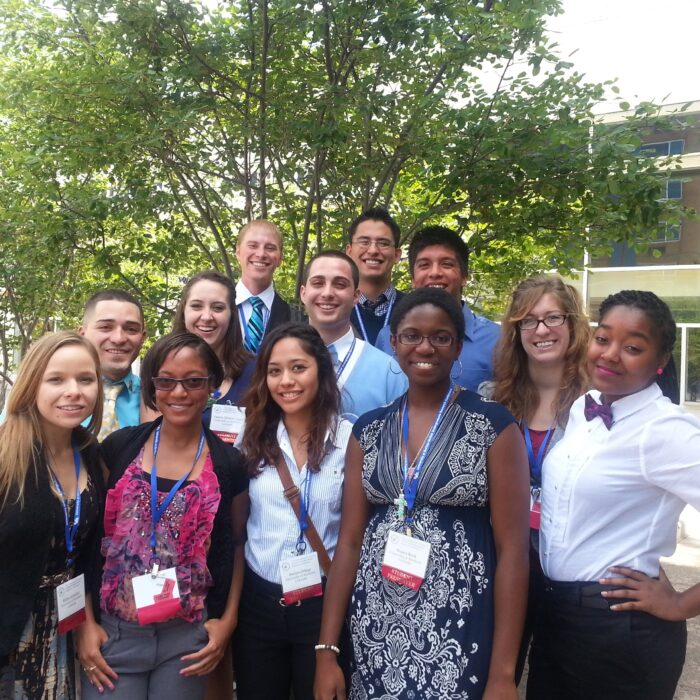
Recent Cohorts
Follow the links below to learn more about our UNC McNair Scholars and their Research Projects and faculty mentors.
- 2025 Cohort
- 2024 Cohort
- 2023 Cohort
- 2021-2022 Cohort — Coming Soon
- 2020-2021 Cohort — Coming Soon
- 2019-2020 Cohort — Coming Soon
- 2018-2019 Cohort — Coming Soon
- 2017-2018 Cohort — Coming Soon
- 2016-2017 Cohort — Coming Soon
- 2015-2016 Cohort — Coming Soon
Where Are They Now?

Christopher Bell, PhD
President, Creative Partners
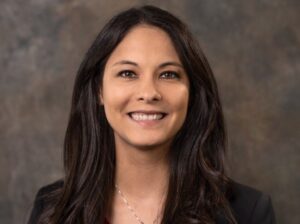
Kayla Howerton, PhD, AuD, CCC-A
Assistant Professor and Clinic Coordinator for Audiology Services
University of Northern Colorado
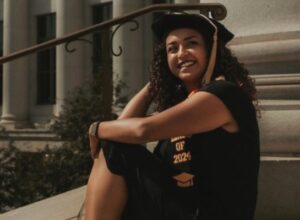
Denise Muro, PhD
Deputy Director, Found in Translation, Inc.
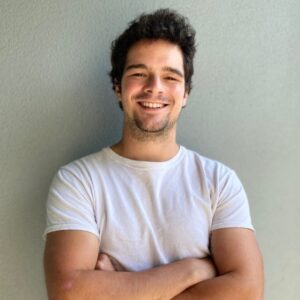
Dreycey Albin, PhD
Software Engineer, Microsoft

Maia Powell, PhD
Data Analyst, State of Colorado

Traci L. Parry, PhD
Assistant Professor, Kinesiology, University of North Carolina Greensboro
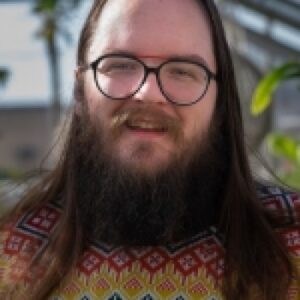
Forrest Bowlick, PhD
Senior Lecturer and Associate Department Head for Finance and Operations, Department of Geoscience, University of Massachusetts Amherst

Letisha Brown, PhD
Assistant Professor of Sociology, University of Cincinnati
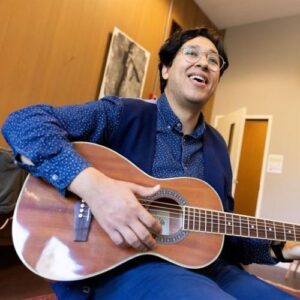
Everardo Reyes
PhD Candidate at the University of California Berkeley
Visiting Assistant Professor at Colorado College
Ronald E McNair, PhD
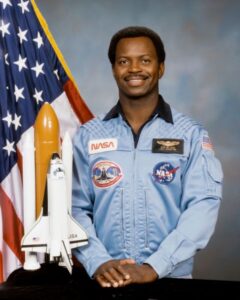
Dr. Ronald E. McNair was a pioneering physicist, astronaut, and inspiration to countless individuals. Born on October 21, 1950, in Lake City, South Carolina, McNair’s journey from a small town to the stars is a testament to his determination and brilliance.
From an early age, McNair showed exceptional promises. In 1971, he graduated magna cum laude with a B.S. in Physics from North Carolina A&T State University. His thirst for knowledge led him to the Massachusetts Institute of Technology (MIT), where he earned his Ph.D. in Physics in 1976 at just 26 years old.
McNair’s expertise in laser physics caught NASA’s attention, and in 1978, he was selected as an astronaut candidate from a pool of 10,000 applicants. His selection made him one of the first three African American astronauts in NASA’s history.
On February 3, 1984, McNair achieved a historic milestone as the second African American to fly in space, serving as a mission specialist on the Space Shuttle Challenger (STS-41-B). During this mission, he showcased his skills by operating the Canadarm robotic arm and conducting various experiments.
Beyond his scientific achievements, McNair was a Renaissance man. He held a fifth-degree black belt in karate and was an accomplished saxophonist, becoming the first person to play a saxophone in space.
Tragically, on January 28, 1986, McNair and six fellow crew members perished when the Space Shuttle Challenger exploded shortly after launch. He was only 35 years old. Dr. McNair’s legacy lives on through the Ronald E. McNair Post-Baccalaureate Achievement Program, established by Congress to inspire and support underrepresented students in pursuing advanced degrees. His life exemplifies the power of education, perseverance, and dreaming big.
As Dr. McNair once said, “Whether or not you reach your goals in life depends entirely on how well you prepare for them and how badly you want them. ” His words continue to inspire students to reach for the stars, just as he did.