
Biology Research & Facilities
UNC offers a wide range of facilities for researching different aspects of biology, including ecology, molecular biology, cell biology, pharmacology, and more!
Laboratory Facilities
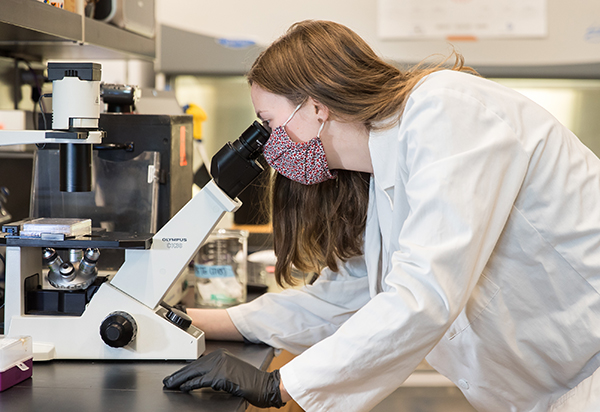
Research laboratories include those designed for ecology, plant and animal physiology, molecular biology, genetics, cell biology, pharmacology, systematics, microbiology, and methods courses in biological education. These laboratories are typically 600 sq. ft. in size and fully equipped for cutting edge discovery by undergraduate and graduate students working closely with faculty mentors.
Research and Facility Options
At the southwest end of Ross Hall is a Natural Area incorporating vegetation from the native short-grass prairie and foothills regions. This area is maintained as an instructional resource and is used frequently for a variety of courses.
In addition to the resources on campus, there are outstanding field resources just a few miles from UNC. Many of the biology faculty utilize these resources in their research, but they also provide outstanding recreational opportunities as well.
The Herbarium is a core repository for plant specimens that are used for teaching and research. The collection consists of 24,000 specimens and focuses on species from the southern Rocky Mountain region and the high plains. For more information, contact Mitchell McGlaughlin.
The University maintains a greenhouse which hold materials that are used for both teaching and research purposes. For more information, contact Scott Franklin.
The Natural History Museum is a repository for animal specimens that are used for both teaching and research. The collection includes an extensive number of vertebrate and invertebrate specimens with a focus on animals from the Rocky Mountain west. For more information, contact Lauryn Benedict.
A variety of instruments are available in the School and we are adding more all the time. We currently have the following instruments available for use by investigators:
- Molecular Devices UV-Vis Plate reader
- Bio-Rad CFX 384 real-time PCR machine
- Bio-Rad VersaDoc gel imager
- Beckman ultracentrifuge
- Leica fluorescence microscope
- Atomic force microscope
- Zeiss confocal microscope
- Scanning electron microscope
- Sony cell sorter
- Attune flow cytometer
The use of some equipment is fee-based. To establish an account, please contact biology@unco.edu.
Biomedical and Cell/Molecular Research
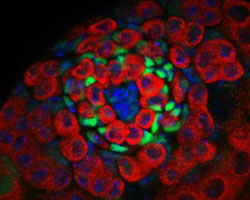
The Reproductive Physiology Laboratory studies the cellular and molecular mechanisms by which prostaglandins regulate corpus luteum function in mammalian females and the influence of fish oil on lipid microdomain membrane ultrastructure and cellular signaling. For more information, contact Dr. Pat Burns.
The Immunopharmacology Laboratory is focused on discovering the mechanisms underlying altered immune function and disease resistance caused by toxic chemicals in foods, drugs, or the environment. For more information, contact Dr. Gregory DeKrey.
The Cancer Biology Laboratory focuses on revealing the molecular function of cancer cells for purposes of developing better anti-cancer therapies. For more information, contact Dr. James Haughian.
The Developmental Biology Laboratory focuses on how the cellular microenvironment regulates adult stem cells, using the Drosophila testis as a genetic model system. For more information, contact Dr. Judy Leatherman.
The Neurophysiology Laboratory is studying the wiring of the brain to find better treatments for Parkinson’s disease and schizophrenia. For more information, contact Dr. Mark Thomas.
The Cell and Molecular Biology Laboratory focuses on how the migration and adhesion of tissue fusion is regulated on a cellular and molecular level, using the zebrafish eye development as a molecular model system. For more information, contact Dr. Andrea James.
The Inflammation Laboratory is investigating the molecular mechanisms behind processes such as allergy, wound healing, and cancer cell invasion using cell culture and mouse models. For more information, contact Dr. Nicholas Pullen.
The Epigenetics laboratory is focusing on how environment factors such as drugs, diet, exercise and sleep affect the progression of human diseases, such as non-fatty liver diseases, obesity and biliary cancer through modification of DNA methylation, histone modification and non-coding RNA expression. For more information, contact Dr. Yuyan Han.
Ecology and Evolutionary Biology Research
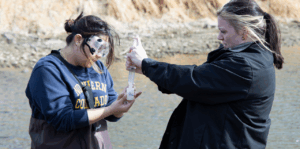
The Avian Behavior Laboratory studies the form, function, and ecological context of birdsong from an evolutionary perspective. For more information, contact Dr. Lauryn Benedict.
The Disturbance Ecology Laboratory studies plant communities and their responses to flood and fire. For more information, contact Dr. Scott Franklin.
The Plant Physiology Laboratory focuses on beneficial interactions between soil fungi and roots, and how these could affect insects that are feeding aboveground, and vice versa. The long-term goal is to develop improved management practices to maintain a balance between an efficient symbiosis and limited insect abundance. For more information, contact Dr. Karen Gomez.
The Venom Analysis Laboratory studies the biology of venomous snakes and the biochemistry of their venoms, and ongoing projects use discovery science approaches toward uncovering novel compounds with therapeutic potential. For more information, contact Dr. Stephen Mackessy.
The Plant Population Genetics Laboratory focuses on using genetic tools to understand patterns of plant diversification and how genetic data can enhance the management and conversation of rare and endangered species. For more information, contact Dr. Mitchell McGlaughlin.
The BLE (Bioeduction and Lichen Ecology) Lab uses community analysis to describe how disturbance patterns lichen community structure. For more information, contact Dr. Emily Holt.
Biology Pedagogy Research
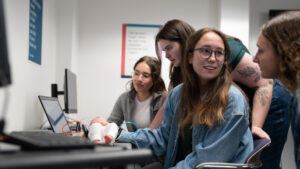
The BLE (Bioeducation and Lichen Ecology) Lab currently has two central foci: the measurement of learner-centeredness in undergraduate biology classes and climate literacy as it relates to biotic components of climate change. For more information, contact Dr. Emily Holt.
The STEM (Science, Technology, Engineering, and Mathematics) Education Lab studies student conceptual understanding and problem solving, instructor and peer instructor professional development, supporting students in applying computing to biology, and practices that support an inclusive science community. For more information, contact Dr. Jennifer Avena.
Lab Safety
Emergency and 24-hour response
- UNC Campus Emergency: 911
- UNC Campus Police (non-emergency): 970-351-2245
- Weld County Poison Control Center: 1-800-222-1222
School of Biological Sciences
- Main office: 970-351-2921
- Chair, Dr. Scott Franklin: 970-351-2650
- Chemical Hygiene Officer (CHO), Dr. Karen Gomez: 970-351-2555
UNC Environmental Health and Safety
- Director, Mr. Glenn Adams, Director: 970-351-1149
- Radiation Safety Officer, Dr. Cynthia Galovich: 970-351-2079
Safety Quiz and Tutorials
Compliance with regulatory mandate
- Take the laboratory safety quiz here (Canvas).
- Read and study the Biology’s Laboratory Safety document