

Research and Teaching Labs
UNC’s Anthropology program offers students access to state-of-the-art research and teaching laboratories that bring classroom learning to life. Each lab provides unique hands-on opportunities to explore the many dimensions of human experience—from ancient artifacts to modern cultural practices.
Research and Teaching Labs
X-Ray Fluorescence Lab
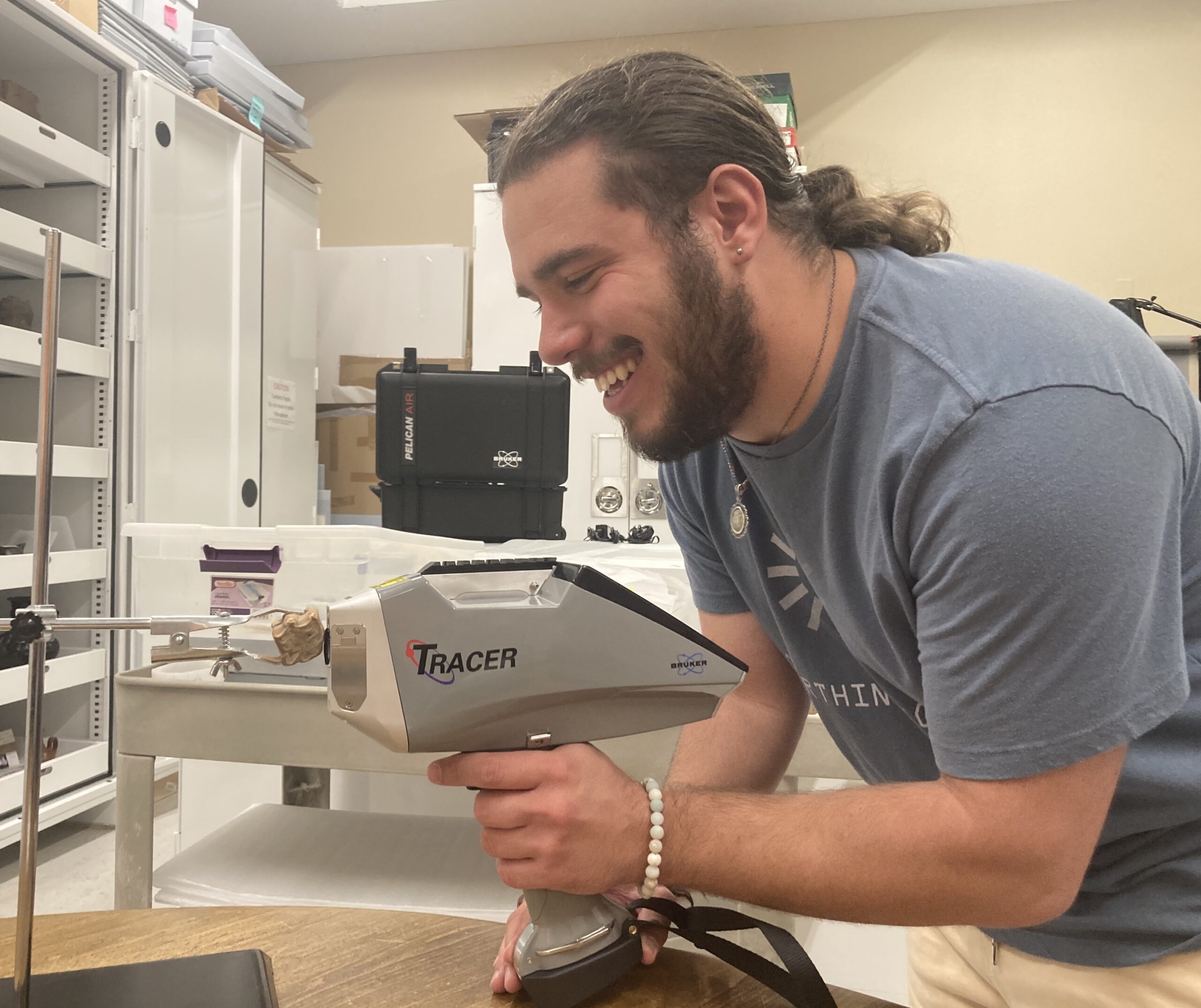
X-Ray Fluorescence (XRF) is a technology that allows us to examine the elemental makeup of materials. We can apply this in so many ways to answer anthropological questions! The XRF@UNC lab has opportunities for students to get involved with hands-on research, supports student research projects, and collaborates with community organizations across Colorado and Wyoming.
Archaeological Geophysics Lab
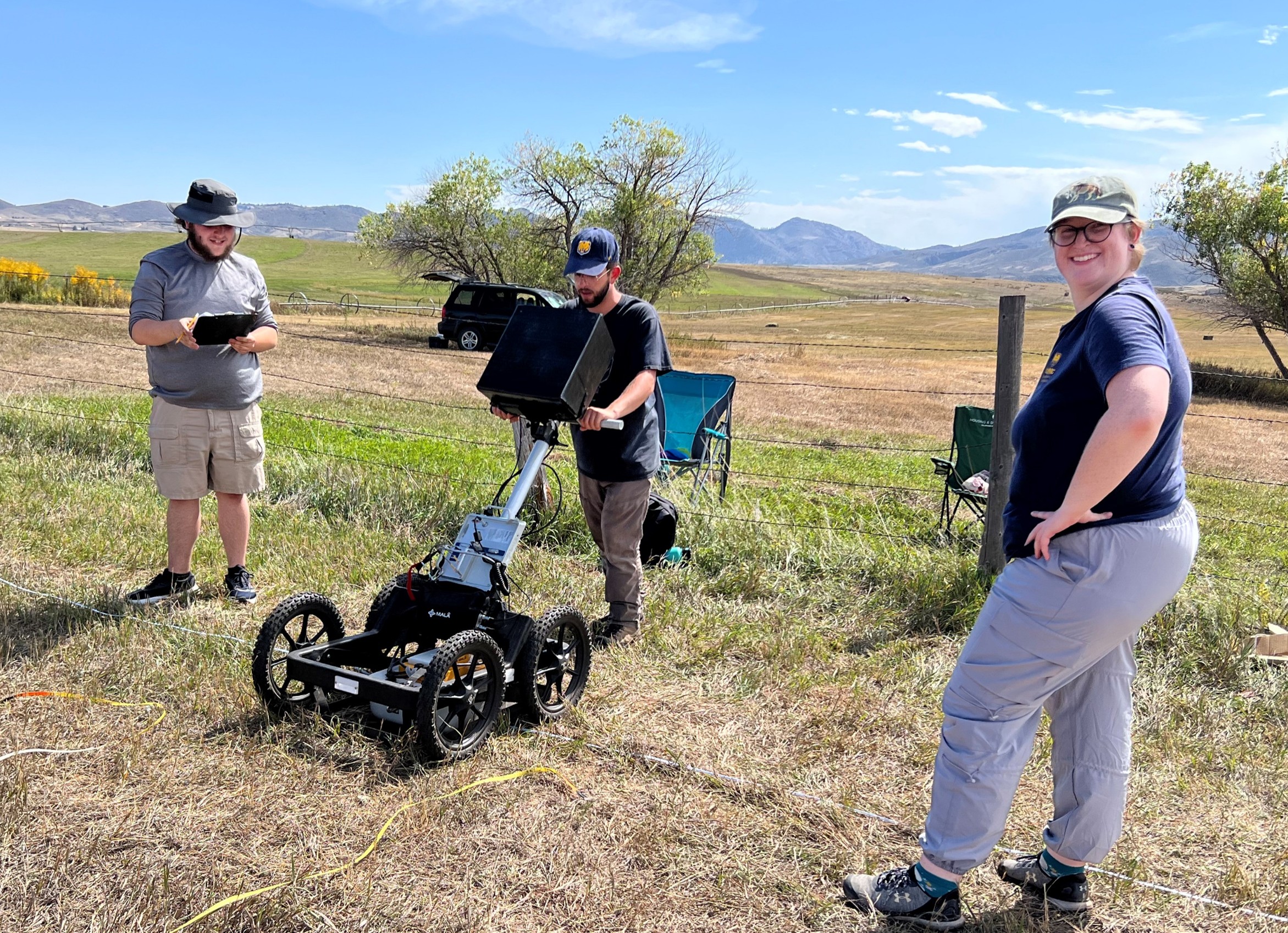
Archaeological geophysics uses remote sensing methods. These techniques help locate everything from small campsites to ancient cities by measuring soil and subsurface properties. At UNC, students gain hands-on experience with tools like magnetometers, radar systems, resistance meters, GPS units, and UAVs, both in the classroom and the field. Past research has included sites in Colorado, New Mexico, Israel, Palestine, and Iraq.
Human Skeletal Biology Lab
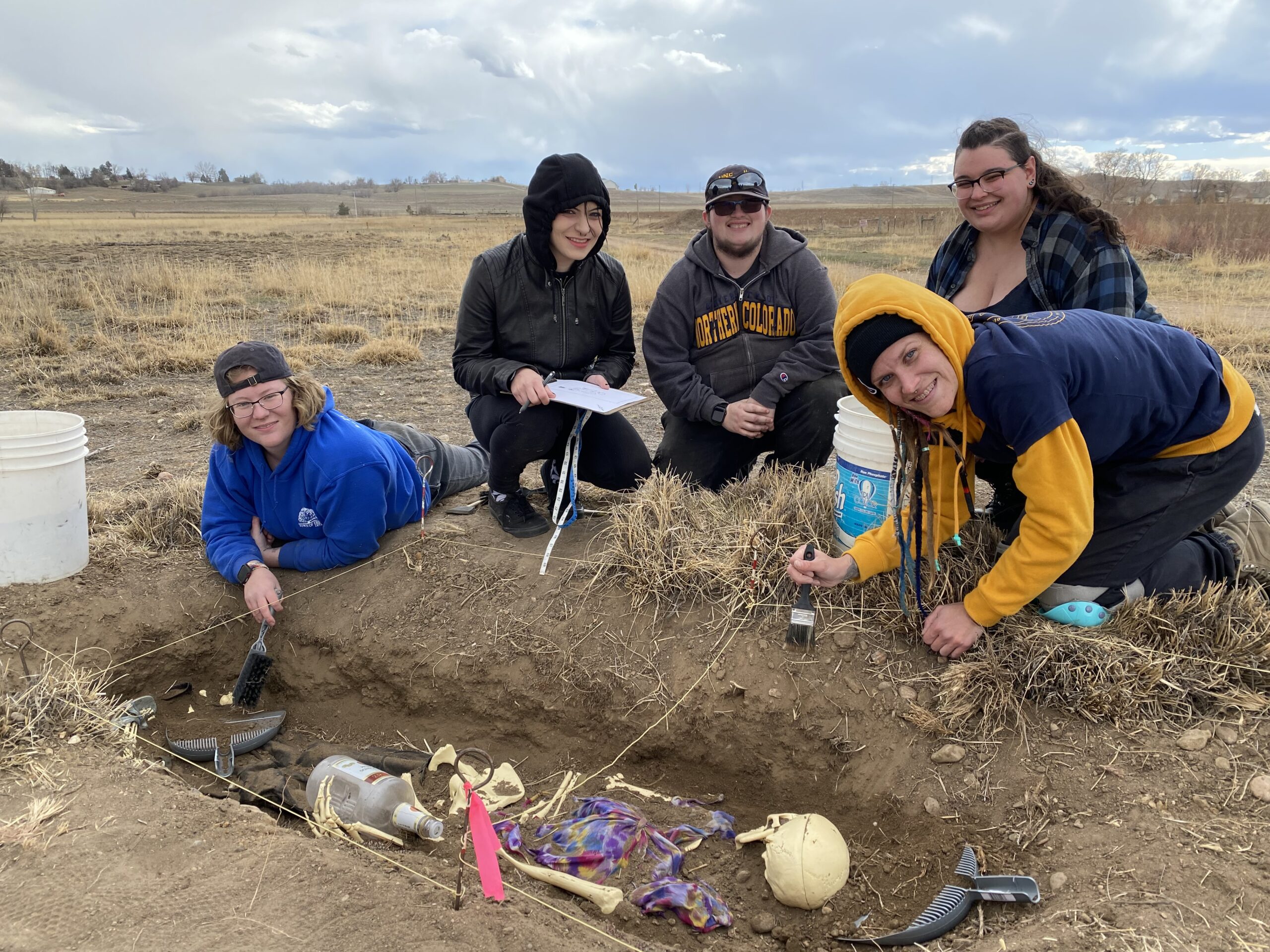
The UNC Human Skeletal Biology Teaching Lab has a collection of eight full human skeletons, along with several skulls and other bones. These were donated by people who chose to donate their bodies to science, so we know details like their age, sex, and cause of death.
The lab also has many plastic models and casts of bones showing diseases, injuries, and other conditions. This top-quality collection gives students the chance to work directly with real and model bones. They get to learn and practice the same methods used by forensic anthropologists and bioarcheologists.
Laboratory for Ethnographic Training & Analysis (LETA)
The Laboratory for Ethnographic Training & Analysis (LETA) teaches students how to learn about people, cultures, and communities. Students get to do hands-on activities, work with others, and use creative methods to explore and understand the world.
Leta encourages students to think critically, understand different points of view and solve global problems with care and respect. The goal is to prepare future leaders and researchers who will help build a more inclusive, kind, and connected world.