

Wearing a classic black tuxedo over a white button up shirt and a purple velvet bowtie, Tim Gocklin, oboist, adjunct professor and Artist in Residence at UNC’s School of Music, attended the Crypto Arena in Los Angeles on Feb. 2 for the 67th Annual Grammy Awards.
Gocklin and the four other longtime members of the Akropolis Reed Quintet, who have been creating music together for the last 16 years, were about to find out if they would become Grammy winners. Their song “Strands,” created with drummer Christian Euman and composer/pianist Pascal Le Boeuf, was nominated in the Best Instrumental Composition category.
As their category approached, anticipation was building when actor, comedian and singer Wayne Brady spoke the famous suspenseful words, “And the Grammy goes to ...
“... ‘Strands’ by composer Pascal Le Boeuf, Akropolis Reed Quintet, and Christian Euman.”
It was music to Gocklin’s ears. His hands went straight to his face in pure shock and excitement. After taking two seconds for the news to sink in, Gocklin, and the whole team, ran up to the stage with tears in his eyes to stand behind Le Boeuf, who briefly and beautifully thanked the Recording Academy for the recognition.
“We are so thrilled, stupefied and extremely excited,” Gocklin said. “There are so many deep emotions of gratitude and love in reflecting on everything that brought us to this moment.”
The Akropolis Reed Quintet is an ensemble of five different reed instruments — oboe, alto saxophone, bassoon, clarinet and bass clarinet. The group began recording their latest album Are We Dreaming the Same Dream? in 2020, completing it in 2022.
The album brings together the reed quintet, piano and drums to create quite a special jazz and classical fused experience. Throughout the record, and especially in the award-winning song “Strands,” the musicians explored the concept of the American dream.
“The project is a dedication to the music of Geri Allen, Dave Brubeck and George Gershwin and a commentary on how we in America are all woven from different ‘strands’ that come together to create something beautiful,” Gocklin said. “It’s an amalgamation of our different musical styles.”
Chasing the American Dream
Gocklin worked on the Grammy Award-winning project while teaching at UNC. He’s grateful he can work with students in the classroom while honing his professional expertise. He says one of the biggest benefits students in UNC’s School of Music have is the opportunity to learn and study under many faculty members who excel in the music industry.
“My goal is to inspire my students through practicing what I preach with regards to hard work, consistency and perseverance,” Gocklin said. “It’s also important to show them that it’s not all about how well they play, it’s about collaboration, how you work and how you communicate with people. ‘Be someone who people want to work with,’ as my teacher Steve Taylor at Yale told me.”
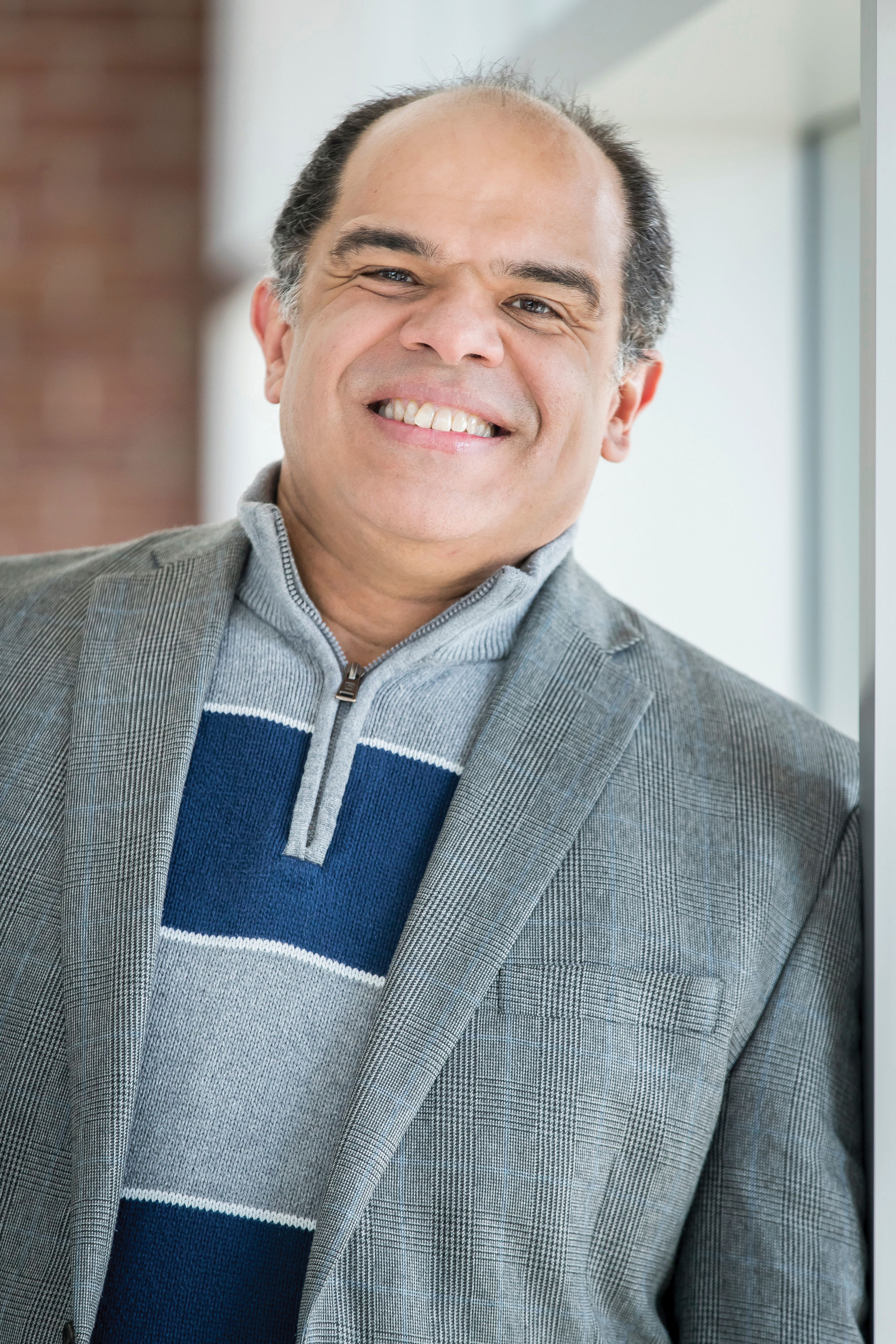

Socrates Garcia, D.A. ’13, Director of Music Technology
Steve Kovalcheck, M.M., Professor of Music, Jazz Guitar
Several of Gocklin’s colleagues have successful careers outside the classroom. For example, professor of Music, Jazz Guitar Steve Kovalcheck, M.M., was also recognized by the Recording Academy this year. He played on the album And So It Goes nominated for Best Large Jazz Ensemble.
Although the Grammy went to another musical group, Kovalcheck walked away with the experience of a lifetime playing with the Clayton-Hamilton Jazz Orchestra led by bassist/composer John Clayton and drummer Jeff Hamilton, who are legendary jazz musicians.
“They have more than 50 years of experience in the industry, working with everyone from Quincy Jones to Whitney Houston to Barbara Streisand and Diana Krall,” Kovalcheck said. “I’m very grateful they asked me to record with them.”
Another accomplished faculty member is Director of Music Technology Socrates Garcia, D.A. ‘13. His talents and successes as a recording engineer and producer earned him a spot on the voting body of 13,000 professionals who determine the Grammy Award winners, a position he has held for the past 12 years.
“It’s a service that I love to do,” Garcia said, “Having a Grammy is a big deal, it’s a big accomplishment, so I don’t take it lightly.”
To become a voting member, Garcia had to qualify by gaining a certain number of recording credits on albums sold regionally and internationally. Throughout his career, Garcia has performed as a touring musician, guitarist and keyboardist in many Latin American countries, including Mexico, Colombia, Venezuela, Bolivia, Costa Rica, Aruba and throughout his home, the Dominican Republic. He typically plays with his big band, the Socrates Garcia Latin Jazz Orchestra.
As for the Grammys, each year, Garcia votes in two rounds, the first deciding who should be nominated and the second deciding who should receive an award.
“I spend literally days listening to music I don’t know as I go through the voting process. It’s a lot of listening and a lot of fun,” Garcia said.
Garcia, who has worked on a project that won two Grammys and other Billboard topping chart projects himself, doesn’t vote on every award. He votes on the most prominent awards, such as Record of the Year and Artist of the Year, as well as awards involving producing and engineering — his expertise. While he can’t say who he voted for, Garcia says his fellow UNC faculty members’ works were well worth the nominations.
“Steve and Tim were great and well-deserved,” Garcia said. “And just like all of our faculty do, they’ll be able to bring back their whole Grammy experiences to their students in the classroom.”
Grammy-worthy teaching
Teaching beyond the textbook is one of Garcia’s favorite aspects of his job.
“I love to share anything and everything I’ve learned. My students will tell you that I don’t hold back,” Garcia said. “For example, a recent graduate interned in my recording studio. She left with credits on a movie and two albums. Those are the kind of things I like to share. Everyone needs experience.”
And his sentiment is echoed by Grammy-nominated Kovalcheck.
“We have a lot of connections to all the major music capitals in the country — Nashville, New York and L.A. Students know that this is a place where it doesn’t matter what level they are at, they’re going to be challenged and they’re going to get supported through those challenges,” Kovalcheck said.
“In the School of Music, we are like a family. As soon as you come here and see how we work together, you feel that it’s a very unique place. I always say that what we have here is special.”
—Sydney Kern