CORE: Initiative Program
Shana Gibbs presents information about the CORE: Initiative Program in American Sign Language.
The Connections, Opportunities, Resources, and Education (CORE): Initiative was the IRIS Project’s free 9-month, 300-hour hybrid (online and in-person) individualized mentorship and facilitated interpreting knowledge & skills training designed specifically for rural interpreters.
Throughout the CORE: Initiative, participants experienced the following:
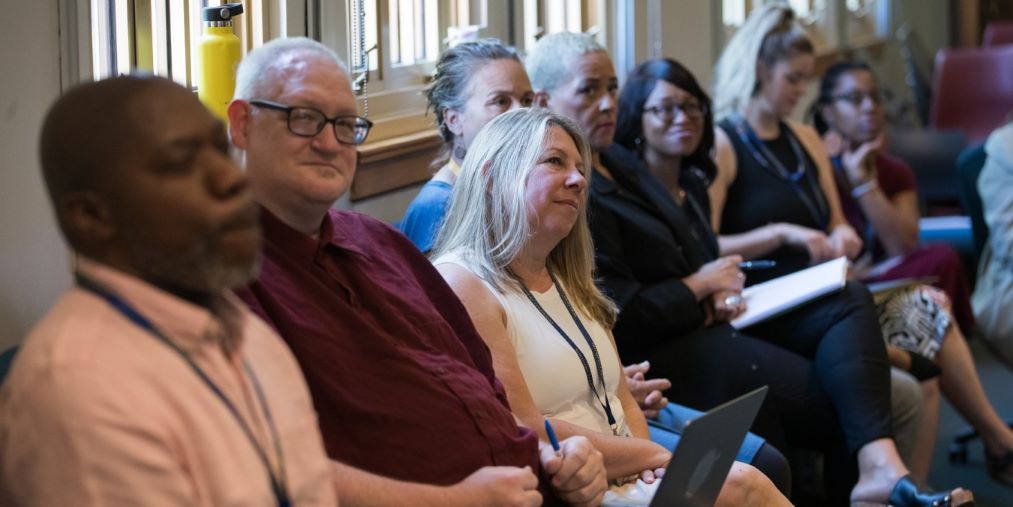
- Direct connections with a diverse cohort of colleagues, facilitators, and mentors;
- Exploration of interpreting frameworks via facilitated communities of learning;
- Individualized review and detailed analysis of their interpreting work, including areas of strength and opportunities for growth; and
- Individualized and small group mentoring.
Upon completion of this program, participants were able to:
- Build a network of support with other rural interpreters;
- Demonstrate fundamental best practices in the interpreting profession:
- Employ context-dependent and culturally competent ethical decision-making strategies;
- Analyze interpretations following a practice profession framework; and
- Deconstruct the interpreting product apart from the person via an Integrated Model of Interpreting framework.
CORE: Initiative Curriculum
 Feel free to review and use this Canvas course and curriculum materials!
Supporting documentation:
- Course Map
- Slide Deck
- Module 1: Analysis & Collaboration in Interpreting
- Module 2: Rural Interpreting: Challenges & Opportunities
- Module 3: The Evolution of the Sign Language Interpreting Profession
- Module 4: Working with Diverse Deaf Populations
- Module 5: Ethical Frameworks: Demand Control Schema & Role Space
- Module 6: Integrated Model of Interpreting
- Module 7: Power and Privilege in Interpreting
- Module 8: What’s My Relationship with the Deaf Community?
- Module 9: The Interpreting Brain
- Module 10: Practicing Ethical Decision Making
- Module 11: Product & Process: A Closer Look
- Module 12: Working in Teams
- Module 13: Working with Deaf Interpreters
- Module 14: Your Interpreting Process: Who’s the Boss?
- Module 15: Healing Centered Interpreting
- Module 16: Technology and Interpreting
- Module 17: What now?
Curriculum materials are in a read-only format. Do you want to use this content in a Learning Management System (LMS)? Learn how to import it! Should you download the cartridge, you will need to create assignments and quizzes manually.
The University of Northern Colorado and the IRIS Project are not offering Continuing Education Units (CEU) processing for the content presented here. Should you be interested in RID CEUs, please contact any RID CMP Sponsor to inquire about a participant-initiated learning activity.
Please note that these resources are being made available to you as they were presented during the 2021-2026 grant cycle. Permission is granted to copy and disseminate this product for noncommercial educational purposes provided UNC-IRIS is credited as the source and referenced appropriately on any such copies. Creative Commons Attribution-NonCommercial 4.0 International License.
Suggested citation: UNC-IRIS. (2024). Name of Resource. URL (if applicable).
 Disclaimer
Neither endorsement nor verification is intended or made of any hypertext link, product, service, or information, either by its inclusion or exclusion from this page or site. Some links may become outdated or expired over time. Users are encouraged to verify the information independently and exercise discretion when relying on external or online resources.
CORE: Initiative Cohorts
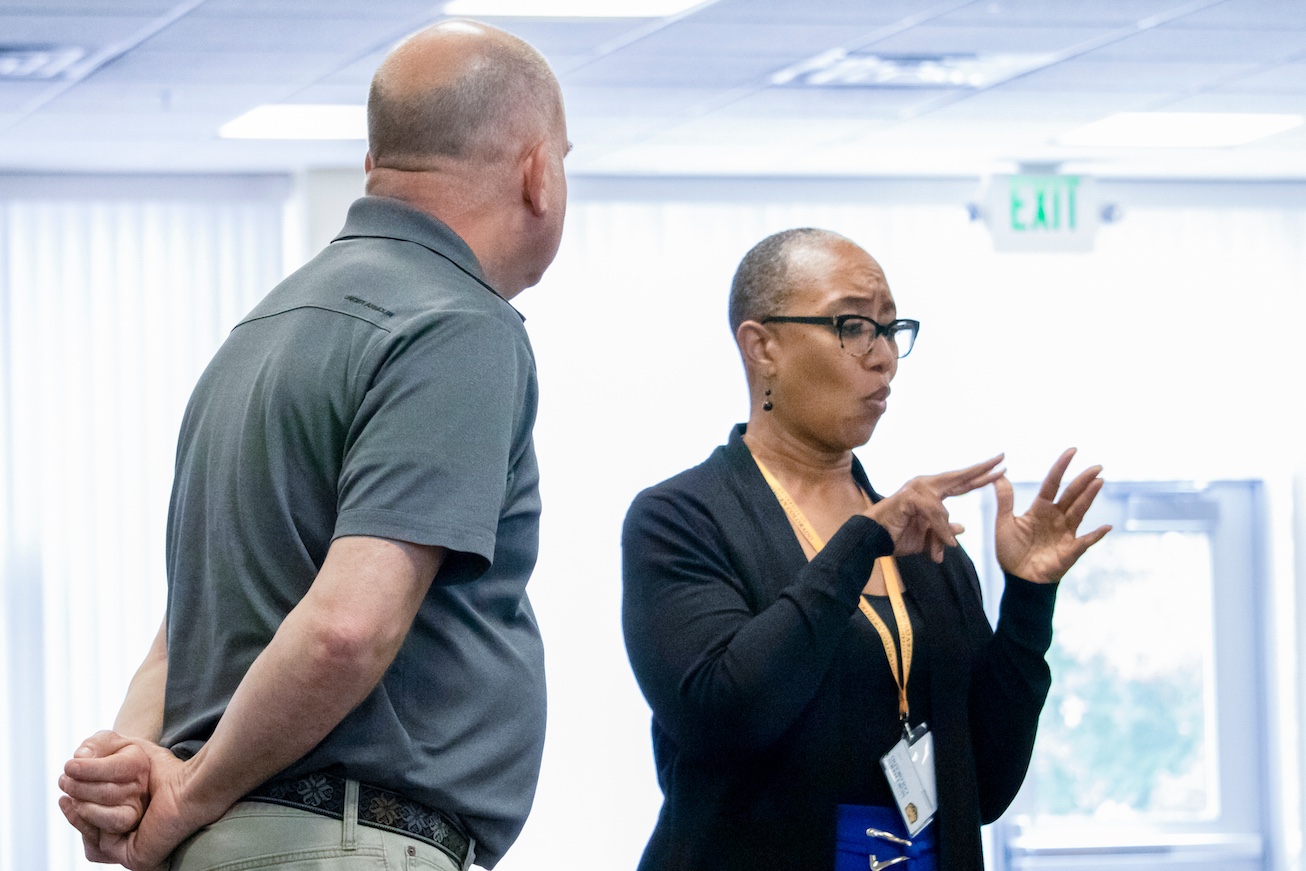
The IRIS Project recognizes the hard work and dedication of the participants who have successfully completed* the CORE: Initiative program. To search for qualified interpreters, visit the Registry of Interpreters for the Deaf (RID) website.
*Successful completion of this training does not provide endorsement of the participant's language fluency or skills as an interpreter.
Cohort One (2022-2023)
By first name; NOTE: 1st column is first names starting with A-D, 2nd column is G-K, 3rd column is L-P, & 4th column is R-T.
- Amy Richardson
- Byron Oakes
- Christina Holifield
- Darren Reed
- Dawn Tomlinson
- Glenna Cooper
- Jamie Olson
- Jordon Oswald
- Kayla Perez
- Kris Courson
- Lakesha Trotter
- Laurie Walcott
- Monique' McCrary
- Paige King
- Pamela Bailey
- Robin Brenner
- Romelle Hoon
- Sophia Molitor
- Terri J. Brown
Cohort Two (2023-2024)
By first name; NOTE: 1st column is first names starting with A-E, 2nd column is G-J, 3rd column is K-L, & 4th column is M-S.
- Akeya Peoples
- Carrie Tweedie
- Daniel Gough
- Don Petit Homme
- Emma Wood
- Erin O'Shaughnessy
- Gale DeArmin
- Hilda Costello
- Jeanice Davis
- Joan Pellerin
- Kataya Urquhart
- Khadayilah Garza
- Lasheria Murphy
- LaTonya Smith
- Mary Rodriguez
- Megan Joseph
- Shannon Wheeler
- Shannon Blachly
Cohort Three (2024-2025)
By first name; NOTE: 1st column is first names starting with A-C, 2nd column is E-J, 3rd column is K-P, & 4th column is R-T.
- Aaron Johnson
- Alexis Radford
- Alicia Booth
- Autumn Talbot
- Bonnie Aernie
- Chelsea Elertson
- Cheryl Witters
- Colleen Frantz
- Erica Ables
- Erika Manzanarez
- Felicia Reed
- Islande Robart
- Janet Dickinson
- Jen Benjamin
- Julie Seawright
- Kelley Osborne
- Lynn Kohler
- Mando Garza
- Meli Stamp
- Naomi Pittman Hardy
- Patrick Harris
- Paula Bazinet
- Rochelle Davis
- Ronda Bryan
- Shamika Dorsey
- Tammy Derrick
- Tanya Brown
- Theresa Muschiatti
- Tina Linke