

Chemistry BS
- Major
- BS
- In-Person
- Greeley
- Biochemistry (ACS Certified)
- Chemistry (ACS Certified)
- Forensic Science
- Industrial Chemistry
- Pre-Health
- Secondary Teaching - Licensure: Science (Grades 7-12)
4 Years
Fall or Spring Semesters
Program Overview
UNC’s Chemistry BS gives you a strong foundation in chemical science, hands-on experience in modern labs, and the flexibility to choose a concentration aligned with your career goals. Whether you want to pursue graduate school, enter the medical field, or work in industry, you’ll graduate prepared for the next step.
All chemistry majors take core courses in analytical, organic, inorganic, and physical chemistry. You’ll also strengthen your problem-solving skills with extensive lab work and research experience.
Learn from faculty who are active researchers and dedicated teachers. With small class sizes, you’ll receive individual guidance in both coursework and undergraduate research projects.
Choose from our six concentrations to tailor your studies toward your specific interests and career goals.
- Biochemistry
- Chemistry (both ACS certified)
- Forensic Science
- Industrial Chemistry
- Pre-Health
- Secondary Teaching with Licensure in Science for grades 7 to 12
Chemistry Concentration (ACS-certified) requires 120 credits, including core courses in general, organic, analytical, physical, and inorganic chemistry, plus extensive lab experience.
Biochemistry Concentration (ACS-certified) With the biochemistry emphasis, you’ll gain specialized preparation for postgraduate opportunities in fields such as medicine, chemistry and biochemistry.
Forensic Science Concentration
This concentration will prepare you to use the advances in forensic science for chemist to work in a wide range of positions from crime labs to manufacturers.
Industrial Chemistry Concentration
The industrial chemistry emphasis can prepare you for many different career paths, including petroleum, manufacturing, pharmaceuticals, biotechnology and government research and regulation.
Industrial Chemistry Requirements
Pre-Health Concentration
It provides a solid foundation in chemistry and biological sciences for those students planning to pursue professional studies in dentistry, medicine, optometry, podiatry, pharmacy or veterinary medicine.
Secondary Training Concentration
You’ll complete teacher training (including a student teaching assignment) as part of this degree and be eligible for a teacher’s license upon graduation.
Follow a structured path to complete the 120-credit Chemistry B.S. in four years. Depending on your concentration, plans might include chemistry, math, and physics courses each semester, along with labs and Liberal Arts Core requirements.
Forensic Science Four-Year Plan
Looking to strengthen your science background?
If you are studying any other degree, you can pair your studies with one of our three minors to expand your expertise. Options include Chemistry (Liberal Arts), Chemistry Teaching, and Brewing Laboratory Science—each offering skills that complement careers in research, health, and industry.
Concentrations
Customize your degree by choosing one of six concentrations. Each provides a solid chemistry foundation with specialized courses to prepare you for your career path or graduate study.
Explore the intersection of chemistry and biology. You’ll study molecular structures and processes that underlie life, preparing for medical school, graduate research, or careers in biotechnology and health sciences.
This concentration provides the most comprehensive chemistry training, certified by the American Chemical Society. It’s ideal if you plan to pursue graduate study, research, or a professional career in chemistry.
Apply chemistry in the pursuit of justice. Courses emphasize analytical techniques, toxicology, and criminalistics, preparing you for careers in crime labs, law enforcement, and forensic research.
Gain practical skills for careers in the chemical industry and manufacturing. This concentration emphasizes applied chemistry, quality control, and process development for laboratory and production environments.
This degree offers focused preparation for medical, dental, pharmacy, osteopathic, chiropractic, and optometry schools. You’ll complete all the prerequisites necessary for admission to these schools, while gaining a strong background in chemistry, biochemistry, mathematics, physics, and biological sciences.
UNC has a national reputation for excellence in the training of chemistry educators. Demand is skyrocketing for strong teachers in chemistry and other STEM (Science, Technology, Engineering and Math) fields, and this emphasis can yield outstanding career opportunities. You’ll complete teacher training (including a student teaching assignment) as part of this degree and be eligible for a teacher’s license upon graduation.
Hands-on Labs
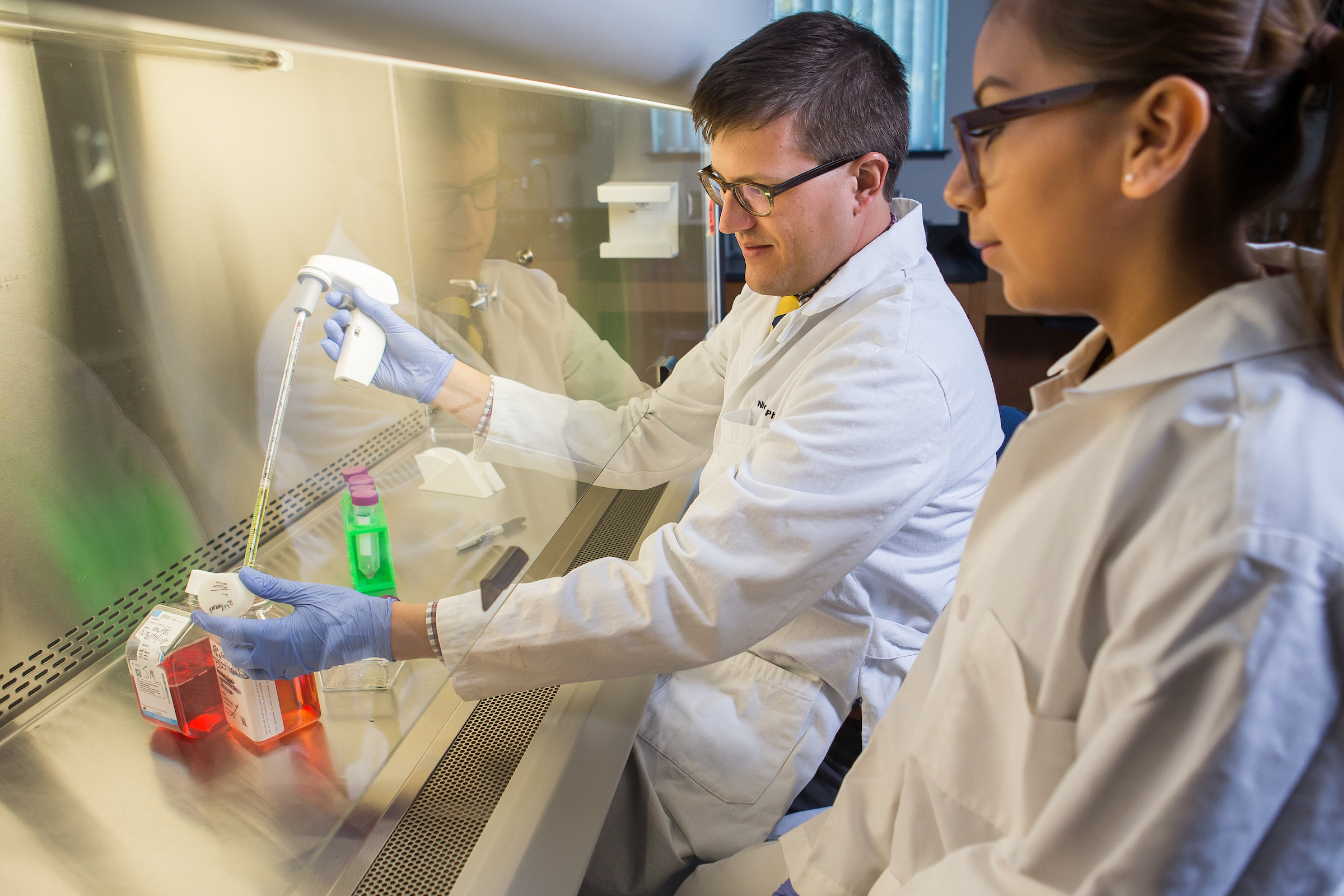
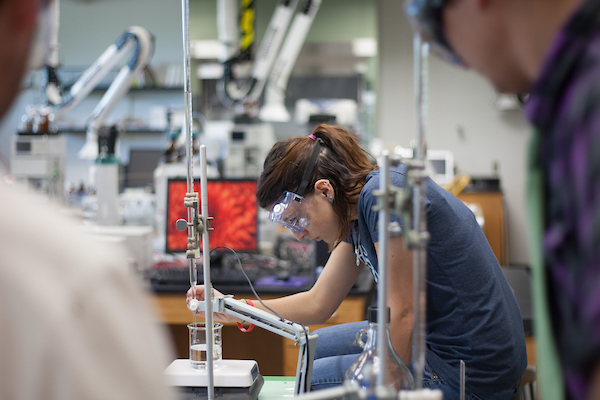
You’ll gain practical skills using advanced instruments in UNC’s teaching and research labs, preparing you for both professional work and graduate-level study.

Career Readiness
The program equips you with skills for careers in science, medicine, forensics, or industry. Many graduates also go on to Ph.D. programs, medical school, or other advanced degrees.

Why Study Chemistry at UNC?
Chemistry is often called the “central science” because it connects physics, biology, and environmental science. At UNC, you’ll study chemistry in depth while applying it to real-world problems in health, industry, and research.
From your first year, you’ll learn in small classes and modern labs, working side by side with faculty who are active researchers and dedicated teachers. You won’t just memorize formulas—you’ll gain hands-on experience using the same instruments and techniques found in professional labs. Many students also join faculty-led research projects, often presenting their work at national conferences or co-authoring published studies.
The Chemistry B.S. offers six concentrations—Chemistry, Biochemistry, Forensic Science, Industrial Chemistry, Pre-Health, and Secondary Teaching—so you can match your studies to your career goals. Whether you’re planning on medical school, graduate study, a career in forensics, education, or entering the chemical industry, you’ll build both the knowledge and the practical skills to succeed.
UNC Chemistry graduates go on to work in laboratories, hospitals, breweries, schools, and government agencies. Many continue their education in top Ph.D. and professional programs. With rigorous training, supportive faculty, and career-focused concentrations, UNC’s Chemistry B.S. prepares you for wherever science leads.
Brewing Laboratory Science
UNC is one of the few universities in the nation offering a Brewing Laboratory Science minor. Through partnerships with local breweries, students gain hands-on experience in fermentation, quality testing, and lab analysis—skills that translate directly to Colorado’s thriving craft beer industry.

Experience what makes us different
Faculty-Led Research
Collaborate with faculty on projects in biochemistry, forensics, and materials science—many students present at national conferences or co-author publications.
ACS-Certified Excellence
Earn a degree certified by the American Chemical Society, a mark of rigorous academic and professional standards recognized nationwide.
From the classroom to the lab
Work in modern labs with advanced instrumentation and gain real-world research skills from your first semester.
What our students think

Research & Development Chemist, Clean Chemistry
"Small class sizes and research opportunities allowed me to feel confident and prepared for starting my career in the laboratory. The skills I learned in lab courses taught by the university’s experienced professors are skills I use daily in my position as a chemist in an R&D lab for a green chemistry startup."
Casey Jeanes
B.S. Chemistry, 2024

Research Chemist, TDA Research, Inc
The education I received at UNC has been crucial to my success. It equipped me with valuable techniques, knowledge, and confidence that I apply every day in my work as both a chemist and a leader. Currently, I am employed as a Research Chemist, a role I hoped my advanced education would lead me to.
Joie Melzer-Games
M.S. Chemistry, 2020
President's Postdoctoral fellow, University of Minnesota
I had a wonderful experience. The Department of Chemistry had a plethora of mentors–graduate students and faculty alike–who provided both career guidance and research opportunities. I remember spending hours synthesizing silver nanoparticles and running down a flight of stairs to measure their absorption to learn about them
Steven Diaz, Ph.D.
B.S. Chemistry, 2017
Research & Development, RapiCure Solutions
“I loved my time at UNC, especially the hands-on experience I gained through the Lofgren Scholarship research program. I had the opportunity to work on three diverse research projects, including a collaboration with Triverity Laboratories.
Elisabeth Kulesus
B.S. Chemistry, 2023


Contact Us
Chemistry and Biochemistry
From tiny atoms to big reactions, chemistry helps us understand and improve the world around us. With small classes, hands-on research, and a focus on you, our program prepares students for exciting careers in science and beyond.
Curious about how things work? Start your journey here.
- chemistry@unco.edu
- (970)-351-2559
- Ross Hall, Room 3480